Politics Events Health Local 2026-02-24T20:07:02+00:00

Violence in Mexico After Cartel Leader's Killing

A wave of violence has erupted in Mexico following the killing of a leader of one of the country's most powerful drug cartels. Authorities have deployed troops, and the White House has warned against harming American citizens.


Violence in Mexico After Cartel Leader's Killing

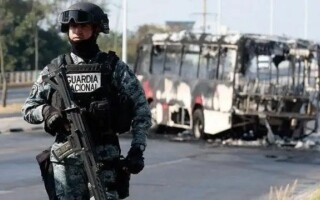
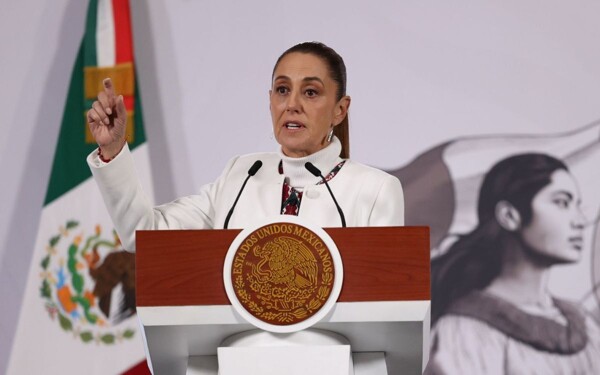
Violence continues in Mexico following the killing of 'Nueva Generación Jalisco' cartel leader Nemesio Oseguera, known as 'El Mencho'. In Jalisco, armed men blocked main roads by setting vehicles on fire. In Guadalajara, Mexico's second-largest city, shops and schools closed due to fears of escalating unrest. Mexican President Claudia Sheinbaum confirmed the removal of roadblocks set up by armed men, stating that 'protecting the population is a priority' and that 'the country is calm and at peace.' She denied the involvement of U.S. troops, mentioning only an exchange of intelligence. Oseguera, 59, was one of the most-wanted individuals in the U.S., with a $15 million bounty on his head. On Monday, Mexican authorities deployed 10,000 soldiers in Jalisco to contain a wave of violence that erupted after the cartel leader's death. The Mexican Army reported that Oseguera was wounded during an operation in the Tepalpa area and died while being airlifted to Mexico City. The White House has warned Mexican drug cartels against harming any American citizens. White House spokesperson Caroline Levitt urged all Americans in Mexico to follow the guidance of the State Department. Following the leader's killing, attacks and violence were reported in about 20 states. According to the Mexican government, approximately 25 security personnel, including National Guard members and prosecutors, as well as 30 cartel members, were killed in clashes that followed the military operation. The 'Jalisco New Generation' cartel, founded in 2009, is considered one of the most powerful drug trafficking networks in the world.
Latest news

See all news
Mexico's World Cup 2026 Security Raises Concerns for FIFA
2026-02-24T19:15:48+00:00

Mexico's World Cup 2026 Security Raises Concerns for FIFA

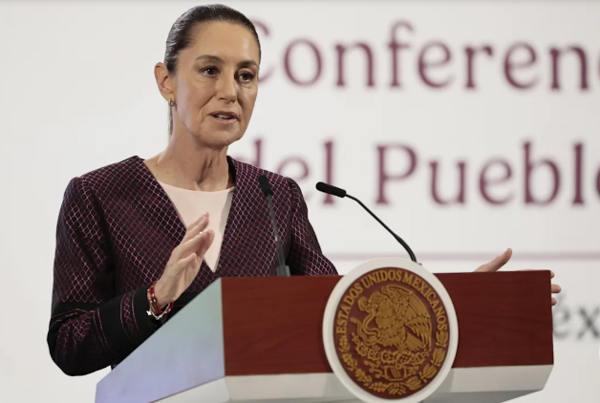
With just three months until the ball rolls, the security of the 2026 World Cup has gone from being a guarantee to an international question. This is not a minor issue: the regulations empower the international federation to remove host cities if the integrity of attendees is in danger. Before the World Cup, Mexico faces a major test on March 26 and 31. Mexico's president says security is in place and the World Cup will go on. February 24, 2026: U.S. seizes third tanker in the Indian Ocean for violating oil blockade. February 24, 2026: Trump warns Mexico must intensify its efforts against cartels. Heads up: In Mexico, a reform to reduce the workweek from 48 to 40 hours is advancing. February 24, 2026: Controversy: Gustavo Petro denounces alleged fraud in upcoming elections. If the March playoffs see the slightest incident, Mexico's World Cup dream in 2026 could face drastic last-minute changes. It has shifted from a 'security declaration' to a 'risk warning'. Priority was given to FIFA pressure and European media over the official statement from the president. The severity of the situation in Guadalajara was emphasized to contrast with the 'normality' narrative. The Akron (Guadalajara) and BBVA (Monterrey) stadiums will host the international playoffs with teams from four continents. Guadalajara, the epicenter of recent unrest, will host New Caledonia, Jamaica, and the DR Congo. European federations have already begun direct dialogues with the Mexican government out of fear that the security crisis could escalate. While Sheinbaum assures that the situation 'is normalizing', the crossfire in areas like Zacatecas — where artists Christian Nodal and Ángela Aguilar were recently caught in the middle — reinforces the narrative of insecurity that now dominates the foreign press. You might be interested: Leather! Sources close to football's governing body confirm that FIFA has already requested detailed reports on the viability of the matches. Despite President Claudia Sheinbaum stating on Tuesday that the country has 'all guarantees,' the reality on the streets of key host cities like Guadalajara tells a different story that has already reached FIFA's ears. The death of cartel leader Nemesio Oseguera Cervantes 'El Mencho' unleashed a wave of violence in Jalisco that has not gone unnoticed.