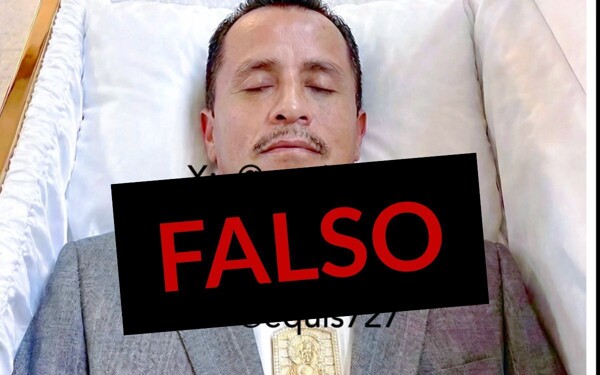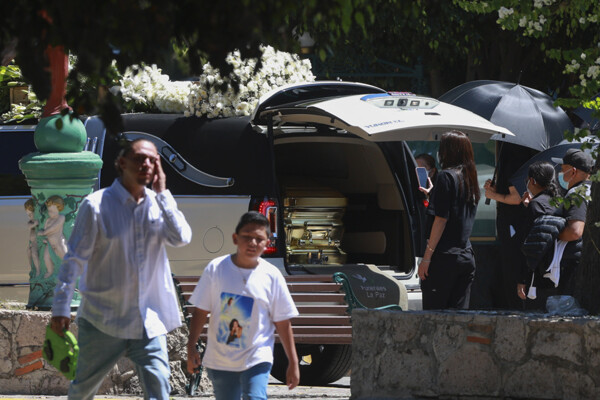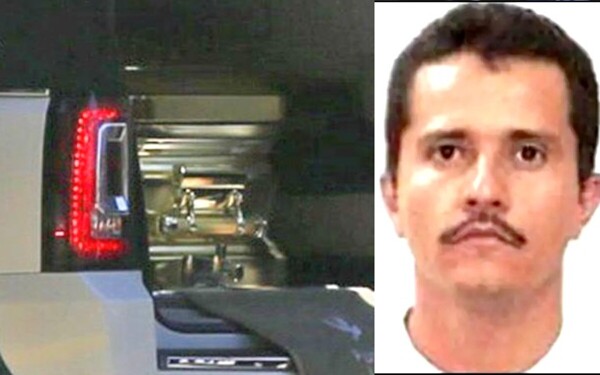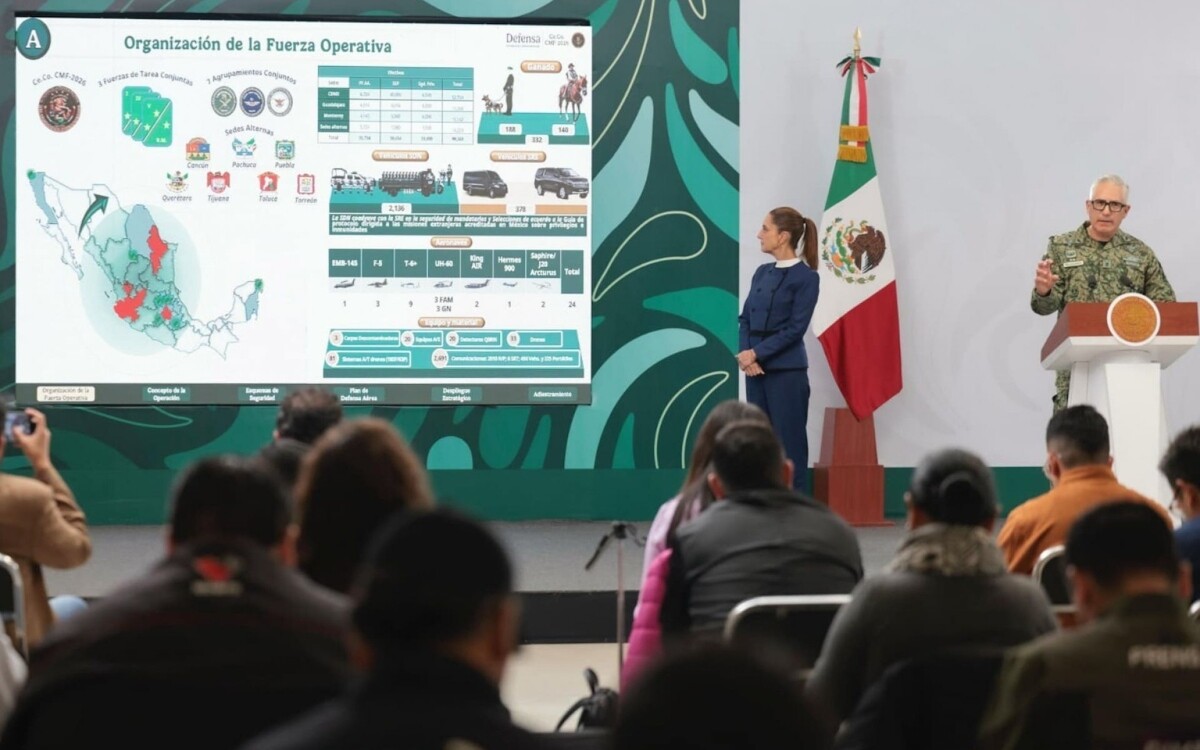
Mexican President Claudia Sheinbaum expressed confidence that bilateral cooperation with the United States will continue after the departure of Kristi Noem from the Department of Homeland Security, amidst the complex relationship the two countries maintain on migration and security issues. The head of state emphasized that there is a stable working relationship between the authorities of both countries and assured that institutional dialogue will continue with the new leadership of the U.S. Department of Homeland Security (DHS)."We will continue to work as we have done so far, and there is good coordination, both on migration issues between the U.S. agency and the Mexican government, particularly with migration, and at the same time with all security issues and our permanent insistence on protection," she stated. The Mexican leader highlighted that bilateral relations in these areas have been characterized by permanent communication between Mexican and U.S. authorities, especially regarding the management of migratory flows and security strategies on the common border. Sheinbaum also reiterated that the Mexican government will maintain its stance of prioritizing the protection of the rights of migrants, while continuing coordination with U.S. agencies responsible for migration policy and border security. The outgoing U.S. Security Secretary visited Mexico in March 2025 to meet with Sheinbaum, where they agreed to strengthen bilateral coordination on security. On Thursday, U.S. President Donald Trump replaced Noem, who will leave her post effective March 31, and will be succeeded by Oklahoma Senator Markwayne Mullin. Noem was heavily criticized for her handling of the migrant raid crisis in the state of Minnesota (northern U.S.), where two U.S. citizens, whom she herself had accused of 'national terrorism' without any evidence, were killed by federal agents' gunfire. Furthermore, this same week she testified at the Capitol in a controversial intervention where she refused to retract her comments, blamed protesters for the chaos, and defended Trump's mass deportation policy. Mullin still needs to be confirmed by his colleagues in the Republican-controlled Senate before formally taking office in a simple majority process that is expected to be favorable to the businessman. The Mexican government announced this Friday, from Jalisco, the 'Kukulkan Plan,' a security strategy to safeguard the FIFA 2026 World Cup. Secretary of Security Omar García Harfuch stated that with this plan, Mexico seeks to 'guarantee protection conditions' for the population attending the World Cup. In President Claudia Sheinbaum's morning conference, this time held in Jalisco, García Harfuch highlighted that the Kukulkan Plan includes 'mechanisms for international cooperation with the United States, Canada, and FIFA to strengthen information exchange, operational planning, and timely risk response.' Meanwhile, head of the World Cup Coordination Center, Román Villalvazo, detailed the operation that will be implemented during the World Cup. Hosting an event of this magnitude represents two challenges for Mexico, acknowledged Román Villalvazo: 'The first is to show a reliable, safe, organized Mexico to the international community; and the second is for the Mexican state to have the capacity to face the antagonisms that threaten national security.' He noted that this strategy will involve over 99,000 personnel from various security areas, such as the Army, National Guard, federal and state Secretariats of Security, as well as private companies. According to his explanation, there will be three joint task forces, one for each host city (Mexico City, Guadalajara, and Monterrey), which will be made up of 20,000 members of the Armed Forces, mainly the National Guard; and 55,000 agents from the Secretariat of Public Security (SSPC), as well as private security personnel, raising the total deployed personnel to nearly 100,000. Regarding equipment, 2,100 military vehicles, 378 civilian vehicles to form the security details for heads of state and foreign football delegations, and 24 aircraft for aerial surveillance will be mobilized. Furthermore, General Villalvazo highlighted, they will also have 33 surveillance and monitoring drones or decontamination tents. During the World Cup months (June and July), the military will coordinate flights so that 'no-fly zones' can be available to prevent 'unwanted incursions.' 'We will have anti-drone systems to mitigate any flying device not on our whitelist (...) That is why we ask fans who have their drones to refrain from flying them if they are not registered on the whitelist,' added the general. Points of special interest such as airports, hotels, training grounds, and stadiums will have a particular security device 'immediate, medium, and long-term.' The deployment will also include 88 specialized dogs for explosive detection. The debate over the World Cup's security intensified following the wave of violence that several regions of the country suffered after the death of the leader of the Jalisco New Generation Cartel (CJNG), Nemesio Oseguera Cervantes, alias 'El Mencho,' in a federal operation. President Claudia Sheinbaum affirmed this Friday that her government is working in coordination with state authorities to guarantee security and peace, 12 days after the death of 'El Mencho,' which triggered a wave of violence in much of the country. During her visit to the city of Guadalajara, Sheinbaum highlighted the coordination with the state government and assured that the presence of federal authorities aims to send a message of support to the population. This city, the third largest in Mexico and considered the cradle of the CJNG cartel, will host four World Cup football matches in June, which has raised concerns about security guarantees in the region. 'We are here not only as we have visited different states of the Republic, but to tell all the people of Jalisco, all Jaliscans, that we are together, that we are working for peace, for security, and for the well-being of the inhabitants of this beautiful state,' she expressed. The Mexican leader explained that during the day she would hold meetings with the state security cabinet and local businessmen, as well as participate in activities related to educational and transportation projects. 'Today we are here, after the conference we will have a meeting with Jalisco businessmen with the security cabinet and then we will go to the inauguration of the Technological Agropecuary High School Center number 331 in El Salto and we will go for a ride on the light rail that was recently inaugurated,' she noted. The president also thanked the coordination with the state's governor, Pablo Lemus, and assured that in recent weeks joint work between authorities has been strengthened. 'I thank the governor a lot for all the coordination we have had since the beginning of the government and particularly in recent weeks there has been extraordinary coordination,' she said. The visit comes nearly two weeks after the capture of Oseguera Cervantes in a federal operation carried out in the municipality of Tapalpa, considered one of the most significant blows against organized crime in the country in recent years, and which triggered a violent response from cartel members in much of the country. Meanwhile, Secretary of Security and Citizen Protection, Omar García Harfuch, reported that as part of operations against criminal groups, between October 2024 and February 2026, 890 people have been arrested for high-impact crimes in Jalisco, in addition to seizing 626 firearms and more than 10 tons of drugs. Sheinbaum is confident in maintaining cooperation with the U.S.