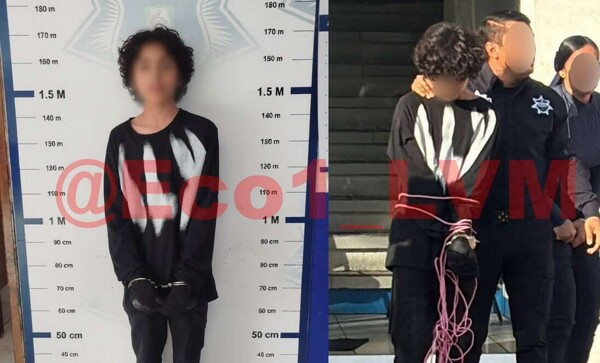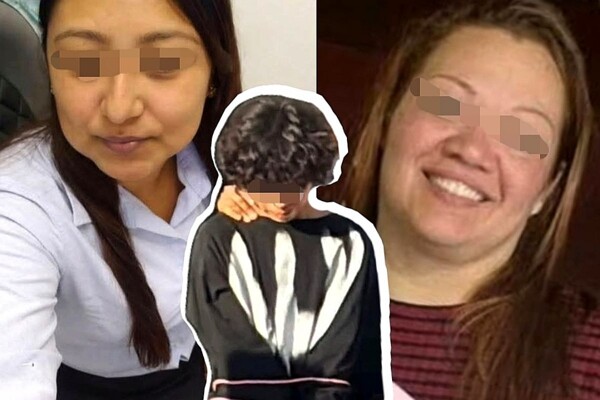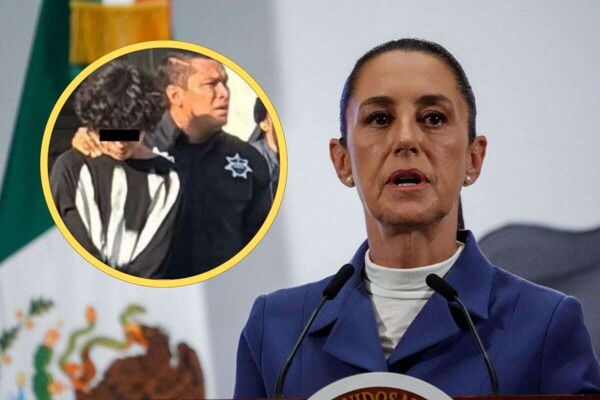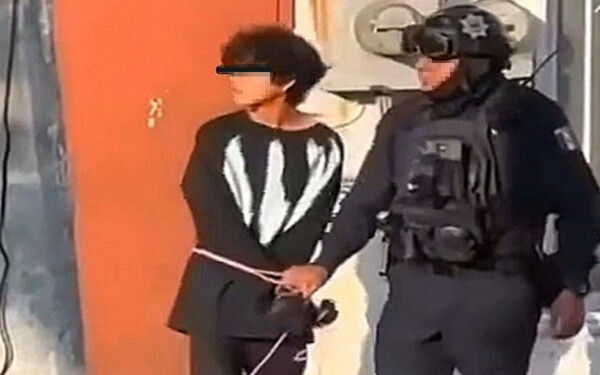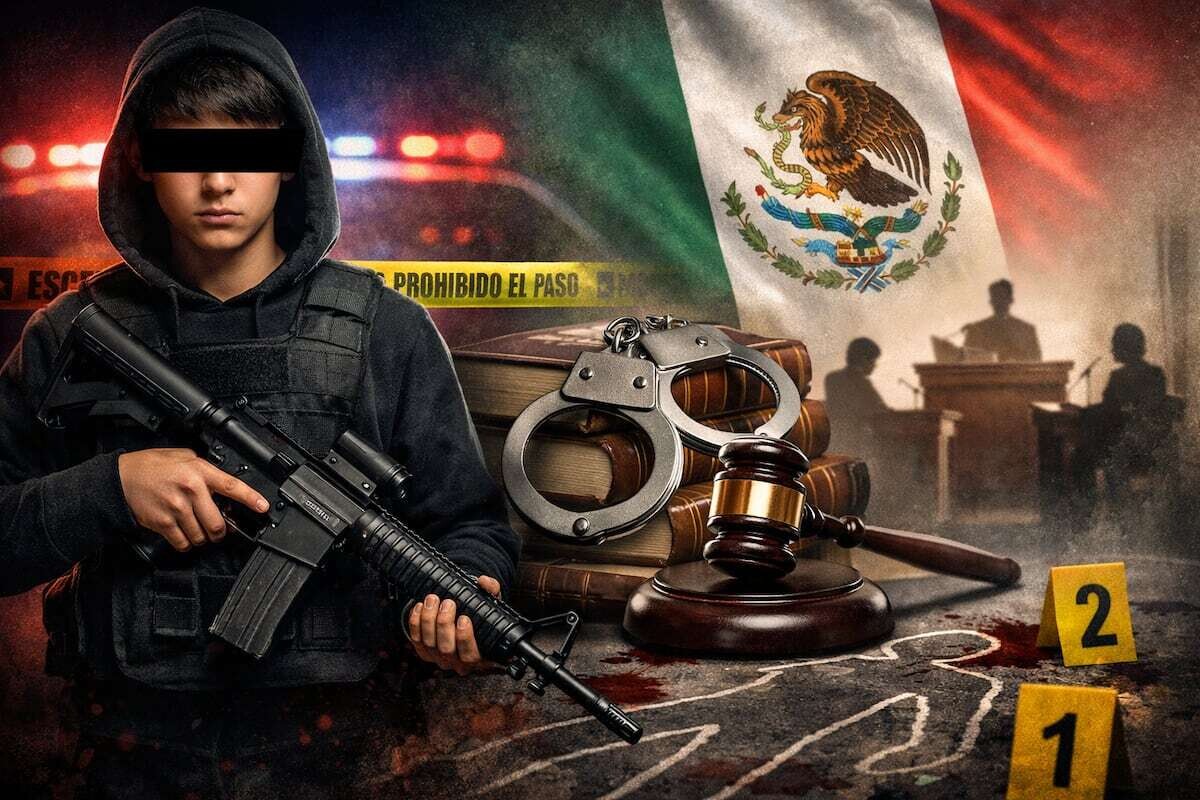
Cases of extreme violence committed by adolescents in Mexico, such as the one perpetrated by Omar "N" in Michoacán, are pushing public opinion to reopen a controversial debate: should a minor who commits a brutal crime receive the same punishment as an adult. This debate is not new; however, each high-impact media episode places it back at the center of the public conversation, thus reviving a key question: how viable would it be for Mexico to modify its legal framework in this matter? In an interview with Publimetro, Rodrigo Guerra Wong of GW & Asociados spoke about the implications and challenges that this change would bring for the country, stating that it would not be enough to just modify the Penal Code, but to reform the Political Constitution of the United Mexican States. "It's not just about analyzing the debate of whether or not to judge a minor as an adult for heinous crimes. It's about training teachers, hiring specialized staff, and creating guides for parents," he concluded. Mexico's President, Claudia Sheinbaum Pardo, also commented on the crime that occurred at the Antón Makárenko preparatory school in Michoacán, which she described as very painful due to the manner in which two teachers were murdered. "Yesterday's case is very painful in many ways, one being the death of the teachers at the hands of this young man with a long-barreled weapon," she said. Sheinbaum Pardo also recalled that in September 2025, Lex Ashton, a young student from CCH Sur, carried out an attack on other students, and therefore she pointed out that both cases could have similarities. "We have a mental health program that we are already working on in secondary and higher education. Therefore, what needs to be sought is a legal procedural mechanism that limits the use of minors to commit crimes," she explained. In turn, the litigator noted that currently, Article 18 of the Constitution of the United Mexican States establishes that a minor will be subject to preventive imprisonment for committing a serious crime, so Omar "N" could face 3 to 5 years in confinement. "Exceptional cases for the loss of rights cannot reach minors or adolescents; perhaps a way could be sought at a constitutional level to state that in extreme or urgent cases, a minor can be judged as an adult," he added. "Rather than thinking if that is going to help reduce the violence or the outrage that exists at times like this," commented Guerra Wong. Why can't minors be tried as adults in Mexico? In our country, unlike the United States, when a minor commits a crime of great magnitude, they cannot be tried as an adult, since our country has a Comprehensive System for Adolescent Criminal Justice. At the same time, Mexico is part of the Committee on the Rights of the Child —dictated by the UN—, as well as the Beijing Rules, Guerra Wong pointed out. "To try a minor or adolescent as an adult, the Constitution would have to be reformed, but even if it is reformed, Mexico is part of international treaties that are not going to be modified. Everything seems to indicate that he had already planned (the attack) and that they were the people he was looking for," he mentioned. Likewise, the head of state was questioned by the press if she would be proposing to modify Mexican laws, this to make a minor or adolescent be tried as an adult when they commit a crime of great magnitude. "I did not propose it, I said that it is something that has to be discussed in our country, that it is something we need to talk about and open it up for debate," Sheinbaum responded from the National Palace. On the other hand, Sheinbaum Pardo recalled that in September 2025, Lex Ashton—a young student from CCH Sur— carried out an attack on other students; from there she pointed out that both cases could have similarities. "We have a mental health program that we are already working on in secondary and higher education. So, what would have to be sought is a legal procedural mechanism that limits the use of minors for the commission of crimes," she explained. Likewise, the litigator pointed out that currently, article 18 of the Constitution of the United Mexican States establishes that a minor will receive preventive prison in case of committing a serious crime, so Omar "N" could pass between 3 to 5 years of confinement. "The exceptional cases for the loss of rights cannot reach minors or adolescents; perhaps a way could be sought to constitutionally state that in extreme or urgent cases a minor can be judged as an adult," he added. Is Mexico preparing a new law to punish minors? For her part, President Claudia Sheinbaum Pardo spoke about the crime that occurred at the Antón Makárenko preparatory school in Michoacán, an event that she described as painful due to the way in which two teachers were murdered. "The case of yesterday is very painful in many ways, one of the death of the teachers at the hands of this young boy with a long weapon. Cases of extreme violence committed by adolescents in Mexico, such as the one perpetrated by Omar "N" in Michoacán, are pushing public opinion to reopen a controversial debate: should a minor who commits a brutal crime receive the punishment of an adult. This discussion is not new; however, each high-impact media episode places it back at the center of the public conversation, thus reviving a key question: how viable would it be for Mexico to modify its legal framework in this matter? In an interview with Publimetro, Rodrigo Guerra Wong of GW & Asociados spoke about the implications and challenges that this change would bring for the country, stating that it would not be enough to just modify the Penal Code, but to reform the Political Constitution of the United Mexican States. "It's not just about analyzing the debate of whether or not to judge a minor as an adult for heinous crimes. It's about training teachers, hiring specialized staff, and creating guides for parents," he concluded. How was Omar "N"'s attack on his teachers? In the municipality of Lázaro Cárdenas, in Michoacán, Omar "N", 15 years old, brutally gunned down María del Rosario Sagreo and Tatiana Madrigal Bedolla—who were teachers at the preparatory school— supposedly for having denied him entry to the campus for arriving late. According to the first reports, the minor would have arrived at the Antón Makárenko school at 8:00 a.m., and in his hand he would be carrying a guitar case, where he would hide an AR-15 rifle—a weapon used by criminal groups and armies—and walked a few meters until he found the two teachers and opened fire. After the attack, Omar "N" was arrested by elements of the municipal police—thanks to complaints from his classmates—; therefore, authorities reported that a long weapon of caliber 5.56 with a magazine and more than 40 live cartridges was confiscated from the young man. Data: Omar "N" would have taken the weapon from his home, since his stepfather would supposedly be a federal agent. The school's cameras recorded the scene, and show a cold and direct attack against two women. In a guitar case, he was carrying an AR-15 rifle. Phrase: "I did not propose it, I said that it is something that has to be discussed in our country, that it is something we need to talk about and open it up for debate". Claudia Sheinbaum Pardo, president of Mexico.