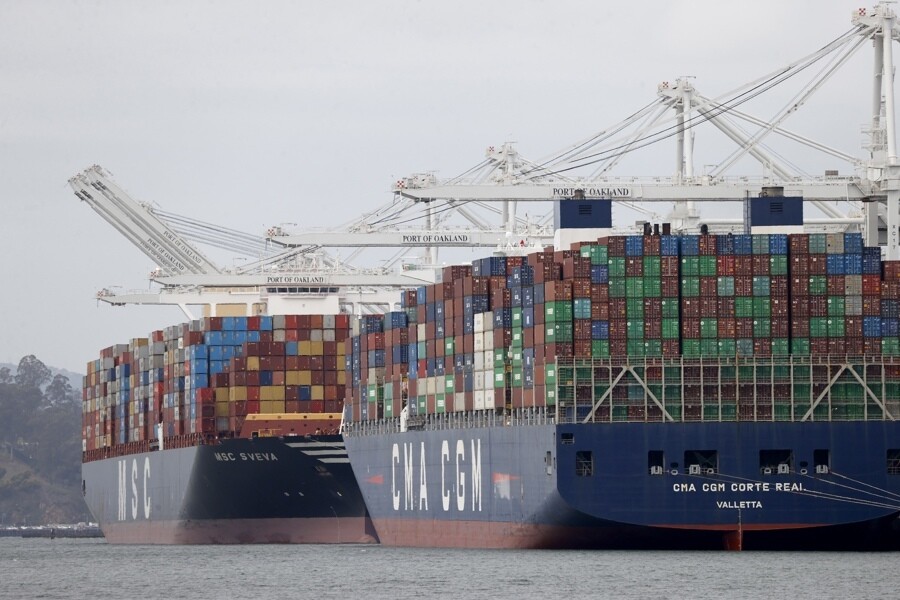
Latin America is "less exposed" to tariffs, which has "amortized trade tensions" between countries, which are expected to see a "modest growth" of 2.3% on average in 2025, experts from the Organization for Economic Co-operation and Development (OECD) said.
According to OECD experts, "the region is less exposed to the rise in tariffs." This has cushioned some of the impact of trade tensions for several countries, but the position is very uneven, highlighted the head of the OECD Economics Directorate, Aida Caldera Sánchez.
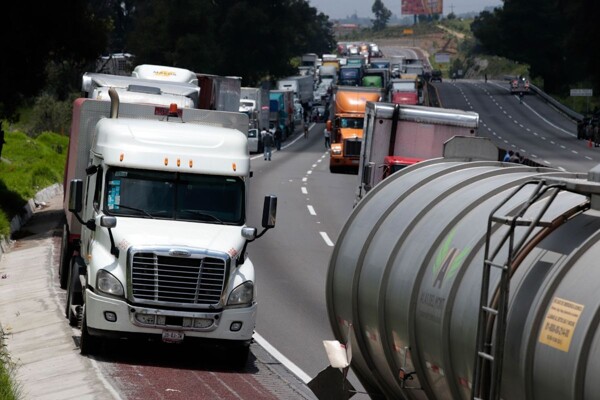
Regarding Mexico, OECD experts noted that "the export engine is sustaining economic activity," and "non-auto exports are maintaining solid growth" due to better use of the Mexico, US, and Canada Agreement (USMCA). They also highlighted the "strong demand" in the US for products related to information technology (IT) and the "dynamism of the artificial intelligence sector".
On the less favorable side, they mentioned that there is a "high level of uncertainty" that is hampering investment, which comes from global factors such as "tariffs and geopolitical tensions," but also from domestic elements like the "judicial reform" and "recent changes to independent regulators."
The OECD forecasts a "modest growth" in Latin America amid global uncertainty. While the region's largest economies are expected to see "modest growth" of 2.3% in 2025, which is above the average for OECD countries (1.7%), the global outlook is 3.2%, slowing to 2.9% in 2026 and recovering to 3.1% in 2027.
Director of the OECD Country Studies Division, Luiz de Mello, noted that "the global economy has shown resilience in recent months with growth of 3.2% in the first half of this year, supported by favorable macroeconomic policies and financial conditions, as well as production and trade in anticipation of higher tariffs."
However, he warned that this "resilience is fragile," so a "moderation of growth" is expected, especially when "higher tariffs" come into force in the US and China. De Mello explained that the tariff impact has not been "so immediate" on economies because some companies have absorbed it into their margins, and others had "stocks of imported goods" that allowed them to "keep those goods in domestic markets without having to raise prices."
"We are sure that in the coming months, as margins run out and the economy has no way of continuing to trade imported goods, the impacts will be felt," he said after commenting on the situation in the US...
"The export engine is sustaining economic activity," and "non-auto exports are maintaining solid growth."
"There is a high level of uncertainty in the region that is hampering investment."