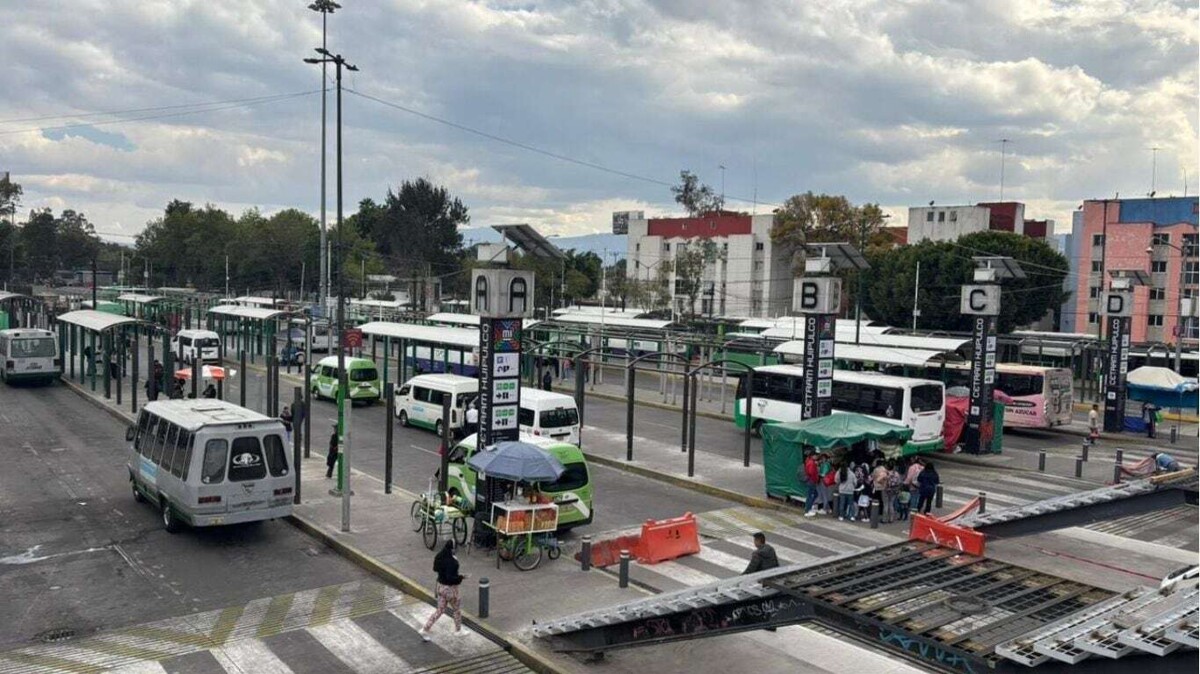
Experts and operators agree that it will be necessary to analyze alternatives such as the establishment of technical tariffs or subsidy schemes that allow maintaining affordable prices for users without compromising the operation and modernization of the service. According to transport operators consulted by AMTM, the recent 1.50 peso increase applied to public transport in Mexico City is merely 'a breather' in the face of the rising cost of inputs, whose prices have increased by up to 300% in recent years. In Guadalajara, Jalisco, Governor Pablo Lemus announced that the public transport increase will be set at 11 pesos for any user and 5 pesos for students, after weeks of social protests against a larger increase. Meanwhile, in Monterrey, Nuevo León, authorities will apply a monthly sliding scheme published in the Official State Gazette, which provides for gradual increases of 10 cents. Amid the debate generated by the recent adjustment to the public transport tariff in the country's capital, the 17th International Transport Congress (17 CIT) will address one of the most sensitive issues for urban mobility: how to guarantee the economic sustainability of the service without affecting user access. Organized by the Mexican Association of Transport and Mobility (AMTM), the international meeting will bring together specialists, authorities, business leaders, and academics from the sector from May 7 to 9 at the Jaime Torres Bodet Cultural Center of the National Polytechnic Institute, where one of the main tariff dilemmas will be discussed: how to maintain the sustainability of transport without the user paying a high price for a poor service that is also not accessible to all. Among the central topics is the need to open a broad dialogue on the public transport tariff model. Currently, a concessioned transport unit carries an average of 250 to 300 passengers daily, a figure that, according to operators, is below the level needed to reach the break-even point. The tariff debate is also playing out in other cities in the country. Under this program, the Monterrey Metro fare will increase from 9.90 to 10.00 pesos and will continue to rise for 65 months until it reaches 17 pesos in May 2030. Faced with this scenario, AMTM emphasized that 17 CIT—whose access is free, prior registration at citamtm.org—will be a key space to discuss long-term solutions that allow balancing affordable tariffs with system sustainability, especially at a time when cities are seeking to modernize their public transport and move towards cleaner energy models. This concept involves accounting for all costs involved in providing the service—from daily operation and maintenance to credit payments for vehicle acquisition—as well as the profit necessary for business sustainability, and dividing these costs by variables such as kilometers traveled or the number of passengers transported. To this scenario is added a sustained drop in demand. Parts, tires, and new mechanical components have become increasingly expensive, which in many cases forces the use of second-hand parts. Operators point out that the tariff policy applied for decades—based on social increases of about one peso every three or four years—has hindered progress towards sector professionalization and fleet modernization, just at a time when public transport faces the challenge of transitioning to electromobility schemes. One of the most relevant angles to be analyzed during 17 CIT will be the way in which the so-called technical tariff is calculated.