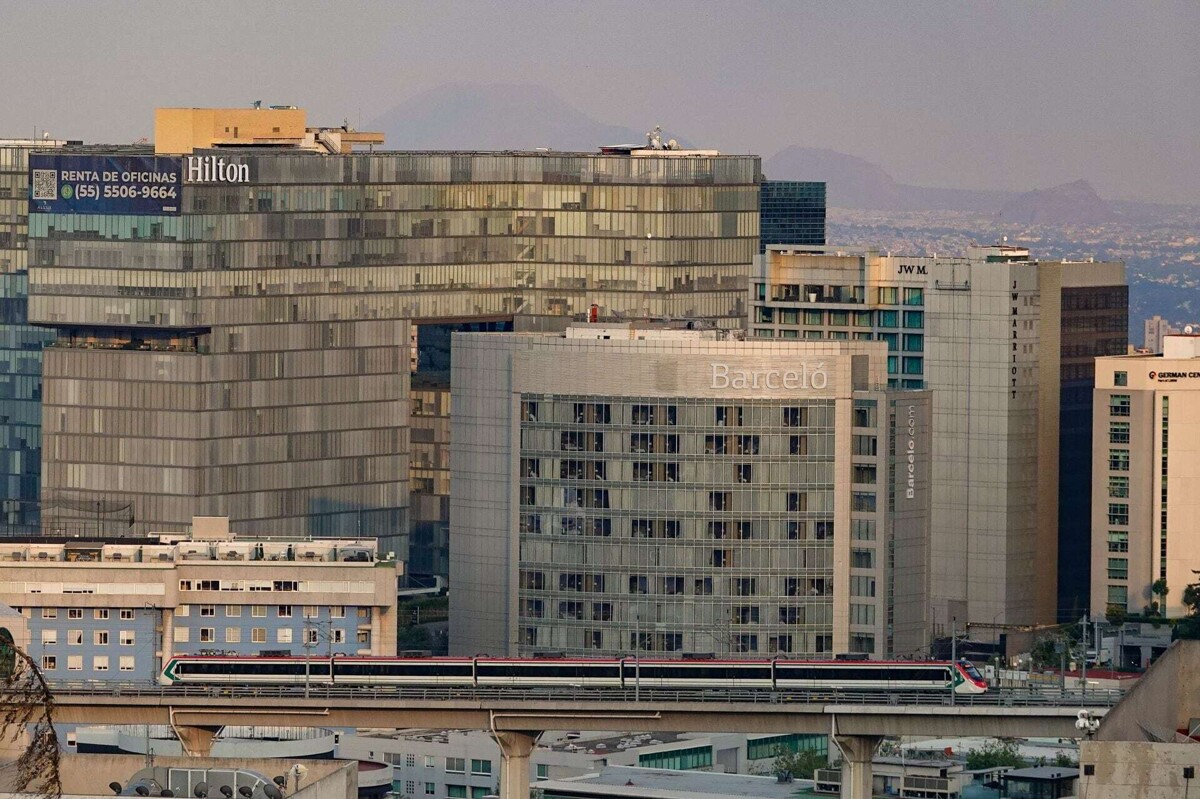
54% of all closed transactions took place in the submarkets of the city's central area. Therefore, shifting focus to the market with the most dynamic absorption and costs is the indicator that sets the starting point for major players. This also explains why office use is stabilizing in the face of new organizational schemes and different usage intensities. Consequently, today's offer presents the best office buildings that have ever existed in the city's history, but the inventory under development is shrinking. Additionally, for companies, the increase in cadastral values and property tax in the country's main cities, which directly impacted OpEx (operational expenses), is causing the 'fly to quality' movement to become a reality. We refer to the process of searching for properties with better technological elements, quality spaces with sustainability certifications, and spaces that promote employee well-being, as this is a factor for talent retention and attraction. These trends motivated the closure of major leasing operations at the beginning of the year, such as the 5,600 m² that Mastercard took in Reforma, the operations of Lockton, or the deals for over 2,000 m² that Dholer and One closed in the Insurgentes corridor. The demand for larger surfaces is a reality that the best-located corridors in the city are facing. Consequently, it is foreseeable that the low levels of new construction, which currently reach 382,000 m² under construction, more than half of which is in central corridors, will be the prelude to a new market cycle. Once this happens, the great challenge will be for authorities to speed up the management processes that any real estate investment requires to respond in a timely manner to market demand. Contrary to perceptions focused on the challenges they face, offices in Mexico City (CDMX) recovered absorption and rental rates at the beginning of the year, from which a cost increase is expected. But the story of the current moment of the cycle has much more depth. To draw the scenario of eventual expansion, one must observe what happened in this period in the numbers of the Class A market in the city's central corridors, as well as the demand for large surfaces. Cushman & Wakefield summarizes it in a 1Q where the best-rated buildings placed 22,000 m², which, although 30% lower than a decade ago, is beginning to generate a reduction in inventory in central corridors. The results of this niche, which generates 4.3 million m² of the 10.7 million m² of all types of spaces, are evident. While the general availability rate is 17.1%, in the 3 central area corridors of Polanco, Lomas, and Reforma it is only 12.8%. In terms of values, rents in the general average are $22.38 per m², while in the central area they reach up to $28.13. This scope has allowed analysts to forecast a general increase of 8.3%. No less important is the representativeness that the area had in the area placed: 22,000 m² of the 31,000 of total accumulated absorption.