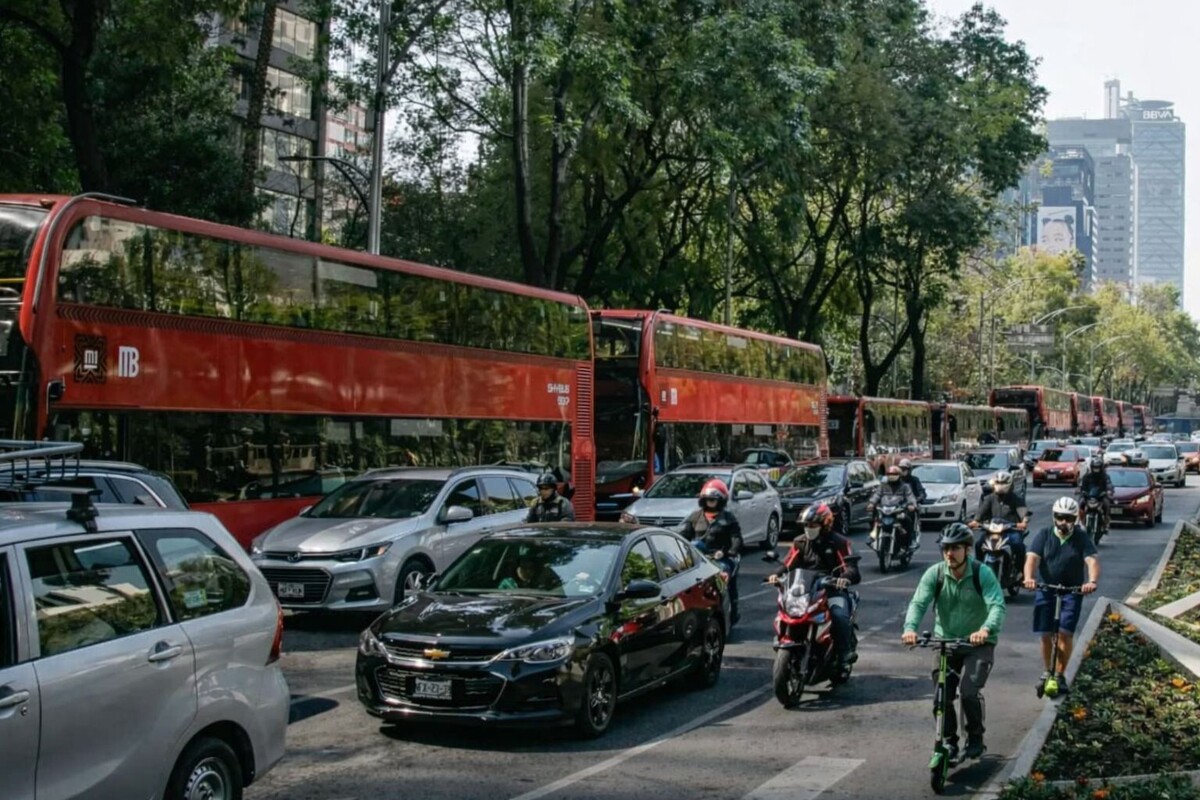
Academic studies conducted in Mexico, such as a UNAM study applied to 300 street vendors, have found that a majority of people exposed daily to pollution show some kind of impairment in their lung function. This context reinforces the need to address mobility not only as a logistical challenge but also as a key component of public health. In economic terms, vehicular congestion in the country's capital generates losses exceeding 100 billion pesos annually, reflecting a problem that transcends finance and settles in the realm of public health and urban sustainability. Faced with this scenario, the 17th International Transport Congress (17CIT) will address solutions from an integral perspective. The 'Rumbo a Cero Emisiones: the energy transition of urban transport' roundtable stands out, where specialists will analyze how the shift to clean technologies can not only help reduce pollutants but also directly improve the population's health. This roundtable will feature Roberto Rocha, CEO of Vemo; Rodolfo Osorio, head of Electromobility at the Ministry of Economy; Gabriela de la Torre Ríos, Head of Zero Emission Vehicles in LATAM for C40 Cities; and Gustavo Jiménez, CEO of E-mobilitas, with moderation by Francisco Cabeza Santillana, CEO of Head DC. The dialogue will connect the energy component of transport with its health effects, highlighting that reducing emissions is not just an environmental goal, but a condition to ensure more livable cities and healthier people. Meanwhile, Nicolás Rosales Pallares, president of the AMTM, stressed that the Congress is designed as a space where different visions converge to address complex problems from a cross-cutting approach. The 17th International Transport Congress will take place from May 7 to 9 and will feature roundtables such as 'Strategies to reduce traffic accidents and increase road safety' and 'Decongesting cities with artificial intelligence: the power of data to optimize traffic', in addition to sessions on electric mobility and inclusion. On World Health Day, celebrated on April 7, the relationship between mobility, air quality, and urban well-being takes on special relevance, particularly in cities like Mexico City, where travel times and traffic congestion directly impact the physical and emotional health of millions of people. This approach will be a central part of the 17th International Transport Congress (17CIT), whose thematic axis 'People, Energy, and Sustainability' places users at the center, but also the environmental and operational conditions that determine their quality of life. In this context, Jesús Padilla Zenteno, founder of the Mexican Association of Transport and Mobility (AMTM), warned that congestion is not just a mobility problem, but a factor that directly affects the daily health of the population. 'Congestion has become the cholesterol of cities; it slowly suffocates streets and avenues. To this is added the impact of pollution derived from traffic, which worsens respiratory problems and deteriorates the quality of life. Various recent studies have documented that constant exposure to pollutants in urban environments can trigger or aggravate respiratory ailments, reduce lung capacity, and cause recurring health problems in the population, especially in those who spend more time in public spaces. There is no one who does not complain about traffic or who does not suffer the stress it involves,' he stated. According to Padilla Zenteno, a person can spend between three and four years of their life in transport, which translates into less time for rest, family, and other essential activities for well-being. The event is free to attend with prior registration at www.citamtm.org.