Washington / Mexico City, December 9, 2025 – Total News Agency (TNA)
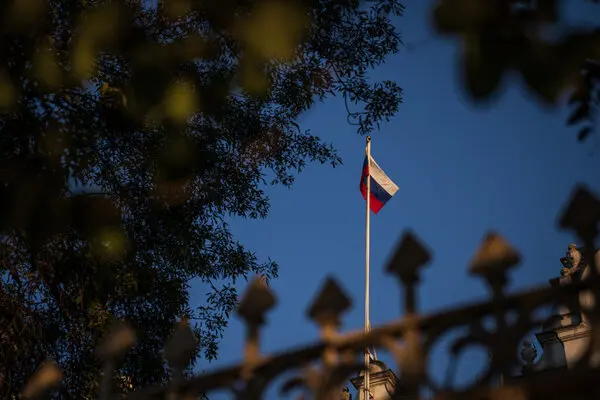
A confidential document prepared by the CIA and delivered this week to Mexican authorities has uncovered what the United States describes as a Russian espionage network operating on Mexican soil under diplomatic cover.
According to former U.S. officials cited by The New York Times, agents of the network were presented as diplomats at the Russian embassy, taking advantage of gaps in the country's immigration and diplomatic controls. The report identifies dozens of agents from Russian military intelligence, some with a history of sophisticated operations in Europe, who were relocated there after the mass expulsions of 2022.
Despite the formal warning, the Mexican government decided not to expel them. Some even mixed with tourists and travelers, using vacation paradises as operational bases, which allowed them to monitor movements toward the United States and gather critical intelligence.
For Washington, this decision represents a risky bet by Mexico—a bet with significant geopolitical weight. What's more: although starting in 2023, new accreditation requests for Russian citizens were accepted, those who already held credentials remained in their positions without restriction.
Sources cited by the CIA and U.S. diplomats maintain that the agents detected in Mexico are not novices: they have a background in clandestine work in Europe, manage intelligence networks, disinformation, and possible infiltration operations, which elevates concerns about their real objectives: espionage, informational sabotage, or infiltration into key continental institutions.
Some analysts also warn that the lack of expulsions could send a signal to the Kremlin: Mexico could become a neutral or permissive territory, ideal for deploying agents without the rigorous control that exists in the United States or Europe.
This refusal to act coincides with reports that, following the start of the Russian invasion of Ukraine in 2022, Moscow doubled its espionage efforts in Latin America, making Mexico its preferred operational base due to its proximity to the United States and less government control.
The data is explosive in its magnitude: more than twenty people appear on the list, several of whom have been accredited for years. Meanwhile, the Mexican government has not made a formal public statement about the list, and in some cases denied having officially received it, calling the matter "exaggerated" or "part of geopolitical pressure."
The scandal, though still unfolding, marks a before and after in intelligence relations in the region: the information leaked by the CIA exposes a hidden network of Russian influence in Latin America; and the response of the Mexican state—or its absence—reveals the risks involved in accepting diplomacy when it is actually active espionage.
Mexico bet on discretion, but the card was laid on the table. That, combined with the flow of tourists and migrants, further complicates the traceability of intelligence operations.
In response, the Russian embassy in Mexico called the accusations "unfounded" and assured that its diplomatic missions are the subject of repeated accusations without proof.
The "tax" that must now be paid could be very high: erosion of international trust, possible erosion of intelligence cooperation agreements, and renewed scrutiny of its diplomatic institutions.
It allowed a group with proven espionage capabilities to establish itself in a territory considered vulnerable, with direct risks to the security of the United States, Mexico, and its allies.
It is the "gambler's luck": Mexico, by tolerating the spy presence, gambled that nothing serious would happen. The "prize" was diplomatic tolerance and political stability; the "tax" could be the loss of international trust, an increase in foreign surveillance over its territory, and the erosion of its de facto sovereignty.