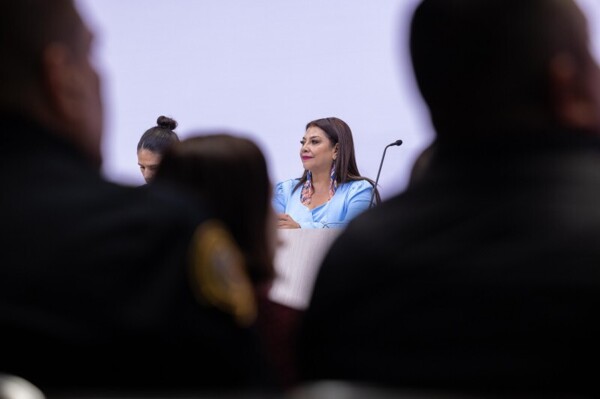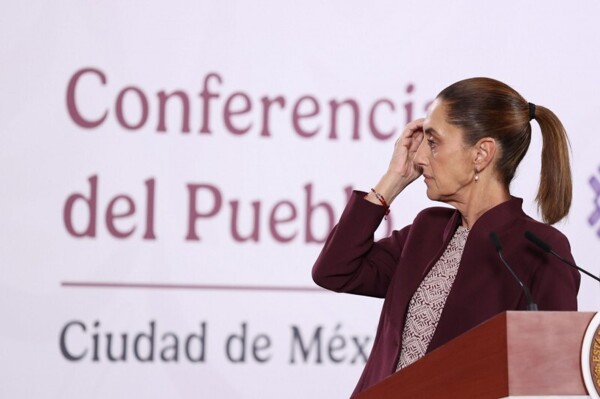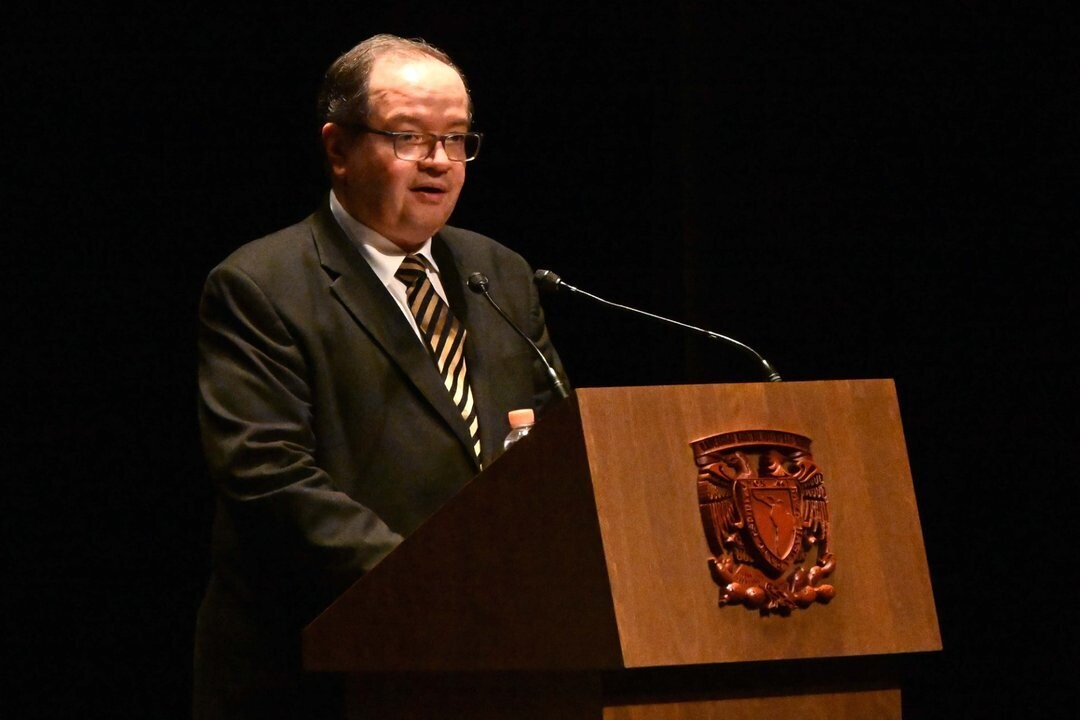
The National Autonomous University of Mexico (UNAM) and the Cervantes Institute presented this Monday the Observatory of the Spanish Language for Latin America and the Caribbean (Oealc), a platform aimed at reducing regional inequalities in the study and treatment of the language, as well as at strengthening the Latin American voice in the analysis of Spanish. During the presentation in the Mexican capital, the rector of UNAM, Leonardo Lomelí Vanegas, explained that the Observatory will analyze the changes that Spanish undergoes in a region that concentrates more than 90% of the world's over 500 million native speakers. «Its purpose is to analyze, document, and interpret the forms of teaching and learning, its presence in the media, in scientific production, and in translation, its evolution in digital environments, and its interaction with other symbolic expressions», he detailed. Lomelí emphasized that Latin America and the Caribbean not only house a «substantial part» of Spanish speakers, but also define dynamics that directly influence the future of the language. In this sense, he stated that Spanish «does not respond to fixed schemes or immutable heritages», but transforms with human displacements and new forms of communication. In turn, the director of the Cervantes Institute, Luis García Montero, celebrated the creation of the Observatory and called to «renounce any type of» linguistic imperialism. «Spaniards are 8 or 9% of a language with more than 500 million native speakers. And therefore, any kind of centralist effort is ridiculous», he affirmed, while highlighting the collaboration with Mexico, a country that concentrates nearly 20% of the world's native Spanish speakers. García Montero also stressed the importance of strengthening cooperation between Europe and Latin America in a global context in which, he said, values such as freedom, equality, and multilateralism are weakening. Meanwhile, the academic director of the Oealc, Fernando Rodríguez Guerra, stated that Latin America constitutes «the demographic and dynamic core of Spanish» and not a «linguistic periphery». He pointed out that this magnitude implies an academic and political responsibility for knowledge in a region where production on the language has been abundant but dispersed. In a first stage, the Observatory will prioritize the teaching of Spanish to foreigners and indigenous communities. Finally, the director of the Center for Foreign Language Teaching (CEPE), Anel Pérez Martínez, stated that Spanish «unites us, but it has also been an expression of inequality», and raised the need to analyze its use in border and diverse social contexts. The Observatory will be based at the CEPE and will be articulated with the Cervantes Institute's Global Observatory of the Spanish Language, which has collaboration networks in more than 100 cities in 50 countries.