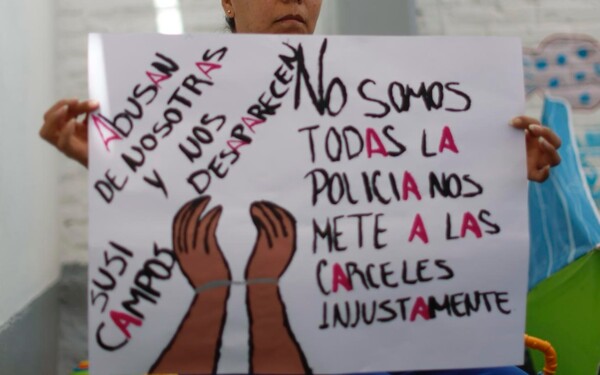
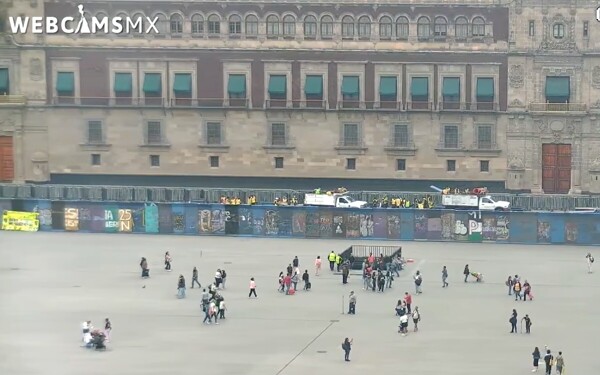
«We are the heart of those that no longer beat», reads one of the signs. In 2025 alone, 2,798 murders of women were registered, of which 725 are investigated as femicide, i.e., crimes for gender-based reasons. Civil organizations warn that many violent deaths are not investigated as femicide and alert to other forms of persistent violence, such as disappearances, in a country with more than 130,000 missing persons, a quarter of whom are women. Thousands of women took to the streets of Mexico City on International Women's Day, holding signs with slogans like “We didn't all make it” and “Not one daughter less, not one more broken mother”, to denounce sexist violence in a country where about ten women are murdered every day. Among the crowd, teenagers marching for the first time mix with women who have been participating in the 8M for years, in a mobilization that occurs for the second year with Claudia Sheinbaum as president of Mexico. “I march because no woman should have to be afraid to go out on the street, no matter the time,” Amai-rani Quetzali, 17, who is participating in the 8M march for the first time, tells EFE, and shares that she feels fear when she leaves school late. Civil organizations like Balance A.C. promoted specific blocks for adolescents and young people for this 8M, with the aim of making their demands visible within the feminist movement and promoting intergenerational spaces for participation. This block, convened from the platform Sentir Bonito MX, joined the Green Contingent for Free Abortion, one of the most visible expressions of the movement for sexual and reproductive rights in Mexico. Karina Rocha, from Balance, explains that young feminist activists seek to have their voices heard in debates about abortion, bodily autonomy, comprehensive sex education, and access to friendly health services, in a context marked by the advance of anti-rights discourse worldwide. “They are making public policy without taking us into account (...) it is a call to make visible that we exist in public spaces,” she affirms. The protest also again takes place with buildings in the Historic Center protected by metal fences, a measure applied in recent years during feminist marches with the official argument of safeguarding historic buildings. Furthermore, the march was divided into different calls from 9:00 a.m. (4:00 p.m. GMT), driven by different social and political organizations, heading to the Zócalo of Mexico City, where the mobilization will coincide with two visible elements. Along with the cordons installed in buildings such as the National Palace, seat of Sheinbaum, there will be a monumental purple lighting for 8M, promoted by the Government. One of the largest contingents departed around 12:00 p.m. (7:00 p.m. GMT) from the Roundabout of the Women Who Fight heading to the Zócalo, where it is expected that a police presence will possibly try to disperse the march or prevent its entry to the public square. Sofía Pedraza, 18, who is marching for the second time this 8M, considers that the Government “may have its reasons to protect public spaces”; however, she agrees with her friends that: “I only wish they would protect us like that”. “The blood has already been spilled in the streets for many years (...) and the monuments can always be cleaned,” she warns. To the protest joined women from diverse backgrounds, such as members of the sign language community, who warned that the violences they face are often the most invisible. “Many deaf women have been killed, kidnapped, and they also have no feasible way to communicate,” states Cecilia Bello, a deaf woman from the association Manos en Movimiento. The slogans point to a persistent reality: in Mexico, about ten women are murdered every day, a constant trend over the last decade.