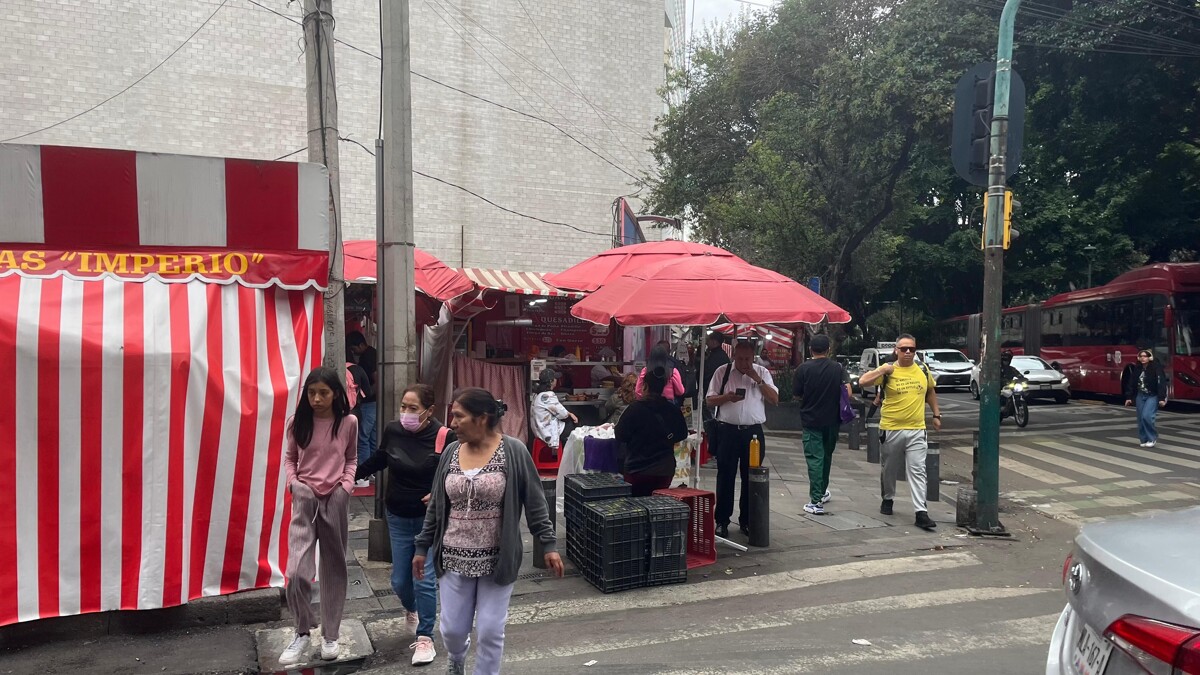
Public street vending in Mexico City could be recognized as a legitimate form of the right to work. Local deputy Diana Sánchez Barrios, an ally of Morena, presented an initiative to incorporate this activity into the city's constitution, in a context marked by the growth of informal employment and its weight in the urban economy. The proposal, called "Chambeando ando constitutional," proposes to modify various articles to grant legal recognition to popular commerce, as well as to establish labor guarantees and non-discrimination protections for those who depend on this activity.
Constitutional Recognition and Labor Rights The project contemplates reforms to articles 10, 12, and 13 of the Political Constitution of Mexico City, with the aim of establishing that street vending is part of the urban economy and contributes to community development. Among the scopes of the initiative are the recognition of fair labor conditions, legal security, and protection against discriminatory practices towards people engaged in informal commerce. In addition, it is proposed that the right to the city include the use of public space for subsistence economic activities, under criteria of equality and access.
Regulation of Public Space The legislator noted that the initiative does not seek to encourage the uncontrolled growth of informal commerce, but rather to create mechanisms for its regulation through agreements with the workers themselves. In this sense, the project incorporates a transitional article that establishes a 180-day period for the local Congress to define specific areas for commerce and popular culture, which would imply a reorganization of the use of public space in the capital.
Social Impact and Economic Dimension According to the Morena member, nearly two million people directly depend on street vending in Mexico City, which positions this sector as a relevant component within the local economic dynamic. The constitutional recognition of informal commerce could modify the relationship between authorities and sector workers, moving from schemes of tolerance or administrative regulation to a framework of explicit rights.
Reaction from Merchants and Legislative Process Following the presentation of the initiative, hundreds of merchants gathered in the vicinity of the Congress of Mexico City to express their support for the proposal. The project was referred to committees for analysis and eventual ruling, where a debate is expected on the balance between the right to work, urban planning, and the use of public space.