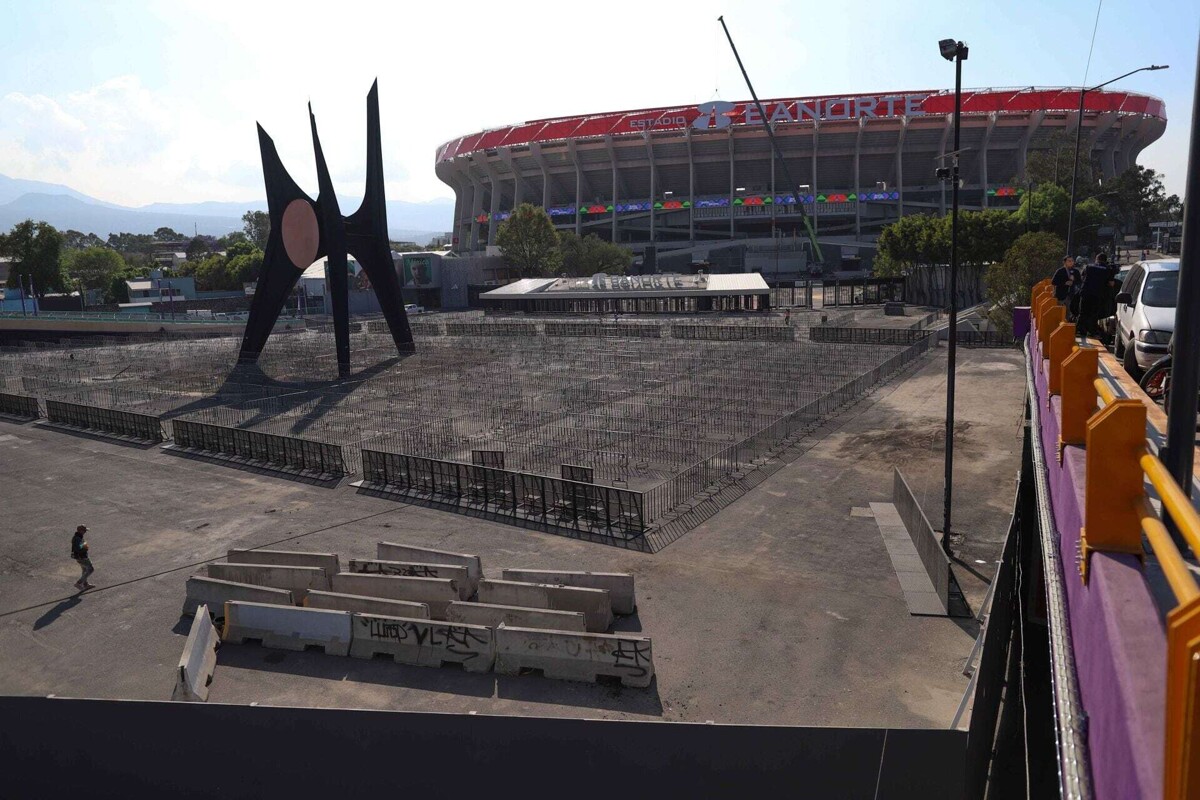
Mexico City will test its technological security muscle this weekend with the match between Mexico and Portugal, as part of a strategy that profiles the video surveillance model to be implemented during the FIFA World Cup 2026. The Command, Control, Computing, Communications, and Citizen Contact Center (C5) announced a special video surveillance operation for the reopening of the Azteca Stadium, where the match will take place. How will the operation at the Azteca Stadium work? Two mobile C2M units will be deployed at strategic points: Gate 8 (parking) and Gate 11. There will be 568 active cameras in the vicinity, representing 187 more than in 2024 (a 49% increase). Each unit is equipped with 13-meter masts and 360-degree vision, as well as monitoring centers connected to the urban network. C5 Coordinator Salvador Guerrero Chiprés highlighted that this operation marks the beginning of an enhanced security model for the 2026 World Cup. CDMX, the most surveilled city heading to the World Cup Currently, the capital has over 113,000 cameras, with a goal to exceed 119,000 before 2026, positioning it as the city with the most extensive video surveillance infrastructure among World Cup host cities. Furthermore, the connection of private cameras to the C5 system is being promoted, expanding coverage through a citizen co-responsibility model. Sedena and C5 seal alliance for World Cup 2026 security As part of the preparations for the international tournament, the Secretariat of National Defense and the C5 signed a collaboration agreement to strengthen monitoring and emergency response. The agreement includes: Joint supervision of 113,814 cameras throughout the city; Priority attention to 13,293 cameras located in key World Cup zones; Integration of military personnel into the C5 for monitoring tasks; Real-time information exchange. General Román Villalvazo Barrios, head of the World Cup 2026 Coordination Center, emphasized that the collaboration between civilian and federal forces strengthens crime prevention. Security strategy: from the match to the World Cup The actions implemented for the Mexico vs. Portugal serve as an operational trial of the scheme to be applied during the World Cup, aligned with the Kukulcán plan promoted by President Claudia Sheinbaum and the strategy of Head of Government Clara Brugada Molina. The agreement, with an initial validity of three months, seeks to consolidate: Inter-institutional coordination; Immediate response to incidents; Crime prevention at mass events. With this deployment, Mexico City not only guarantees the security of the match but also advances in building a technological and collaborative model that will be key during the 2026 World Cup.