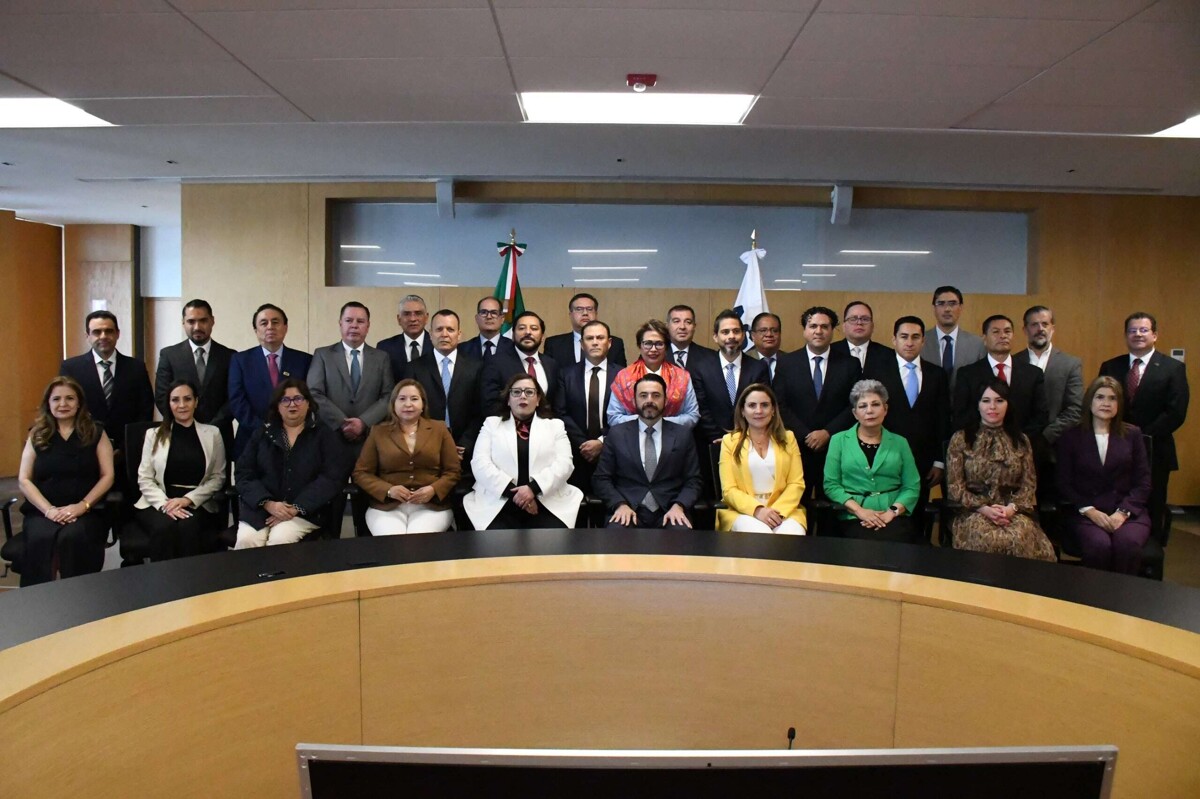
Thirdly, it is time to end impunity. In turn, the Auditor Superior of Mexico City, Edwin Meráz, highlighted that this meeting strengthens federalism in auditing and allows for progress towards more effective coordination among different levels of government, for the benefit of accountability and public trust. In his speech, José Arturo Lozano Enríquez explained that the new ASF model is based on risk-oriented auditing, traceability of public spending, and generating results with consequences, supported by information analysis that makes it possible to identify potential irregularities from early stages. During the meeting, various state auditors shared experiences and proposals, agreeing on the importance of continuous training and reaffirming their willingness to work in a coordinated manner. The head of the Federal Audit Office (ASF), Aureliano Hernández Palacios Cardel, led a meeting with auditors from the 32 federal entities, along with Edwin Meráz Ángeles, Auditor Superior of Mexico City, and José Arturo Lozano Enríquez, General Director of Audit of Federalized Spending 'A', with the purpose of presenting the institutional work plan and strengthening coordination in the auditing of public resources, in order to close gaps to corruption and improve accountability. During his speech, the Auditor Superior highlighted that the ASF's strategy is aimed at combating corruption head-on through broader, preventive, and coordinated auditing. He indicated that the ASF is carrying out an institutional reengineering process to optimize resources and deploy greater operational force in auditing. Aureliano Hernández emphasized that one of the central objectives is to achieve comprehensive audits that allow reviewing all resources and all public entities, avoiding discretion and strengthening the fight against corruption at all levels of government. They also highlighted that the ASF's work plan represents a guide to strengthen accountability and expressed their interest in signing new collaboration agreements. ASF and state auditors agreed to consolidate a permanent strategic alliance that allows strengthening the fight against corruption, expanding the coverage of auditing throughout the national territory, and ensuring a more transparent and efficient use of public resources for the benefit of citizenship. He also stressed the relevance of signing agreements with the federal entities to achieve total coverage in municipalities and mayoral offices. In this sense, he highlighted that the collaboration between the ASF and state auditors will allow for the sharing of information, technological tools — including artificial intelligence — and databases, in order to improve risk detection and prevent acts of corruption before they materialize. He outlined the three principles that will guide the work of the Superior Auditor and invited them to join them: First, corruption, where it still exists, is unacceptable. He noted that it is possible to advance towards a country with stronger institutions if work is done jointly and with a shared vision. Likewise, he stressed the importance of opening direct communication channels with the citizenship to handle complaints and deliver results, as well as promoting regulatory modifications that allow for faster action in the face of possible irregularities. Second, we are here to protect the people's resources.