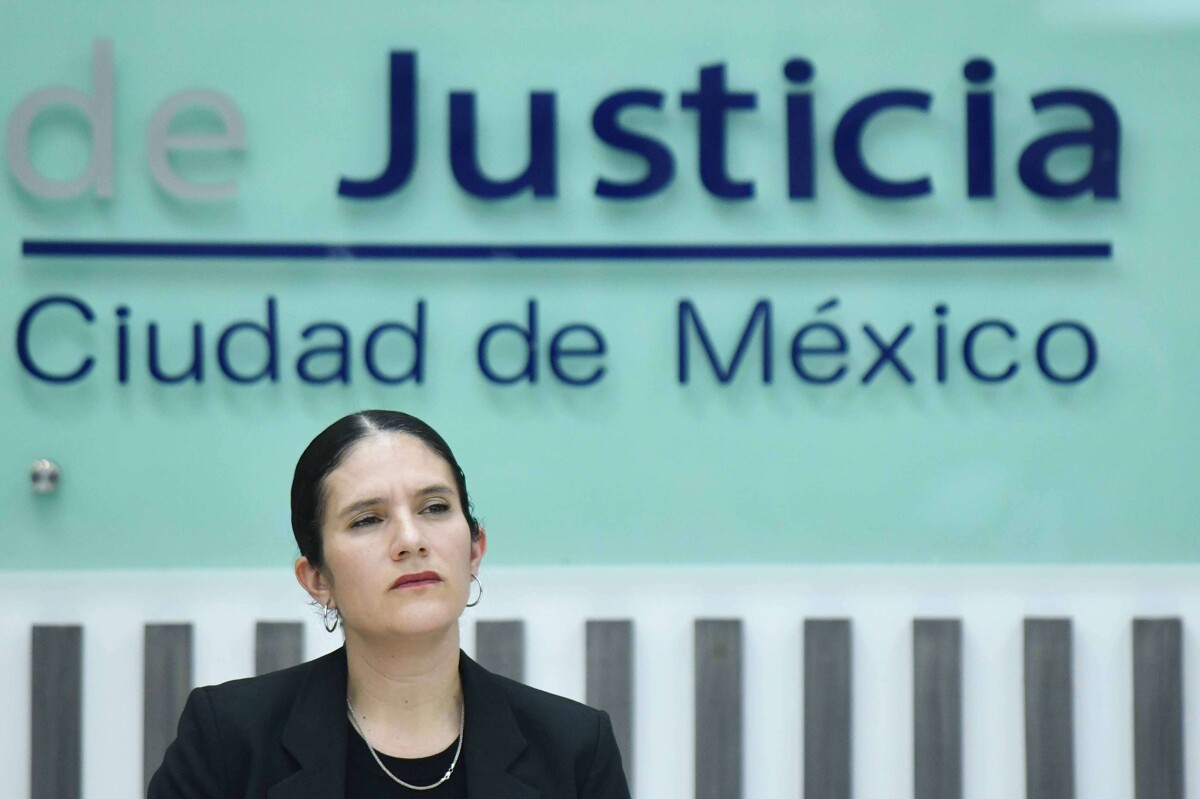
Not long ago, we litigants could enter, file motions, and speak directly with the Public Ministry. It was also not the case, in many instances, that the head of the Specialized Prosecutor's Office was accessible. At times, litigants were even told to wait in undignified spaces, alongside sanitation workers in deplorable conditions, with the sole objective of not exposing the internal disarray. And even after overcoming that first hurdle, the problem persists. It would be unjust to deny it. There is an active team, with the intention of modernizing processes and facilitating, at least in discourse, access to justice. Gaining entry to that Prosecutor's Office has become a bureaucratic process that borders on the absurd: prior registrations, entry filters, waits that can last for hours. It is enough to observe the external dynamics to perceive the level of institutional blockage. To audit, supervise, and, if applicable, sanction. There existed, above all, a material obligation to attend. Today the scenario is different. Access is gained, an appointment is obtained, one waits for forty minutes, an hour or more, and when finally attended to, the discourse is repetitive: “I haven't had time,” “they just assigned the file to me,” “file it again.” The consequence is grave, as there are hundreds of investigation files with years of antiquity without substantial progress. Not for lack of legal tools. The problem lies with the desk prosecutors and their agency heads, who have normalized omission as a form of work. The most worrying thing is that the system seems to function under a stupid logic: if the litigant does not insist, if the matter is not escalated, if complaints are not filed with the Internal Control Body or hearings are not requested for omissions by the Public Ministry, the investigation file simply does not advance. Let's start, for example, with the Specialized Prosecutor's Office for Strategic Financial Crimes. Not for the absence of institutional guidelines. But, plainly and simply, due to the inaction of those who have the direct responsibility to build them. It must be said without circumlocution: the problem is not the Attorney General. However, in the daily practice of litigation, something does not quite fit. It seems that the underlying diagnosis has not been entirely precise. Those of us who are in the prosecutor's offices daily know that the problem does not lie, at least not primarily, in the head of the institution, nor in the high command. The problem is elsewhere, with the desk agents of the Public Ministry and in the way they are organized, or disorganized, within each agency. Let's take as an example the Specialized Prosecutor's Office for Strategic Financial Crimes. Two years after the arrival of Bertha María Alcalde Luján at the head of the Prosecutor's Office for Justice of Mexico City, it is fair to recognize that significant changes have been observed. And this, not due to legal complexity, but due to administrative futility. Faced with this panorama, the conclusion is inevitable: any institutional transformation effort will be insufficient if this core of the problem is not addressed. What is truly grave is having to explain to a victim that their case is not advancing, not for lack of rights, but because the one who must enforce them simply does not want to work. And that, without a doubt, is the type of injustice that no system can afford to tolerate. With its deficiencies, yes, but contact existed. It is concrete. Reviewing agency by agency, file by file. That is to say, the fulfillment of duty has become exceptional, not the rule. Even elementary management tasks, such as the appointment of a legal advisor, can take weeks or months to be finalized. Just cleaning that area would imply considerable work, but it is necessary. Because in the end, what is truly grave is not the procedural delay itself. Circulars can be issued, digital systems implemented, or structures redesigned, but if the direct operator does not comply, the administration of justice will continue to be an unfulfilled promise. The solution is not rhetorical.