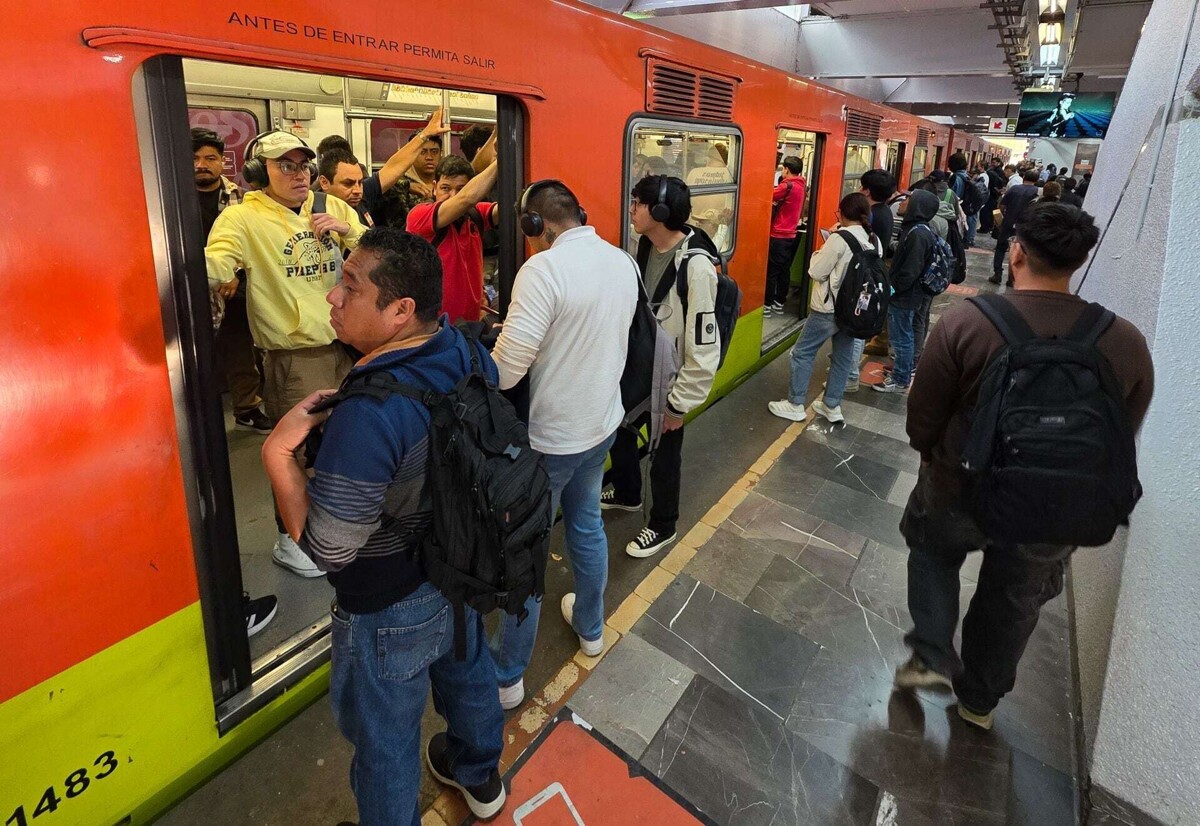
Clara Brugada, head of the Government of Mexico City, rejected the accusations from the Metro union regarding a lack of maintenance in the Collective Transportation System (STC). "The Metro is a priority, it is one of the most important items for the city. The government's interest is that the unions must take care of their work environment, which is everything that implies the permanent operation of the Metro," she explained. García Nieto denied that the workers' demonstration was a labor strike, and instead clarified that it was the refusal to extend the employees' hours that impacted the operation of the lines. "At this moment we are advancing appropriately and the union agrees that we are going to allocate budgetary resources," added the head of Semovi. The head of Government stressed that an effort is being made not to increase the Metro fare and, instead, to carry out maintenance work with the allocated budget. "The Metro must be cared for by everyone: users, workers, and the government itself," added the capital's leader. Why did Mexico City Metro workers protest? On Monday night, the head of the Collective Transportation System, Adrián Rubalcava, announced that he had reached an agreement with Fernando Espino, leader of the Metro union, following the workers' protests. The Metro director said there would be improvements in the working conditions of STC workers and also measures to optimize maintenance. "Both parties have agreed that the priority is to give maintenance to the transport system, improvement to the trains, the tracks, and the safety of users," detailed Rubalcava through his social networks. On Monday, April 13, during the full return to classes after Easter vacation, Metro workers halted part of their operations to denounce the poor technical conditions of the service and that these do not comply with international protocols. "The system is practically collapsing despite the fact that we have punctually exposed, for five months and consecutively, the most urgent issues," said engineer Fernando Espino in an interview with Ciro Gómez Leyva. The Metro constitutes the most important public mobility good for the City. "We have managed to have 50 billion pesos destined for the Metro between 2025 and 2026," highlighted the capital's leader. Of that figure, at least 1.5 billion pesos were reallocated for the work on Line 2 of the Mexico City Metro heading towards the 2026 World Cup. Brugada recalled that part of these resources was prioritized for the remodeling of Line 1 and now for the renewal of Line 3 of the Mexico City Metro. "Agreements are being built with the Mexico City Metro union": Semovi The Secretary of Mobility, Héctor Ulises García Nieto, assured that the capital government is building agreements together with the Metro union and they have the common objective of having permanent maintenance in the STC. "There is a relationship to build agreements with the union, all negotiations and different mobilizations are at play."