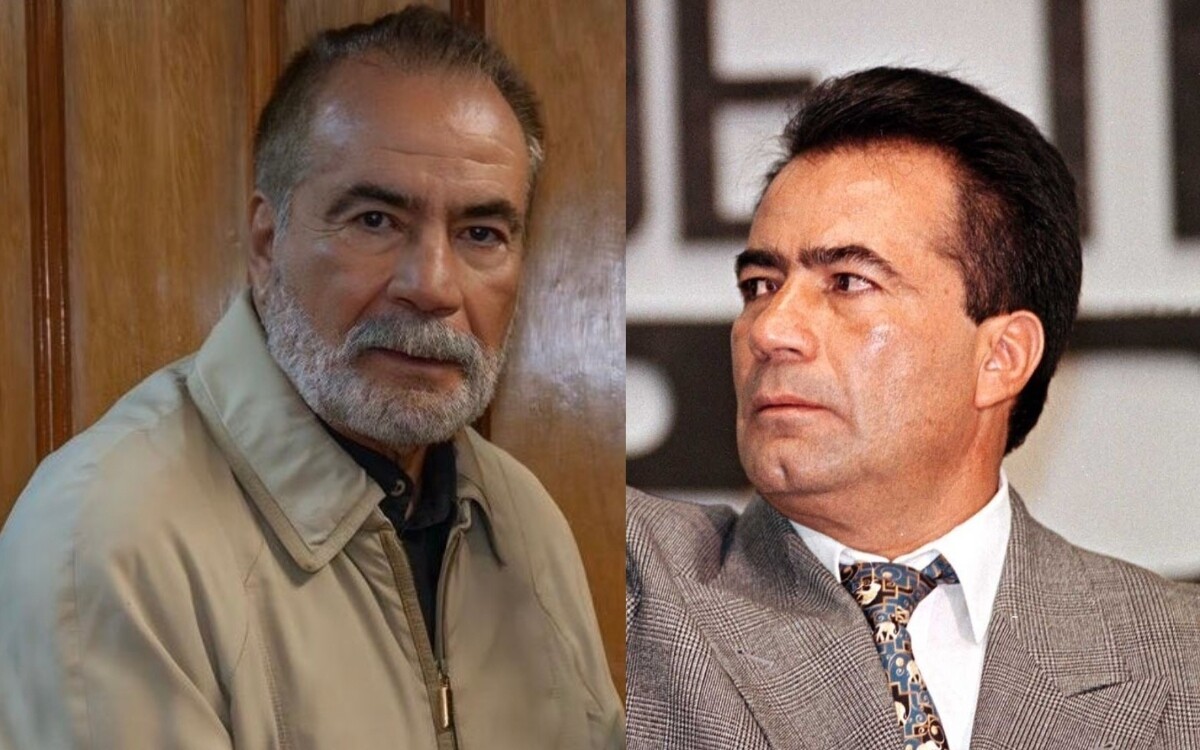
Fernando Espino Arévalo, the current leader of the National Union of Workers of the Collective Transport System (STC-Metro), has been the most powerful man in the Metro for 43 years, even surpassing some of its general directors. Last Monday, Espino Arévalo once again demonstrated his power to mobilize by leading a protest by unionized workers who refused to work overtime, causing delays and crowding in Metro operations. Although Espino ultimately reached an agreement with the capital government, it became evident that the Metro Union has the ability to challenge the government of Mexico City and its leaders. A member of the Institutional Revolutionary Party (PRI) since 1970, Fernando Espino Arévalo first led the Metro Workers' Union in 1978. From 1983, he became its de facto leader, ousting a leadership affiliated with the left-wing labor movement, particularly the Workers' Revolutionary Party (PRT), led by Ariel Macías. Since 1987, when he won the union elections by excluding an opposing slate, Fernando Espino has alternated between the positions of General Secretary of the Union and President of the Vigilance Committee, and President of the National Executive Committee. This rotation has allowed him to circumvent re-election bans while maintaining power. Espino Arévalo has not only skillfully alternated positions to retain union leadership but also served as a federal and local deputy six times between 1991 and 2015: four times under the banner of the Institutional Revolutionary Party (PRI), once for the Ecologist Green Party of Mexico (PVEM), and once for the New Alliance Party, thanks to an alliance he forged with the former teachers' leader, Elba Esther Gordillo. From 2015 to the present, the leader of the National Union of Metro Workers has lost three more electoral bids, buried by the votes of Morena and its allies in the 2018 and 2024 presidential elections. Restaurant owner and a boxing fanatic. The Metro workers' leader has been accused several times of nepotism, as he has used his union position to favor the hiring of his relatives, including his daughter Mabel Espino Suárez, who became Submanager of Medical Services at Metro until it was exposed by journalistic investigations and she was asked to resign. Journalistic investigations dating back to 2013 point to nepotism within Metro: that year, his sons, Fernando Espino González and Fernando Espino García, received a monthly salary of up to 20,000 pesos. In addition, he managed to place three ex-wives, the children of his three marriages, nephews, and brothers-in-law on the Metro payroll. A boxing fanatic, he has turned the Workers' Sports Center of the Metro into an arena for this discipline, so his son Fernando Espino González has even registered several brands related to this sport: the hamburger restaurant Nokaut and an agency to represent amateur boxers called Feres Boxing. Furthermore, together with his son Fernando Espino González, he is a partner in at least three companies: Comercializadora Fármacos Especializados La Viga with an initial capital of 50,000 pesos, dedicated to the purchase of medicines; Tejamex with the same initial capital; and Takoaro, an operator of cafeterias, restaurants, and bars that started with a capital of 100,000 pesos and has brands such as Barilochito, Parrillada DF, Café Kaffa, and Gurtmex, among others. Since the beginning of left-wing governments, first in the Federal District and then in Mexico City, Fernando Espino has maintained a tense relationship with the city's leaders; as well as an open confrontation with some Metro directors like Joel Ortega Cuevas and Javier Gonzalez Garza. Now, in the midst of 2026, the de facto leader of the National Union of Workers of the Collective Transport System (STC-Metro), Fernando Espino Arévalo, has once again burst into the capital's governance, demonstrating that 43 years at the head of that union wear out Metro directors more than his leadership.