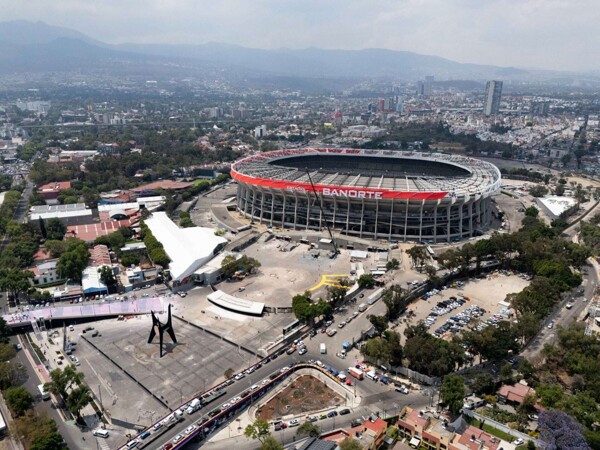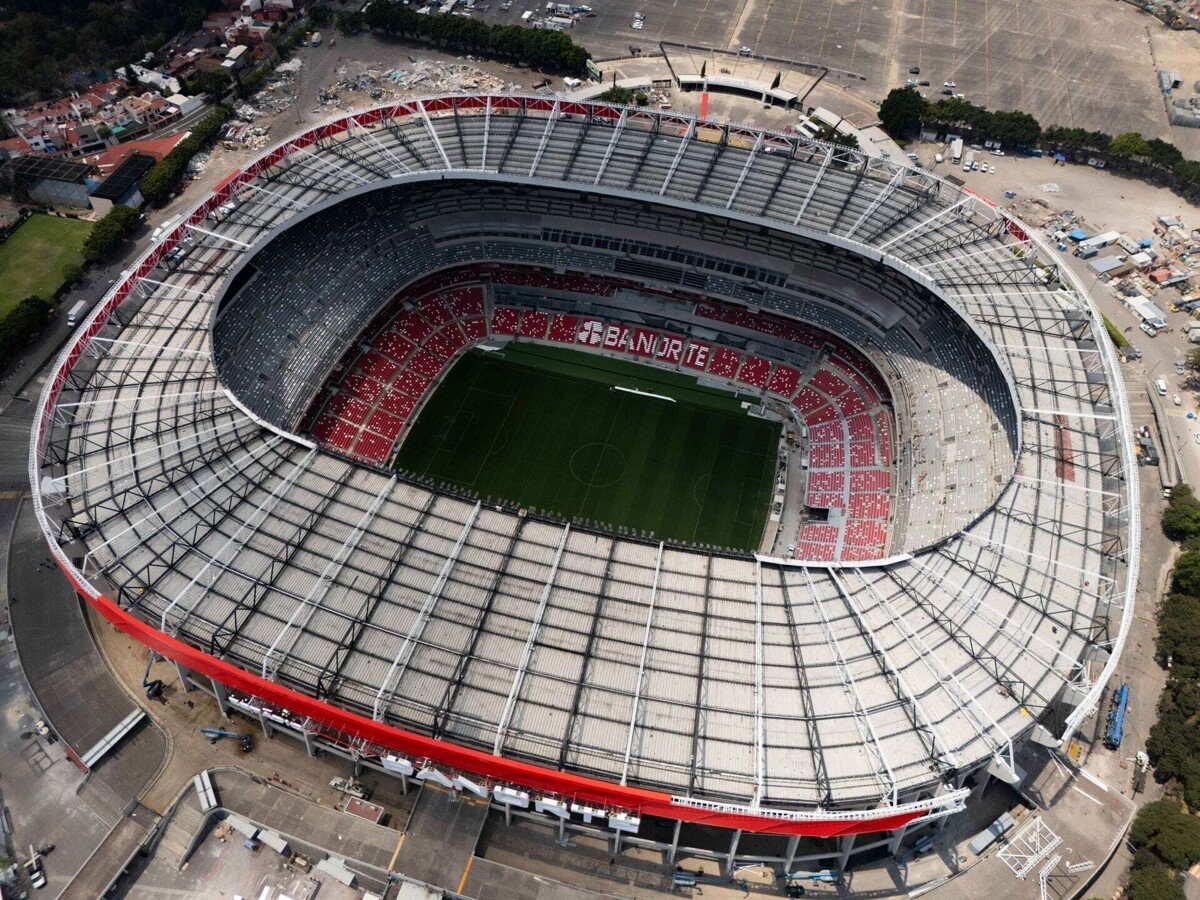
Authorities in Mexico City have announced measures for security and transportation for the upcoming football match between Mexico and Portugal, scheduled for this Saturday, March 28th, at the Azteca Stadium.
According to the head of the Mobility Secretariat (Semovi), Héctor Ulises, the entire traffic strategy will be focused on pedestrian mobility and public transport. “There will be no access to public parking; the last mile will have to be done on foot,” he emphasized. Only vehicles with special permits will be allowed into the area, such as emergency units, security vehicles, or local residents.
A “last mile” operation will be implemented with road closures around the stadium. Final access points will be exclusively for pedestrians. Ride-hailing apps will not be able to enter the secured perimeter.
For fans arriving via public transport, authorities have designed special routes. For instance, from the Reforma, Polanco, Roma, and Centro districts, you can take Metrobús (Line 7), connect with the Mexico City Metro (Line 2), get off at Taxqueña, and then take the Light Rail to the stadium. Similar routes are available from the airport, as well as from the Ciudad Universitaria and Perisur areas.
Additionally, several free shuttle services will operate from key city points: from the Auditorio, Santa Fe, Chapultepec, and Centro districts. These transfers will be free of charge during this initial phase.
For those planning to drive, remote park-and-ride lots will be available at Santa Fe, Auditorio, Six Flags, Parque Ecológico Xochimilco, and Plaza Carso. From there, direct public transport to the Santa Úrsula Coapa area will be provided.
Taxi and rideshare zones will be located outside the perimeter on Viaducto Tlalpan, Periférico, and Paseo Acoxpa. Entry to the immediate vicinity of the stadium will also be prohibited for them.
The stadium gates will open at 15:30 local time, with the match kicking off at 19:00. Public transport will operate until 1:00 AM.
Authorities strongly advise fans not to bring their cars, to plan their route in advance, and to use public transport or special shuttle services. This operation will be one of the strictest in the city's recent history due to the extensive road closures and high expected attendance.