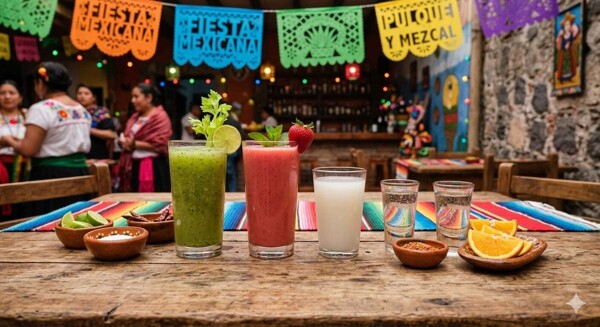
In Mexico, there are beverages that are not just served; they also tell stories. These are mezcal and pulque, which belong to that special category of symbols that cross generations, regions, and social classes. One was born and consolidated as a distilled agave drink with a strong artisanal identity; the other comes from pre-Hispanic times as a beverage deeply linked to the maguey, the countryside, and community life. Together, they represent an essential part of the national culture, one that remains alive at fairs, markets, pulquerías, mezcalerías, and popular celebrations. This cultural centrality is not just a social perception: the Ministry of Agriculture recognizes that the heritage value of magueys and their uses is part of the intangible cultural heritage of the Mexican people, while the INPI highlights the historical, economic, and cultural importance of pulque for Mexico's indigenous peoples. This symbolic weight is also reflected in the numbers; according to the organizers of the Pulque and Mezcal Festival, in 2024 Mexico recorded a production of 11.3 million liters of mezcal, while pulque reaches an approximate annual production of 194 million liters. Beyond the volume, what's important is that these drinks are not relics of the past, but living expressions of consumption, artisanal work, and cultural belonging.