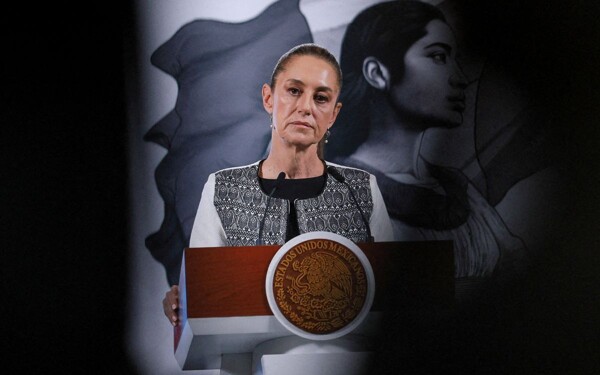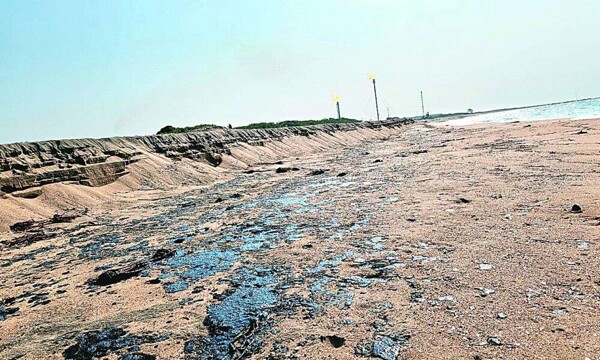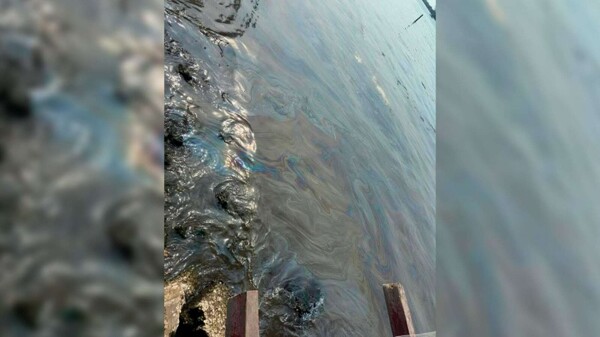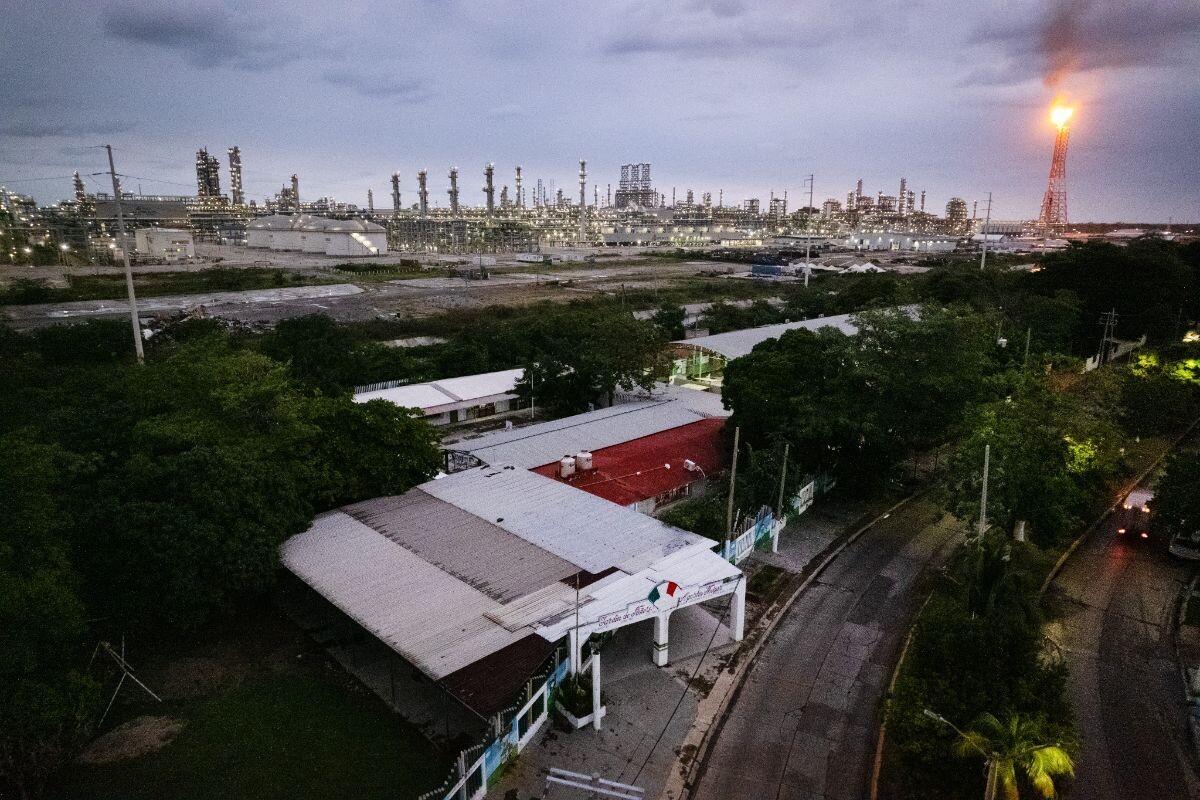
After more than seven years of ignored complaints and a recent public mobilization led by mothers and fathers, the government of Tabasco announced that the Jardín de Niños Agustín Melgar kindergarten and the Abías Domínguez Alejandro primary school will be relocated. The two institutions are located right next to the Olmeca refinery in Dos Bocas, in the municipality of Paraíso, one of the most important projects of former President Andrés Manuel López Obrador. The decision comes after social pressure exerted by more than 200 families that documented health risks for children and violations of educational standards. The announcement was confirmed at the weekly press conference of the governor of Tabasco, Javier May Rodríguez, although he assured that the refinery was built with certification standards. The case escalated to the state and national public agenda through protests, press conferences, and complaints accompanied by civil society organizations. For the families, the official commitment represents an expected advance, although they warn that the relocation must be carried out with certainty, clear deadlines, and suitable conditions to not become just another promise. The two institutions are located in the Lázaro Cárdenas del Río neighborhood, which was previously residential and educational, but was transformed with the construction of the Olmeca refinery because large-scale works, industrial walls, pipelines, heavy traffic, and the permanent operation of plants arrived. The daily environment of homes and schools that remained within a risk zone was modified. According to mothers and fathers, girls and boys take classes while, on the other side of the wall, industrial tanks, pipelines, and plants associated with hydrocarbon processing operate, to which are added constant noises, vibrations, and intense odors that are part of the daily school life. "We are talking about schools that are not just close, but attached to a facility considered high-risk," explained in an interview for Aristegui en Vivo, Pablo Montaño, director of the Conexiones Climáticas organization, which accompanies the families. This is not a perception, there are official norms that establish minimum distances between educational centers and dangerous industrial areas, and here those norms are not met. The collective of mothers and fathers pointed out that the regulations of the Ministry of Public Education (SEP) prohibit the operation of schools within 500 meters of facilities representing chemical or industrial risks. In the case of Dos Bocas, some components of the refinery, such as the bitter water tanks and the sulfur recovery plants, are even less than 300 meters from the schools. In these industrial processes, hydrogen sulfide, a highly toxic gas, can be released, which, in high concentrations, can cause dizziness, nausea, fainting, and even death. "This is not an exaggeration or an unfounded fear, it is a substance recognized as dangerous and that is why there are safety protocols that were not applied here for the schools," Montaño pointed out. The families assure that these warnings were communicated for years to educational and municipal authorities without obtaining concrete answers. The construction and commissioning of the refinery advanced, while the schools remained in the same place. Years of requests without response The demand for relocation is not new; the families point out that in the previous six-year term, they began to formally request the transfer of the schools through official letters, meetings, and management that accumulated without visible results. On November 19, 2024, due to the lack of solutions, the families delivered a letter to the head of the SEP, Mario Delgado, in which they requested the immediate relocation of the schools and the implementation of urgent civil protection measures. Until the moment of the public mobilization, they assure, they had not received an official response. "They always told us that they were going to review it, then, later; meanwhile, our children continued to be there," said Cindily Barjau Mendoza, a mother of family and spokesperson for the collective of the Jardín de Niños Agustín Melgar, referring that before the panorama they decided to make the conflict visible and more than 200 families participated in protests and press conferences in which they presented photographs, maps, and testimonies about the proximity of the schools to the refinery and the possible effects on children's health. "We did not want to close the school or stop sending our children, because they also have the right to education, but we could not continue to be silent either," she acknowledged. However, Barjau Mendoza recognized that the mobilization was their last resort after years of knocking on doors. During one of the press conferences, the spokesperson recounted that the school community lives with the constant uncertainty of a leak or an accident. "We are about four and a half meters from the refinery fence, if something happens, there is no reaction time for such small children." Meanwhile, Pablo Montaño added that during his visits to the schools he was able to verify the reported conditions. "I was a couple of hours in the kindergarten and ended up with a headache from the smells, if that happens to an adult, imagine girls and children who spend several hours there a day," he said. Effects on children's health The families also documented during all this time evidence of recurrent symptoms in their children, such as headaches, dizziness, nosebleeds, and nausea episodes. Although there is no official epidemiological study that directly links these ailments to the operation of the refinery, mothers and fathers consider that constant exposure to pollutants and noise cannot be normalized. In this regard, Cindily Barjau stressed that all they seek is to prevent and for the authorities to attend to their responsibility. "We are not waiting for a tragedy to occur to believe us (...) we only ask to prevent." Faced with the increase in social pressure and media dissemination of the case, the governor of Tabasco, Javier May Rodríguez, confirmed that the schools will be relocated. The announcement was interpreted by the families as a clear recognition that the demand was legitimate. For the collective of mothers and fathers, the fact that the relocation is announced after the protests reinforces the importance of the mobilization, Pablo Montaño assured. "If we had not organized, this would still be the same." The issue also reached the morning conference, where President Claudia Sheinbaum pointed out that "it is possible" to relocate the schools, which opened a window for dialogue between federal, state authorities, and the affected community. However, after the families' press conference, a new concern arose: educational authorities informally raised the possibility of closing the schools instead of relocating them. "Closing the schools is not a solution because it would leave more than 300 girls and boys without a nearby place to study," Montaño warned. In this regard, he said, the families will continue to insist that the right to education and the right to a safe environment should not be opposed. Mothers and fathers had already presented several land options for relocation a few blocks from the current schools, which would allow the school community to remain without uprooting it. "Solutions exist, what is missing is the will and clarity in the times; we are not asking for something new or impossible, only that the law and what has already been promised be fulfilled," affirmed Cindily Barjau Mendoza. While the relocation is carried out, the collective demands that clear civil protection protocols, drills, and permanent environmental monitoring be implemented in the schools. An incomplete victory For the families, the governor's announcement does not close the conflict, but it does mark a turning point, because the relocation, they emphasize, must be materialized with a budget, dates, and guarantees. "This demonstrates that when communities organize, they can change decisions that seemed immovable," Barjau Mendoza concluded. "But we are not going to let our guard down until our daughters and sons are really safe." In Paraíso the lesson was clear: without protest, there is no response.