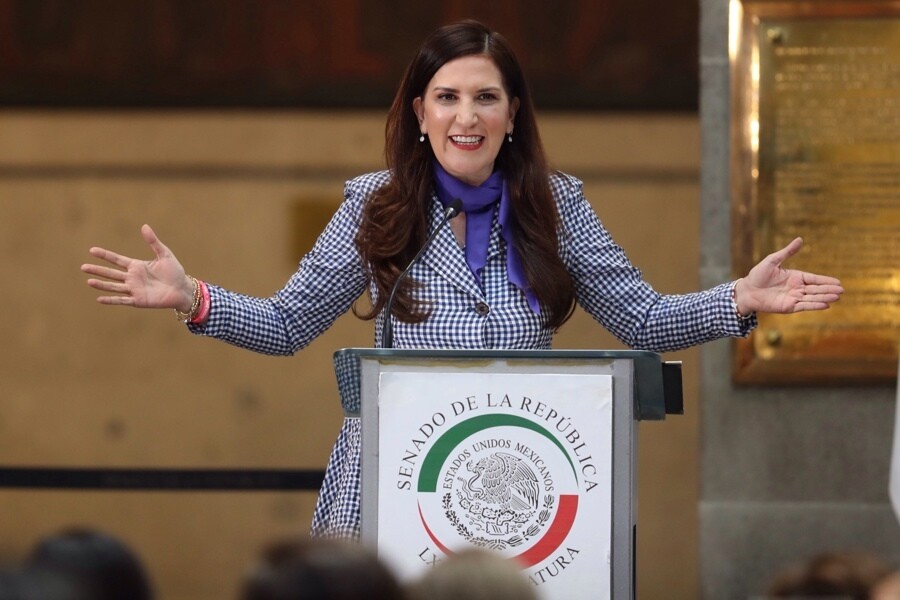
On Tuesday, the Chamber of Deputies declared constitutional the reform that reduces the working week in Mexico from 48 to 40 hours. The president of the lower house of Congress, Kenia López, informed in a plenary session that the reform previously approved by senators and deputies received the endorsement of the majority of state congresses, so she issued the declaration and sent it to the upper chamber. “The Congress of the Union, in the exercise of the power conferred by article 135 of the Constitution (...) and after approval by the honorable legislatures of the states and Mexico City, declares the reform of the sections (...) of article 123 of the Constitution, in matters of reduction of the working day. It is referred to the Chamber of Senators for constitutional effects,” she stated. The secretary of the Board of Directors of the deputies, Julieta Villalpando, reported that 22 state congresses have already voted in favor of the labor reform. Among them are the parliaments of the states of Baja California, Baja California Sur, Campeche, Chiapas, Colima, Guanajuato, Hidalgo, Mexico, Michoacán, Morelos, Oaxaca, as well as the legislatures of Puebla, Quintana Roo, San Luis Potosí, Sinaloa, Tabasco, Tamaulipas, Tlaxcala, Veracruz, Yucatán, Zacatecas, and Mexico City. With the approval, it is determined that the working week will be 40 hours and its application will be gradual until 2030, in a model where, for every six days of work, workers must enjoy at least one day of rest with full salary. When extraordinary circumstances require an increase in working hours, a 100% premium on the ordinary hourly wage will be paid for this time starting from 2027. According to the new guidelines, overtime must not exceed 12 hours in a week and may be distributed up to four hours per day, for a maximum of four days during that period. If overtime is extended, employers must pay 200% more than the salary corresponding to ordinary working hours. Additionally, the workday prohibits overtime for people under 18 years of age. For its officialization, the Senate still needs to approve this same declaration of constitutionality and it must be published in the Official Gazette of the Federation. Once published, the reform will come into effect the next day, and Congress will have 90 days to issue secondary laws. An analysis shared on Tuesday by the Panamerican University warned of four main challenges, which it described as “one of the most relevant structural changes for the labor market and the business environment.” Among them, it identified the increase in labor costs by reducing hours without modifying the salary; the need to expand the workforce to cover shifts and guarantee operations. It also mentioned the pressure from a reduced financial margin that could lead to the informalization of labor relations, and the reorganization of work with a risk of falling into labor intensification.