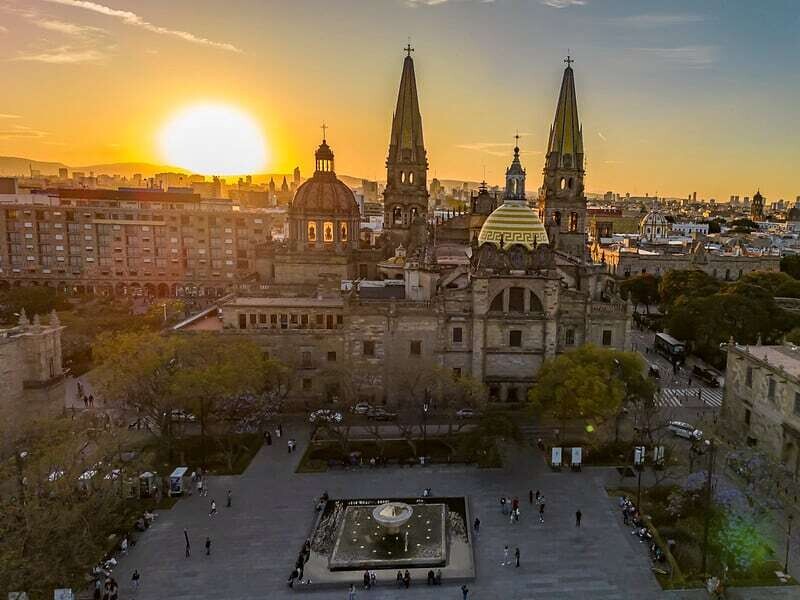
Mexico is a land of great events, but also of a cuisine that moves between the traditional and the contemporary without losing its identity. From birria to drowned cakes, from tequila to new culinary proposals, the state has known how to build its own narrative that today dialogues with the world. The designation as a Michelin host city comes at a time when the state is intensifying its international projection, with an agenda that combines tourism, culture, sports, and gastronomy. A gastronomy that is not built with a budget, but with history, with product, and with a culture that expresses itself naturally at the table. Jalisco plays on both fronts. This was stated by Ignacio Alarcón Rodríguez Pacheco, president of Canirac, during the presentation of the Michelin Guide in the country, by emphasizing that restaurants not only condense culture, but also trigger development, employment, and the perception of a destination. With hundreds of thousands of establishments throughout the country, the restaurant industry has become a decisive first impression: that is where the travel experience begins—and is often defined. It is no coincidence: the most relevant destinations today are those capable of offering complete experiences. In the end, beyond stars or recognitions, what remains is the experience. And in May 2026, that story will have a mandatory stop in Jalisco. What happens at the table ends up shaping the memory of a place. In this context, the arrival of the Michelin Guide in 2024 marked a before and after. New generations of travelers no longer focus solely on visiting a place, but on understanding it through its flavors, on sitting at the table as if opening a door to the identity of a destination. Not only for the recognitions, but for what it means to enter a global conversation where demand, technique, and culinary narrative are scrutinized. On the one hand, the infrastructure: connectivity, venues, hotel offerings, and a constant agenda of international events. Because if something distinguishes Mexico is that its cuisine does not seek to resemble anyone. The expansion to new territories reinforces this idea. A designation that, beyond symbolism, transforms the state into a meeting point for chefs, critics, media, and travelers who closely follow the pulse of haute cuisine. The choice was made after a rigorous analysis by the Michelin Guide inspectors. The one of discovering a place through what is served at the table, of understanding that each dish tells a story and that traveling, in the end, is also a way of eating. The first selection included more than 150 restaurants in six states; by 2025, the figure grew to 181, adding new stars, Bib Gourmand distinctions, and sustainability recognitions. More than a list, what has been built is a network: cooks, producers, suppliers, and destinations aligned under international standards, without losing their roots. But on the other hand—and perhaps more importantly—identity. With the incorporation of Jalisco, Puebla, and Yucatán, the Michelin map in Mexico expands and confirms that the country's gastronomic wealth is not punctual, but deeply diverse. Host City 2026 Within this growth, the key announcement was made: Jalisco will be the host city of the 2026 Michelin ceremony. Gastronomy ceased to be a complement to become the center of the experience. Under this logic—increasingly evident in the way we choose and remember our travels—Mexico is going through a particularly interesting moment in its global positioning.