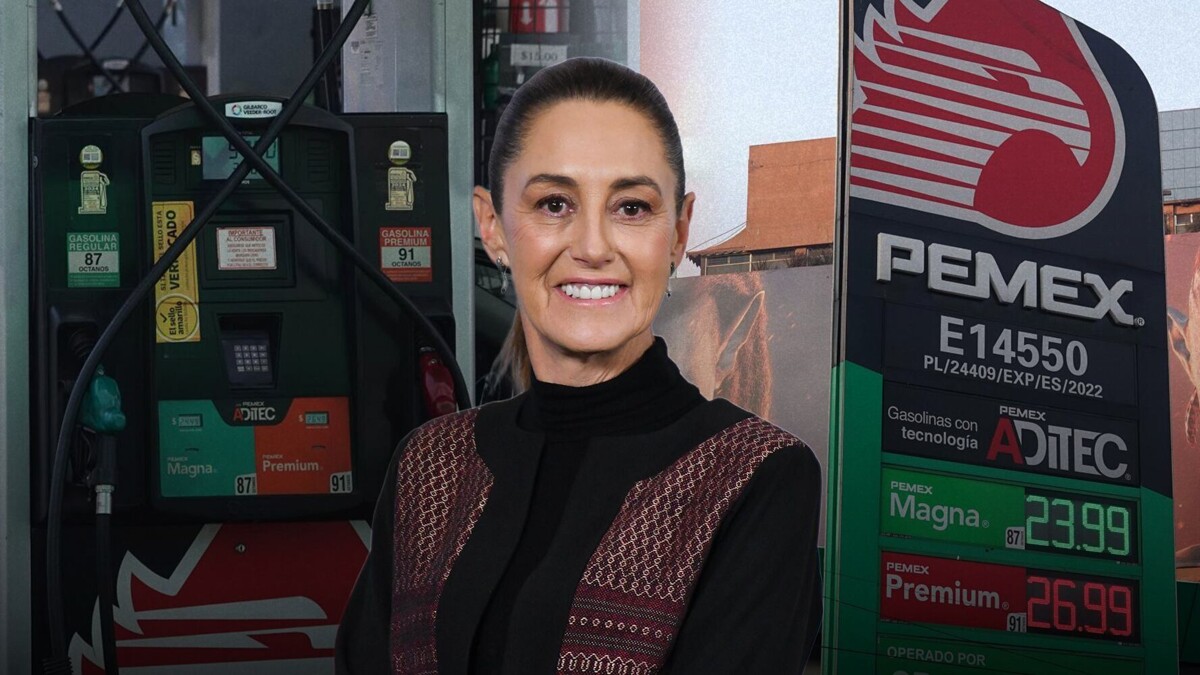
Mexico is not self-sufficient in energy and depends on external markets for fuel production. The price of oil skyrocketed, reaching up to $100 per barrel. This increase caused fuel prices to rise in Mexico and other countries. President Claudia Sheinbaum announced that gas station owners agreed to set a “voluntary cap” on diesel prices after weeks of volatility in the energy sector due to the conflict in the Middle East and the closure of the Strait of Hormuz. She stated that the fuel price per liter will be 28.50 pesos, after reaching an average of up to 30 pesos. This adjustment is a factor in containing the increase in inflation, which accelerated in the first half of March. “We spoke with the gas station owners, a voluntary cap was accepted, as always not forced, which is above 28.50. I told them: ‘it is still too high, it has to be lowered further,’ and we are reviewing to see if it can be done, in this period when the price of oil is rising, at lower costs so that it does not affect inflation,’ she commented during the morning press conference on March 26. Currently, an agreement is in place to keep the price of regular gasoline at 24 pesos per liter. The head of state said she will seek to include tomatoes, lemons, and chicken in the Package Against Inflation and High Prices (Pacic) due to the increase in prices. However, these products are already part of the basic basket list. Inflation accelerates in March On Tuesday, it was reported that the National Consumer Price Index (INPC) increased by 0.62% compared to the previous fortnight, placing annual inflation at 4.63%. The products with the greatest impact on the INPC were tomatoes, lemons, chicken, and air transport, with significant increases in their prices. How does the war in the Middle East affect fuel prices? Despite the distance from Iran and Mexico's non-participation in the conflict directly, the implications are reflected in the energy market. The blockade of navigation in the Strait of Hormuz increases concern about the global supply of oil and natural gas. As a consequence, goods and foods registered price hikes, an effect that impacts consumers' wallets. To date, there is no date for the end of the conflict between the United States and Israel against Iran, although both sides have stated conditions for a ceasefire. The Iranian government requested: The complete lifting of economic sanctions against Iran. Payment of reparations for the damages caused during the war. The establishment of a new legal mechanism that formalizes Iranian control over maritime transit in the Strait of Hormuz, among other points.