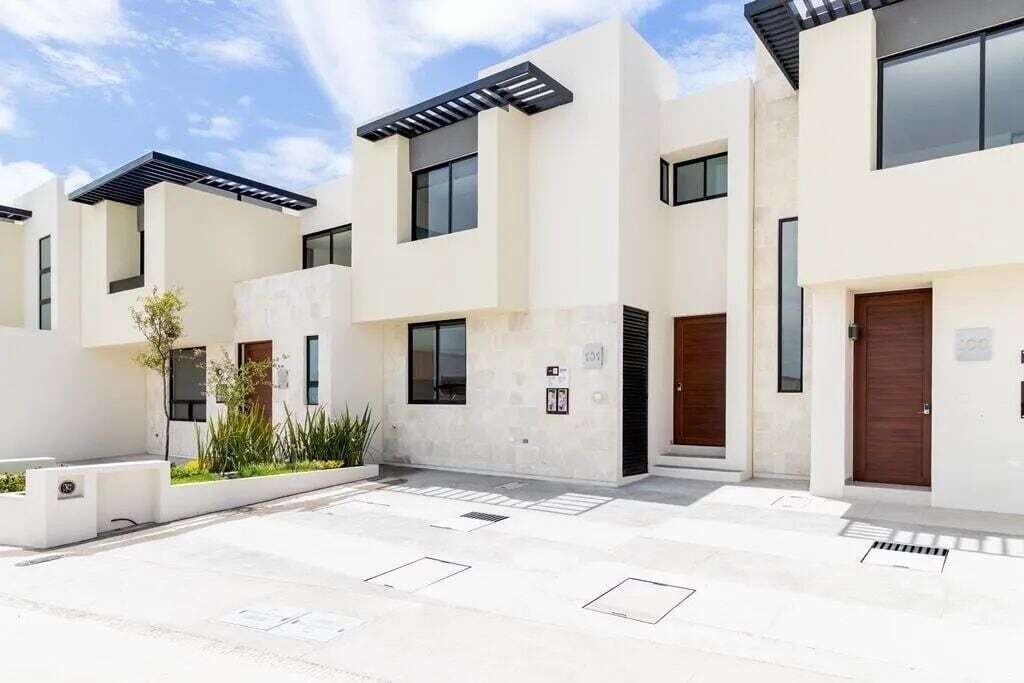
The state of Querétaro has a surplus of over 155,000 homes; however, most of them are inaccessible to meet the population's demand. This is according to a report from the State Housing Institute of Querétaro (Iveq) for the “Contigo por tu Vivienda 2026” program. According to the diagnosis, published in the official newspaper La Sombra de Arteaga, there are more houses than applicant families in the entity, but the properties are not located where the greatest demand is concentrated, which is in the Metropolitan Zone, or their cost exceeds what applicants can afford. Additionally, the agency noted that the surplus includes over 112,000 uninhabited houses (61% of them in the Metropolitan Zone), which represent 14% of the total residences in Querétaro (more than 826,000), according to the latest Population and Housing Census by INEGI, conducted in 2020. “Nearly 80,000 housing actions are needed to improve the quality of existing houses, which suggests that the problem is not only one of quantity, but also of habitability,” the institute states. Iveq acknowledged that this habitability problem is reflected in the formation of an informal market, as although 15,000 formal houses are produced in the entity each month (according to data from the National Chamber of the Housing Development and Promotion Industry, and the Mexican Chamber of Construction), there are also 1,129 irregular settlements as a consequence of “the insufficiency of the formal system to attend to the lower-income strata”. The institute indicated that demand has also transformed in recent years, as it recognized that due to economic and generational factors, Millennials and Generation Z are driving the formation of single-occupant or co-resident households, which has forced the real estate industry to stop producing models designed for the traditional family. “57% of the employed population faces a wage barrier by earning less than 3 minimum wages. Even if they have eligibility, this segment is highly vulnerable to exclusion from the formal market due to rising real estate costs, which pushes them towards renting or self-construction”. It acknowledged that another challenge to be addressed in Querétaro is overcrowding, given that 4% of the total population lives with three or more people in a single room, with the municipalities of Querétaro, San Juan del Río, El Marqués, Pinal de Amoles, and Pedro Escobedo being the most affected. Faced with these problems, Iveq has once again launched the “Contigo por tu Vivienda” program, through which it will grant economic support of up to 550,000 pesos to citizens and workers in the state for the acquisition of homes or land, as well as for expansion and improvement tasks. In total, the institute plans to benefit a maximum of 425 families with this strategy.