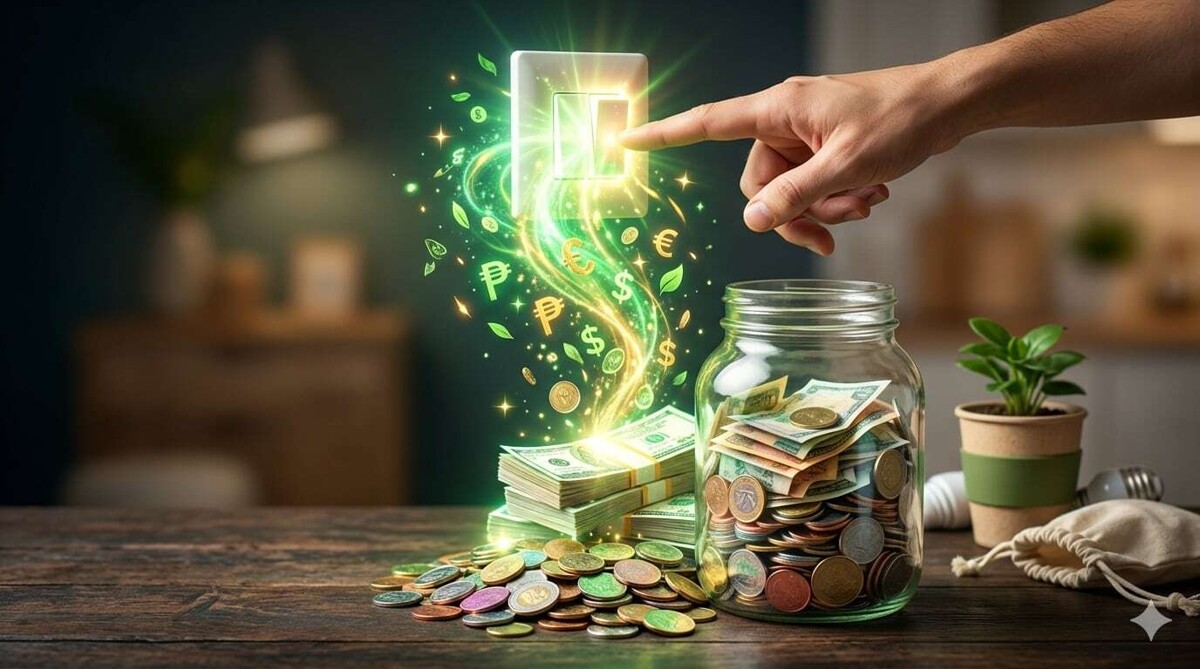
The Director of Financial Education at Banamex, Juan Luis Ordaz, makes it clear: caring for the environment also improves your finances. The reality, however, is much simpler, more practical, and closer; many of the actions that benefit the environment also help improve your finances. The problem is not the planet. The problem is that your money is being drained by habits you don't even notice: lights left on, impulsive purchases, and uncontrolled daily consumption. Thus, your wallet is slowly emptied. Every kilowatt saved is money that stays with you. Where to start? Turn off the lights and unplug electronic devices when you're not using them. "Phantom" consumption can represent up to 10% of your bill. Switch to LED bulbs; although the initial investment is greater, they are much more economical in the long run as they save up to 80% energy. Take advantage of natural light during the day and ventilate spaces to avoid excessive use of fans or air conditioning. 2. Responsible consumption: buy better, not more. Impulse buying not only generates waste but also directly affects your wallet. Adopting responsible consumption habits means pausing and choosing with more intention: durable, useful, and necessary products. Some things to consider: Before buying, ask yourself: do I really need it? Prefer reusable products: bags, bottles, and containers instead of disposable ones. Buy in bulk when possible: it's usually cheaper and reduces packaging use. Opt for quality over quantity; cheap can sometimes be expensive when you have to replace it constantly. 3. Small changes generate big impacts. You don't need to transform your life overnight, but rather integrate small habits that, over time, generate real benefits. Other simple ideas: Use public transport, a bicycle, or carpool when you can; you'll save on fuel and maintenance. Repair before throwing away and replacing: fixing clothes, furniture, or appliances is usually cheaper than buying new ones. Reduce food waste by planning your purchases and using leftovers. Save water by turning off the tap while you brush your teeth or fixing leaks. "Every decision has an impact on the world. Caring for the planet is also a way to take care of your financial health."