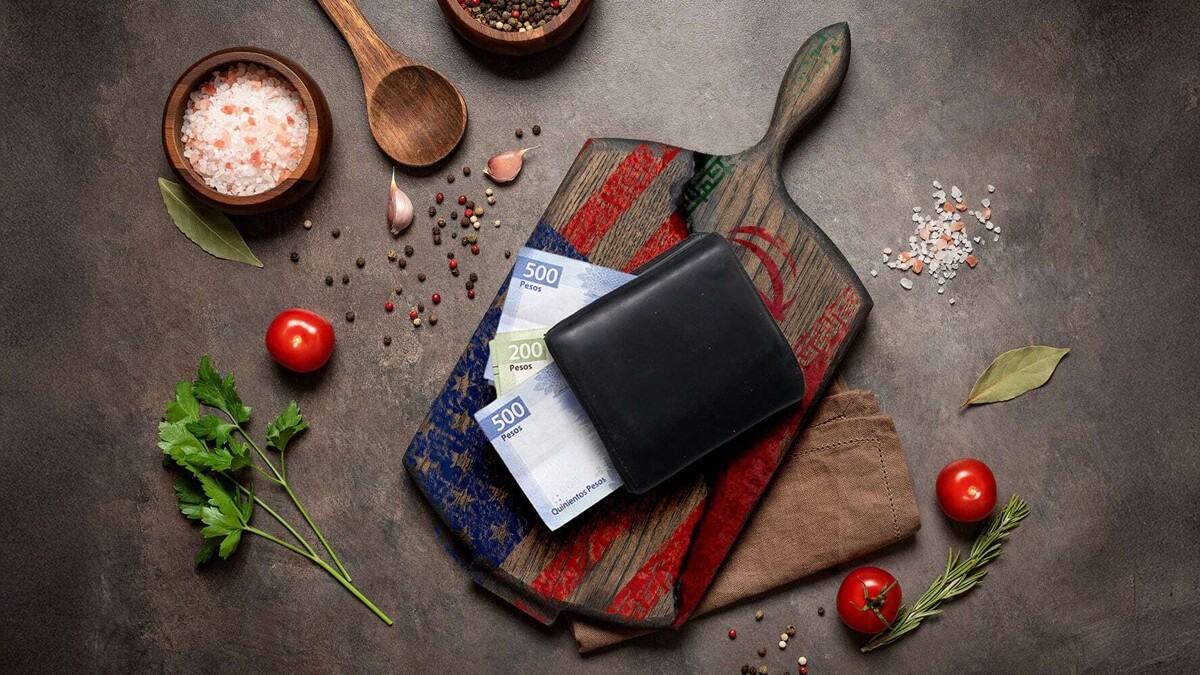
To cover a complete basic basket —food, transportation, health, housing— a person in an urban area needed 4,940 pesos per month. For now, the bulk of these increases has domestic roots: droughts, input costs, seasonal pressures. Traffic through the Strait of Hormuz fell more than 90 percent in March, and urea and ammonia exports from the Gulf are severely restricted. The World Bank confirmed the magnitude of the shock: the price of urea skyrocketed almost 46 percent in a single month between February and March. And Mexico is not immune. But what is concerning is what is coming from outside and is just beginning to seep in. Last week, in an unusual move, the heads of the IMF, the World Bank, and the World Food Program issued a joint statement warning that the rise in oil, gas, and fertilizer prices derived from the conflict in the Gulf will inevitably cause food price increases and greater food insecurity, with the heaviest burden on the most vulnerable economies. Kristalina Georgieva, IMF Managing Director, was more precise: the war could push an additional 45 million people into food insecurity, raising the global total to more than 360 million. In turn, the FAO reported that its Food Price Index rose 2.4 percent in March compared to February, accumulating two consecutive months of increases. The hard data is as follows: the food basket rose 8.1 percent annually in urban areas and 7.9 percent in rural ones. That is, food prices are rising at double the speed of general inflation, which closed March at 4.6 percent. The FAO's Chief Economist, Máximo Torero, put things in perspective: if the conflict lasts more than 40 days with high input costs, farmers worldwide will have to plant less, use less fertilizer, or change crops. This means lower yields and higher prices in the second half of this year and throughout 2027. A recent FAO report on the agro-food implications of the conflict indicates that fertilizer prices could be 15 to 20 percent above the level of a year ago if the crisis persists. Since January, the kilo of tortilla has risen by one to two pesos in several areas of Mexico City, and the National Tortilla Council has warned of possible additional increases of two to four pesos per kilo if flour and gas costs continue to rise. However, we must be clear: we are not facing an imminent food crisis in Mexico. Global grain inventories remain at comfortable levels, and food inflation still has a significant seasonal component. But risks are aligning in a way we haven't seen since 2022, when the war in Ukraine caused the biggest food price spike in decades. The conflict in the Gulf, combined with China's fertilizer trade restrictions, the possibility of an El Niño climate phenomenon, and the persistent drought in US production areas, create a scenario of multiple vulnerabilities. Yesterday's INEGI data on the increase in the cost of the food basket is a warning signal. Mexican households with the lowest incomes, which spend the largest portion of their spending on food, are already absorbing the blow. If external pressure intensifies, the Bank of Mexico will have to think twice before continuing to cut interest rates, and the federal government will face growing pressures on its food support programs, beyond pressures in the energy sector. The war does not need to reach our territory to affect us. The production cost of corn went from 45,000 to 55,000 pesos per hectare. This will not stay in the field. The corn-tortilla chain is the most sensitive in the Mexican economy. The conflict in the Middle East is already filtering silently into what it costs to eat in Mexico. This Monday, INEGI published the update of the Poverty Lines corresponding to March. On the contrary: more than 70 percent of the fertilizers consumed by the country are imported. According to the Agricultural Markets Consulting Group, between January 2025 and March 2026, diammonium phosphate, one of the essential inputs for fertilizers, rose 57 percent; monoammonium phosphate, another one, rose 53 percent; urea, 46 percent. A single product, the tomato, explains almost half of the increase in the field, with a 126 percent increase in a year. Wheat rose 4.3 percent; vegetable oils, 5.1 percent; sugar, 7.2 percent. The higher cost of the basic basket will be the thermometer to calibrate that effect, which is already present.