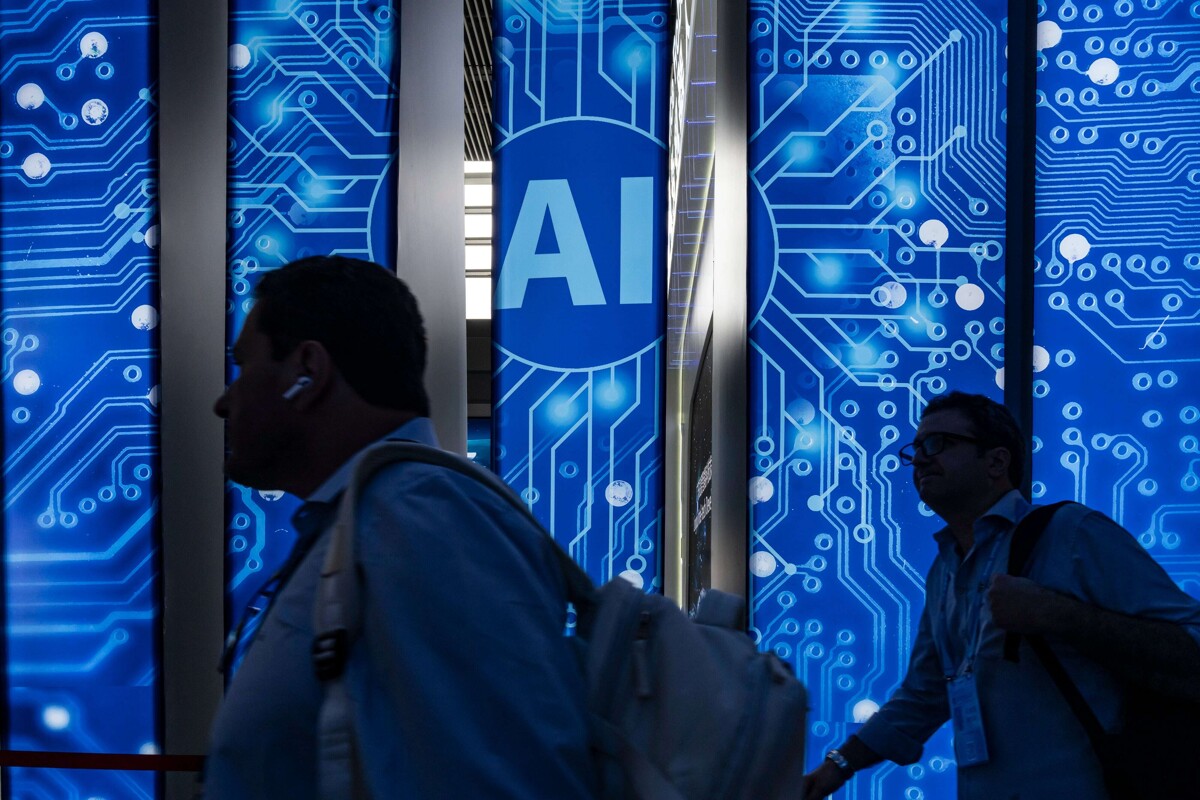
This is what they claim. Of course, nothing is as easy as it seems, and the industry has several significant obstacles to overcome. In other words, these companies are the new unicorns, so it's no surprise that the solution they propose for these and other problems is simply to grow more and more each day: the main mission is to build more data centers and generate enough computing power to meet a demand that has not yet materialized, while competing to see who will be the first to develop the first artificial consciousness—or something close to it. With such a risky plan, it's natural to wonder what will happen if they fail. All adjacent companies, such as NVIDIA and Oracle, as well as the hundreds of businesses that use AI not as a tool, but as a substitute for human talent, would be affected: mass layoffs, lost investments, and infrastructure built in such a way that it would be useless for other types of activities. The bursting of the AI bubble. A crisis that would arise due to irresponsibility and having forgotten what really matters in a company: profitability. The expected benefits have not yet appeared, and most AI companies depend on their investors continuing to have faith in them because they are still far from being profitable. We, as entrepreneurs, must watch out for both our customers and our employees: the products or services we sell must satisfy needs with the least possible risk, and our company must be resilient because it is the source of work for our collaborators. If we have to slow down to catch our breath and rethink our strategy so as not to crash, let's do it before it's too late, because companies are not just ours, but everyone's. For shareholders and investors, AI companies represent a gold mine: when AI builds the future they expect, the returns will be so high that it will possibly be the most profitable investment they will make in their lives. This is an era of profound transformations and great advances in practically all branches of knowledge, but if we had to give it a name, it would surely be the "AI Era", as it is the most promising industry at the moment. According to a study by the consulting firm PwC, more than 55% of companies that have adopted AI tools have not seen a financial benefit, and of that total, 12% have seen their costs rise while their revenues remain the same. This would likely be the prelude to a global economic crisis. There are times when it is necessary to grow rapidly, but nothing justifies doing so at the expense of risking the assets of others. If achieving your goals is a matter of raising capital and not skill, then your company is nothing more than a big bubble. The things that AI promises us are so wonderful that ignoring them would be a folly: intelligent programs that will put the sum of human knowledge within everyone's reach, and if developed enough, they will even make some jobs obsolete. If the words of its staunchest critics were to come true, OpenAI and Anthropic would not be the only ones to suffer the consequences. On the other hand, J.P. Morgan estimates that the industry needs to generate 650 billion dollars in annual profits by 2030 if it wants a 10% ROI.