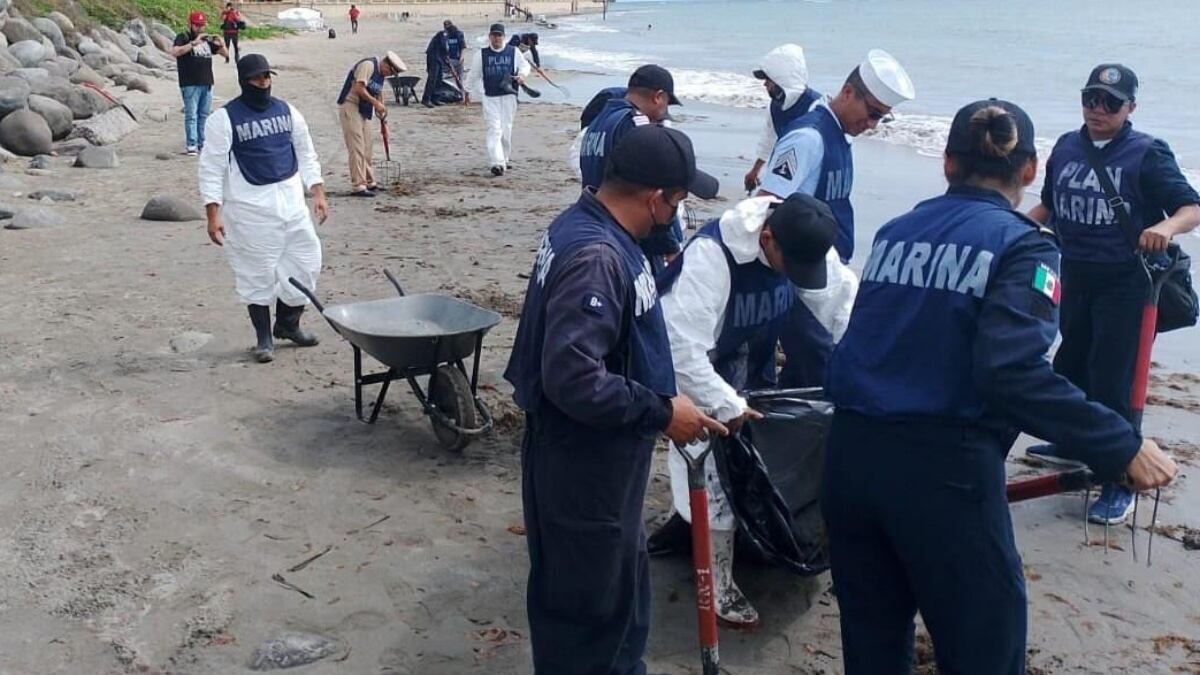
The Government of Mexico assured that hydrocarbon pollution in the Gulf of Mexico is under control after weeks of coordinated efforts among federal, state, and municipal agencies. According to a joint communiqué, authorities such as the Secretariat of the Navy, the Secretariat of Environment and Natural Resources (Semarnat), the Secretariat of Energy (Sener), as well as Petróleos Mexicanos (Pemex) and the Federal Prosecutor's Office for Environmental Protection (Profepa), reported progress in cleaning the affected areas. The institutions stated that as a result of these actions, clean beaches are now reported on the Gulf of Mexico coastline, following the implementation of containment, collection, and sanitation operations. The deployment is part of the activation of the National Contingency Plan, aiming to mitigate the effects of the spill and prevent its spread to other coastal areas. According to the official report, an inter-institutional force of over 3,000 personnel was mobilized, along with 46 vessels, 45 vehicles, seven aircraft, aerial and underwater drones, as well as containment booms. These efforts allowed for the collection of more than 700 tons of contaminant in coastal zones and another 40 tons at sea to prevent it from reaching the beaches. In total, 39 beaches spanning over 480 kilometers of coastline have been intervened, including sensitive ecosystems like mangroves and estuaries, mainly in the states of Veracruz and Tamaulipas. Investigation of the spill in the Campeche Sound Authorities reported that, in parallel, work continues in the Campeche Sound, specifically in the Cantarell complex, where research, containment, and mitigation of hydrocarbons are being carried out. These actions aim to address the source of the incident through specialized technology for underwater inspection. The Agency for Safety, Energy, and the Environment (ASEA) and Profepa maintain oversight and verification processes to determine responsibilities. The federal government highlighted that coordination between agencies and local communities has contained the dispersion of hydrocarbons and advanced in the recovery of the coastal environment. However, permanent surveillance is maintained against possible new re-leakages while investigations continue.