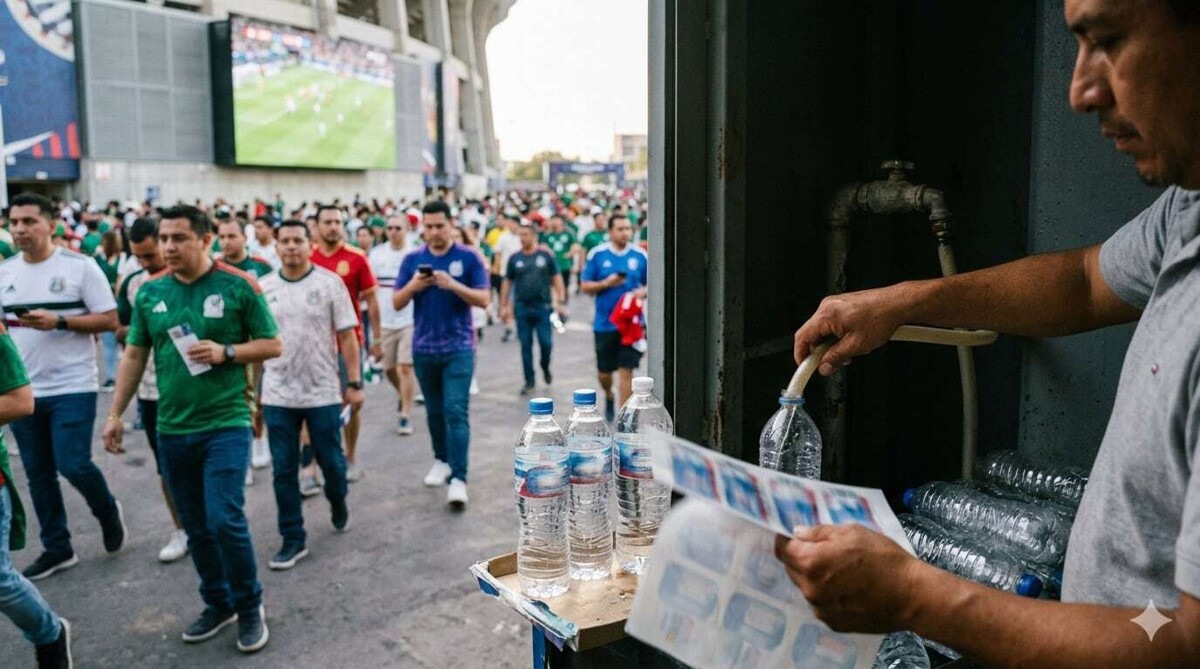
In Mexico, up to 20% of water bottles are counterfeit, refilled, or adulterated, and they are not only sold informally but also manage to infiltrate formal stores without being noticed. 'I can tell you that two out of every ten bottles can be counterfeit,' stated Anpec President Cuauhtémoc Rivera. With the upcoming 2026 World Cup, this problem becomes even more significant, as the country expects five million tourists, which will trigger an ultrahigh demand for drinking water, especially in host cities: Mexico City, Guadalajara, and Monterrey. Rivera specified that during a typical hot season, the demand and sales of bottled water increase by up to 30%, but with the influx of tourists during the World Cup, it could rise another 10-15% during matches of the most famous teams. To prevent the risks of bottled water and protect public health, Anpec and Cofepris have agreed to promote the consumption of bottled water that meets official sanitary and quality standards. To this end, both organizations are launching an online training course on hygiene practices to prevent the sale of 'pirate' water. How to identify a counterfeit bottle? First, the security seal is broken, cracked, or loose. Second, there is no sound when opening and breaking the security seal, which should correspond to the vacuum or pressurized air from filling. Third, the label is blurry, poorly attached, and lacks a batch number or expiration date. Fourth, when held against the light, sediment is visible, and upon opening, a strange chlorine smell is released. Fifth, the bottles are damaged, the plastic is opaque, or there are signs that the original label was removed. The most vulnerable to adulteration are the 600ml and 1-liter presentations. 'Selling adulterated water is a criminal act,' Rivera emphasized. He also explained that counterfeiters invest an average of 4 pesos to buy PET bottles, fake labels, and tap or unfiltered water, but they sell them for 16 to 20 pesos per bottle, making a profit of over 400%. 'If they sell a 600ml bottle for 16 pesos, their profit margin is 10 to 12 pesos per bottle. This is the market we must combat, especially at street-level sales,' said the Anpec leader. The water you buy during the 2026 World Cup season may not be what you think it is. Additionally, proper hygiene measures for cut fruit exposed to heat and prepared foods must be adopted, as they can become sources of disease.