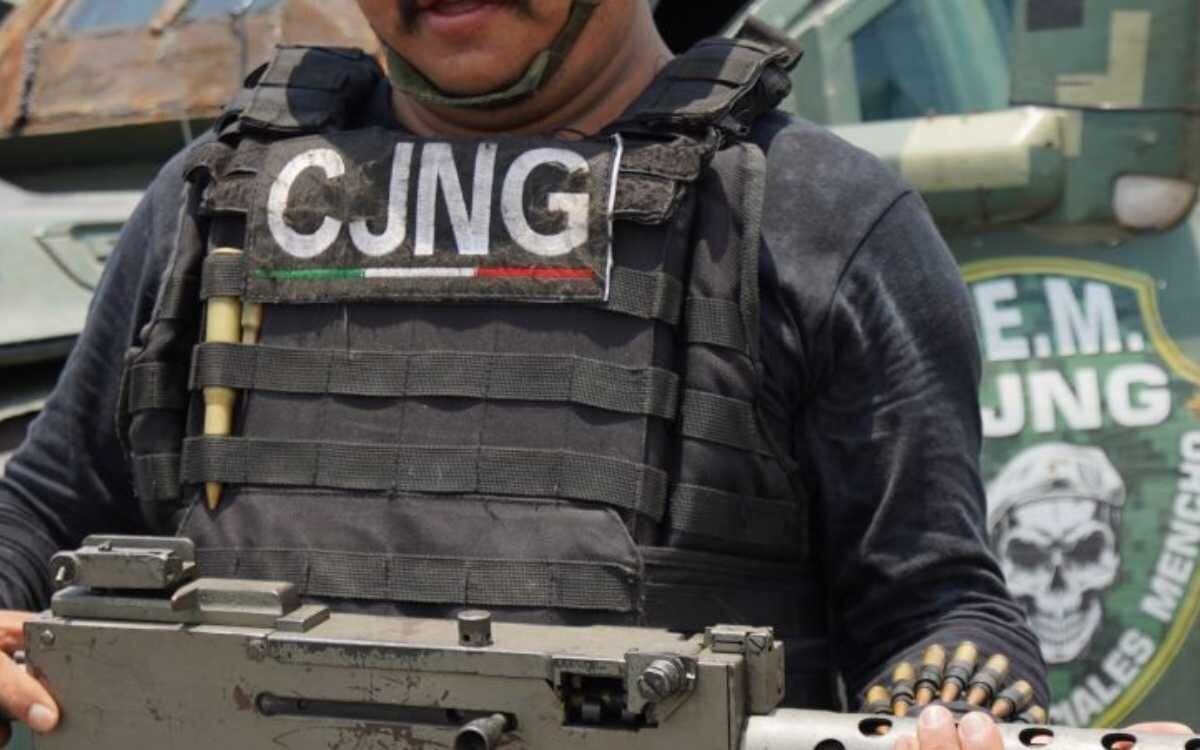
Mexican cartels have increased their lethality in recent years by increasingly using drones with explosives to strike military and civilian targets, amid growing pressure from the United States in the fight against drug trafficking, according to several experts consulted by the EFE news agency. This 'technological leap' by organizations like the Jalisco New Generation Cartel (CJNG) or the Sinaloa Cartel, designated as terrorists by Washington last year, comes amid recurring threats from the U.S. president, Donald Trump, about a potential intervention in Mexican territory to combat these groups. In addition to land attacks with firearms, Mexico's main cartels have recently added a new threat through explosive drones that can be detonated remotely, warned David Saucedo, a security analyst and organized crime expert. 'At first, they were just surveillance tools, but over time they added contact bombs and a mechanism to program their detonation thanks to the knowledge of some engineers hired by the cartels,' Saucedo noted. For large criminal organizations, their use has 'several advantages,' he argued, such as low cost and the ability to carry out 'fast attacks without suffering any damage,' even covering large distances to the target, which makes them a 'very used' weapon. Mostly, these 'flying bombs' are used against government installations, civilian targets, and in internal fights between rival organizations. Dulce Torres, a researcher at the Seminar on Violence and Peace of El Colegio de México (Colmex), added that this new situation represents a 'tactical leap' in the capabilities of armed groups and completely changes the fight against drug trafficking. 'What worries me the most is the intimidation of the population.' Experts also agreed to underline the 'hidden figure' existing in attacks with aerial devices, as 'many of them' are not recorded in official records. In response to information requests from EFE, only Mexico's Secretariat of National Defense provided concrete data, counting 16 attacks with drones and improvised explosives against military personnel from February to October of last year, registered mainly in the western state of Michoacan. 'Literally, they use drones to cause the forced displacement of communities and for those territories to be taken over by organized crime for certain purposes,' Torres explained. The Colmex researcher emphasized that in the 'tense' relationship between Mexico and the United States, countering the threat posed by drone attacks should be a 'shared objective'. In her opinion, it is a topic that is already on the bilateral agenda because it 'benefits' both countries, especially Mexico, which 'is interested in continuing to present results' on security to Washington under the 'narrative that it is doing something' to fight against drug trafficking organizations. This reality could 'add more pressure' on the Mexican government from U.S. authorities to 'intensify their fight' against the organizations that the Trump administration has designated as terrorists, according to the Mexican researcher. However, it could also constitute a 'good opportunity for collaboration,' since the United States has much more precise anti-drone technology compared to its neighbor, Torres added. Despite that possibility, she criticized the 'institutional weakness' of the Mexican Executive, which 'often lacks the personnel and resources' to face attacks with aerial devices.