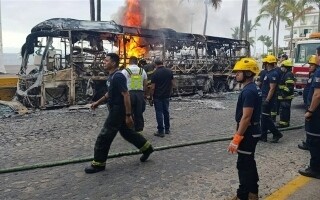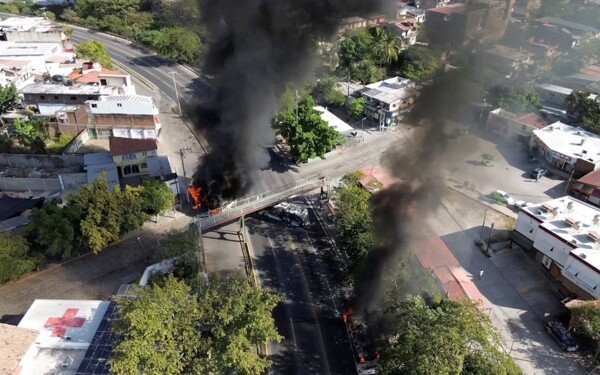
Misinformation about Mexican cartels is circulating widely on social media. For instance, posts on X, Instagram, and Facebook featured images of burning buildings and vehicles with messages like: 'State of war: Mexico on high alert after confirmation of the death of 'El Mencho', a leader of the CJNG'. A reverse image search using Google Lens revealed that these same images were published in September 2025 and actually depict protests against corruption in Nepal by a movement called 'Generation Z'. Upon examining the content, inconsistencies became apparent, such as license plates on the vehicles in the video being from Nepal, not Mexico. Similarly, a video went viral purporting to show Mexican President Claudia Sheinbaum being transferred to a Navy vessel during an 'institutional security' operation to protect her from a cartel assassination attempt. However, a reverse image search confirmed the footage was filmed in early February and shows the president arriving at the inauguration of an underwater museum in Sonora. Following the confirmation of the death of CJNG leader Nemesio Oseguera Cervantes, alias 'El Mencho', a photo of the supposed drug lord's body began circulating on social media and crime-related portals. This image, however, was created using Google's Artificial Intelligence (AI). Using SynthID, Google's technology for identifying AI-generated content, Aristegui Noticias verified that the image was created or edited with AI. SynthID detected digital watermarks in the file, which are used by Google to identify content created or modified by its AI tools. Although this watermark is invisible to the human eye, it is designed to be detectable even if the image is cropped or compressed. Unlike a logo or text in a corner, SynthID is an invisible digital watermark embedded directly into the image's pixel data. Verificado, a source specializing in combating misinformation, documented that this and several other AI-generated images circulated widely on social media during and after the operation that led to 'El Mencho's' death. A single post on X featuring the fake image of Nemesio Oseguera's body garnered 4.7 million views and over 53,000 likes, reported Verificado. The death of 'El Mencho' has sparked a flood of fake photos and videos online. The Mexican Army's operation and subsequent violence led to the spread of false content about alleged attacks on airports, disturbances, and massive fires, information debunked by EFE Verifica. Among these posts was an image of a burning plane, shared with claims that organized crime members had taken control of Guadalajara's International Airport in retaliation for the 59-year-old trafficker's murder. However, an analysis of the image revealed inconsistencies typical of AI-generated content, such as a lack of fire or smoke from the aircraft's engine and two people standing just a few meters away. Specialized tools like 'Fake Image Detector' also validated the synthetic origin of the photo. The Pacific Airports Group, which operates the terminal in Guadalajara, denied these publications on Sunday afternoon, stating that 'no incidents have been recorded inside the facilities and there is no risk for passengers, collaborators, or visitors'. The government of Jalisco also debunked the plane image and a photo supposedly showing a massive fire in Puerto Vallarta, artificially generated with Google's AI, according to the same platform. Social media posts have also linked old, out-of-context videos to the blockades and disturbances that occurred on Sunday in at least 16 Mexican states, including Jalisco, Michoacán, and Colima, following Cervantes' death, which comes amid increasing pressure from the U.S. (With information from EFE).