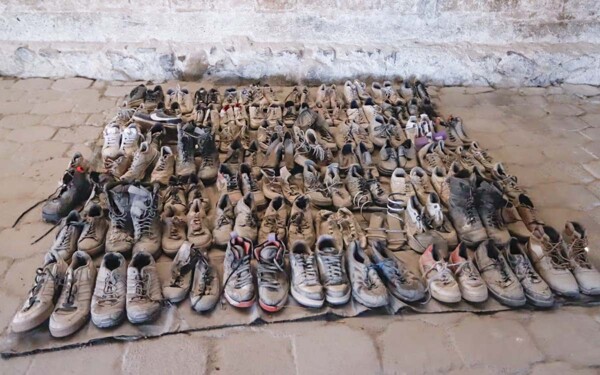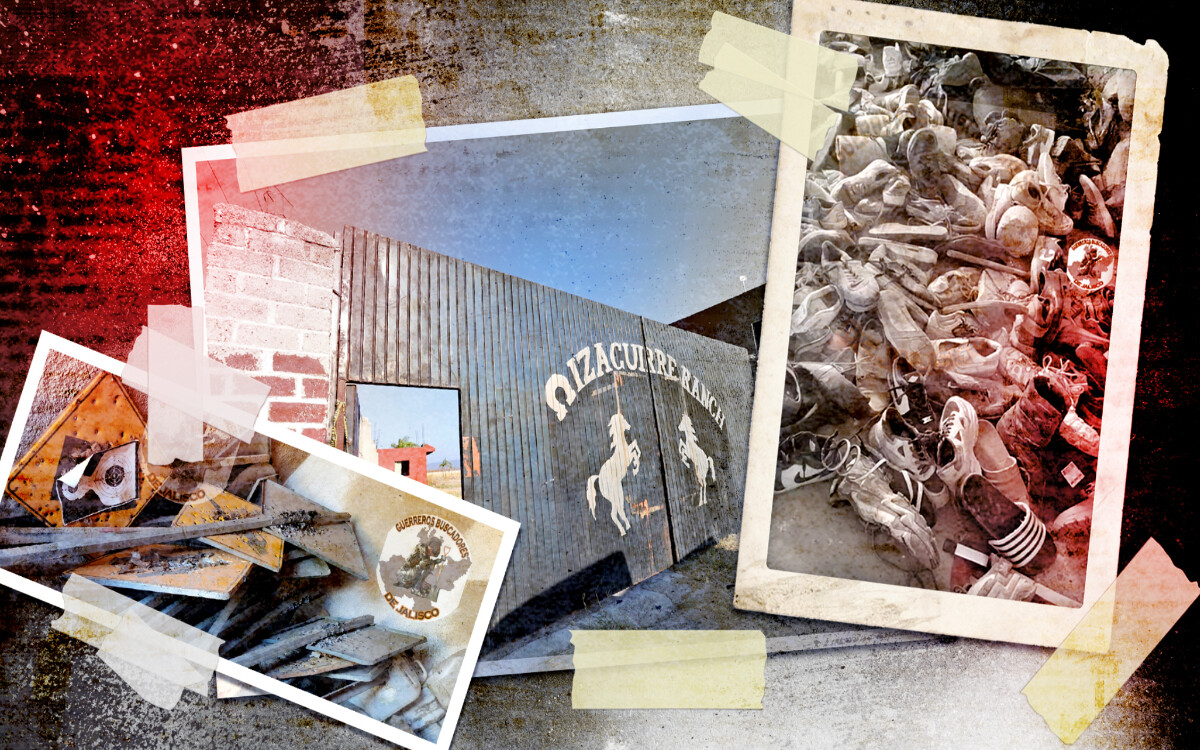
The National Guard handed over the detainees to the local Prosecutor's Office and requested the securing of the property for the search for evidence. However, the National Human Rights Commission (CNDH) accredited that the personnel of the state prosecutor's office failed in their duties to preserve the scene and handle the chain of custody. The National Human Rights Commission (CNDH) issued Recommendation 11/2026 to the Prosecutor's Office of the State of Jalisco (FEJ) and the Jalisco Institute of Forensic Sciences (IJCF) after documenting multiple deficiencies and omissions in the processing of evidence at the property known as 'Rancho Izaguirre', located in the municipality of Teuchitlán. The document does not make recommendations to federal institutions, such as the Attorney General's Office, despite their role in organizing the massive tour that the media carried out on the premises. The events date back to September 18, 2024, when elements of the National Guard went to the place after a report of shots fired. The CNDH stated that due to an improper securing, on March 5, 2025, third parties entered the site and found new evidence that the authorities had overlooked. Days later, on March 20, 2025, a state Public Ministry agent allowed the massive entry of people onto the property, losing control of the area and causing the definitive alteration of the place and its evidence. The recommendation and the CNDH communiqué omitted to mention that it was Alejandro Gertz Manero, then head of the Attorney General's Office, who organized the massive tour of the premises. President Claudia Sheinbaum took advantage of the testimonies of journalists aligned with the government who participated in the tour to argue that there was no extermination center for people; the recommendation does not mention the President of Mexico or another authority from her cabinet. The recommendation points out that there was a delay in expert examinations, since the genetic report of the biological samples of the murdered victim took about six months to be confronted with the database of missing persons. Furthermore, the CNDH denounced that the IJCF displayed on its official website a catalog with 1,842 photographic evidence of the case without adequate controls, which violated the dignity of the possible victims and their relatives. According to the recommendation, the persons in charge of the FEJ and the IJCF have a period of six months to carry out a public act of recognition of responsibility and public apology. Likewise, both dependencies must update their protocols for securing crime scenes, implement training cycles in human rights for their personnel, and collaborate in the administrative procedures that will be initiated against the public servants involved in these serious omissions. Despite the fact that a bone lot, firearms, ballistic evidence, and seven vehicles were located at the site, the authorities omitted their comprehensive technical processing, leaving them unidentified, inventoried, or registered properly. According to the recommendation, three of the seven vehicles secured were stolen on November 25, 2024, while they were in the vehicle depot under the custody of the authorities. The contamination of the scene continued for months later. At the site, 10 armed people were detained and three victims deprived of their liberty were released, one of them already dead.