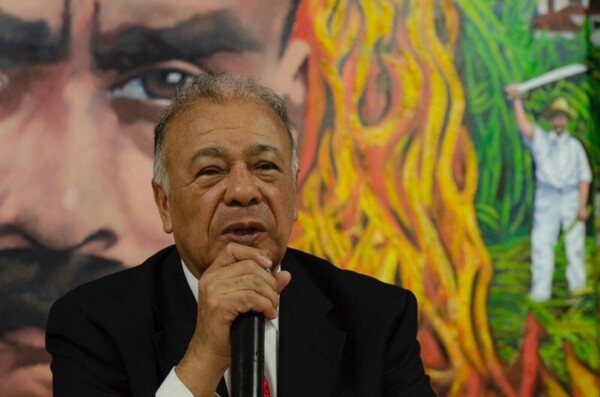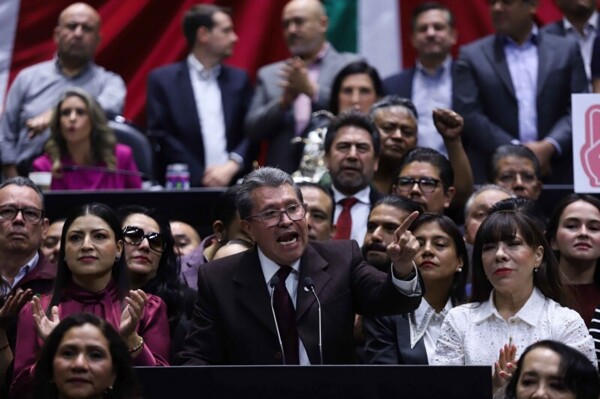
The first major topic left out of the constitutional reform proposal, which could be put to a simple majority vote, is immunity. The elimination of federal immunity for deputies and senators. There is already a proposal in the parliamentary chamber, promoted by a claudicist known as the Zacatecan Alfonso Ramírez Cuéllar, who ensures that this figure has allowed public servants to enjoy impunity before the law, and conversely, its elimination in different parts of the country facilitated, for example, 'the arrest of a member of the Real Estate Cartel of PAN', in reference to Christian Von Roehrich, and more recently, the Morena mayor of Tequila, Jalisco, Diego Rivera Navarro. The 4T is broken: With votes against from the Green Party and PT, the Electoral Reform is rejected in San Lázaro. Another topic that could be included in Plan B will be the change in the structure of the National Electoral Institute to—as the Electoral Reform initiative justified—avoid duplication of functions with the disappearance of local electoral institutes (OPLEs), or the implementation of austerity measures to reduce the INE's operational costs. A third topic that will be important in the new presidential proposal with the backing of the majority caucuses of Morena in San Lázaro and the Senate of the Republic will be the reduction of spending in elections, which, however, will not allow changing the holding of the recall of mandate contemplated in 2028 and no longer in 2027, because changes to constitutional transitory clauses would be needed. Opposition caucuses against the 4T's Electoral Reform. For each of these changes—and more in secondary laws—the backing of the Green Party and PT caucuses would no longer be necessary. After months of speculation and public forecasts, this Tuesday the Electoral Reform of President Claudia Sheinbaum was rejected in the Chamber of Deputies for not having enough votes to advance in the Plenary. Morena has 260 deputies, a very comfortable majority. Among the federal legislators, there has been no shortage of those who recall that Andrés Manuel López Obrador himself had attempted his own Electoral Reform and it was also rejected at two moments in 2022: first without a qualified majority, and later with changes to secondary laws that were dismissed by the Supreme Court of Justice. As on few occasions, Morena was left alone, as its allies from the Green Party and PT decided to reject the presidential project. Now, in the leadership of the Legislative Power, the topic of discussion is different: the content of the already announced and confirmed Plan B of Sheinbaum Pardo, of which only the closest circle to the federal president's legal and constitutional advisory team knows the details. According to constitutionalists from the Political Coordination Board of San Lázaro consulted with the recorder off by this editorial, the President's Plan B cannot have the same content as the proposal already rejected in the Plenary, and must focus on non-constitutional changes, that is, on secondary or regulatory laws. Therefore, it will be less ambitious and could be divided by topics, and not by articles, as was done with the Electoral Reform. Since it does not reform the Constitution, a relative majority (334 votes) is not a legal requirement, and to give the green light to reforms, only a simple majority is needed. Sheinbaum is in a better position with the Judicial Branch, and the changes she promotes in secondary laws could become firm, turning her first legislative defeat into a victory.