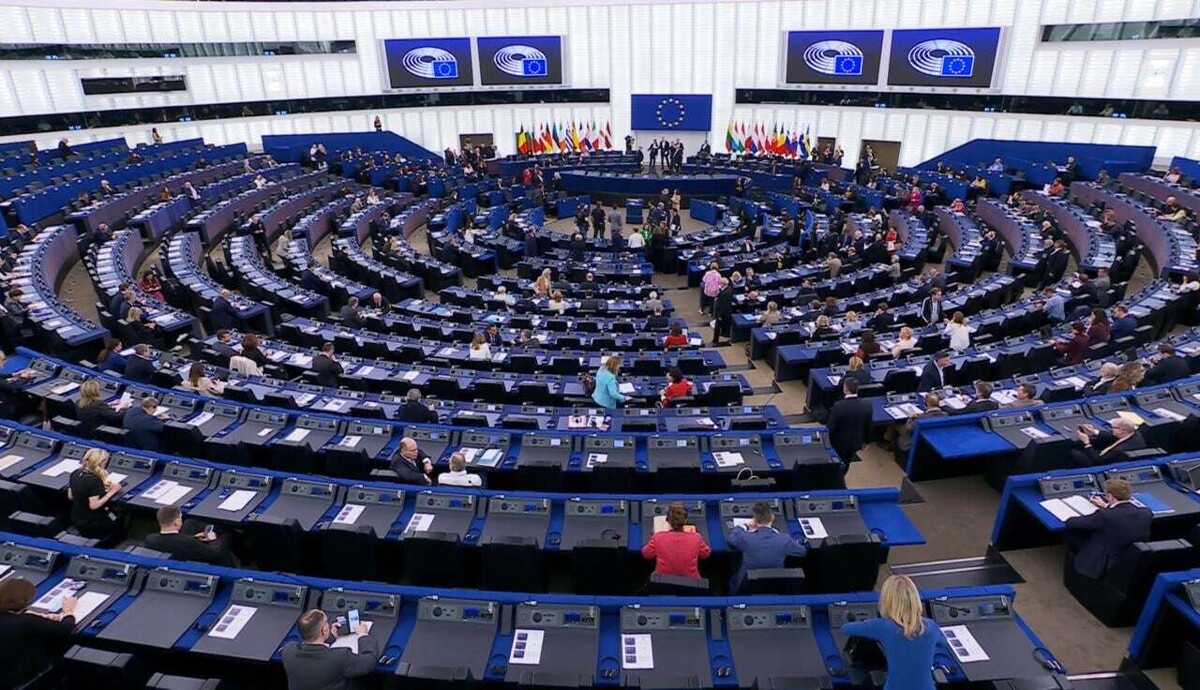
The European Parliament approved on Thursday a controversial tightening of its migration policy, which is already drawing comparisons with the ICE model of US President Donald Trump. With 389 votes in favor, 206 against, and 32 abstentions, the European Parliament gave the green light to the so-called Returns Regulation, a rule that obligates migrants to “actively cooperate” in their own deportation or face severe penalties. According to information from Spanish media, the new framework allows for administrative detention of up to 24 months, and also opens the door to deportations to centers located outside European territory. With this, the new regulation introduces measures that represent a radical shift in European migration policy. Among the most controversial points are: the obligation to “actively cooperate” in deportation, the withdrawal of social benefits in case of refusal, a ban on working, criminal penalties that can include prison time, and administrative detention of up to 24 months. Furthermore, deportations can be carried out even if legal proceedings are underway, unless a judge rules otherwise. Detention Centers One of the most controversial aspects of the regulation is the creation of so-called “return centers” in third countries, a strategy that revives initiatives like Italy's, which in 2024 pushed for centers in Albania, although these faced judicial obstacles. The new regulation would allow migrants to be sent to these centers while their deportation is being resolved, always under agreements between countries and respecting the principle of non-refoulement. Nevertheless, the new regulation proposes a profound transformation in migration management, and while the final details will depend on its implementation in each country, the approved framework allows us to outline how these centers would operate: Functions of return centers: housing migrants undergoing deportation, administrative management of deportations, prolonged custody in cases considered “risk of escape”, coordination with authorities of third countries, execution of accelerated return processes. Functions of agents: supervising compliance with deportation, assessing the migrant's level of “cooperation”, managing documentation for deportation, applying restrictive measures in case of refusal, coordinating transfers and administrative detentions. In cases considered “a threat to security”, the regulation even allows for priority deportations and confinement in separate facilities. Europe ‘divides’ The regulation sparked strong criticism within the European Parliament itself. The vice-president of the Socialists and Democrats group, Ana Catarina Mendes, warned that the result reflects a worrying political shift: “It is not a balanced approach, but a turn driven by the desire to align with the far right.” Additionally, left-wing, green groups, and social organizations warned that these measures could lead to prolonged detentions and violations of fundamental rights.