This configuration does not in itself disqualify the Committee's actions, but imposes on its members an additional responsibility: to act with full independence from those who appointed them.
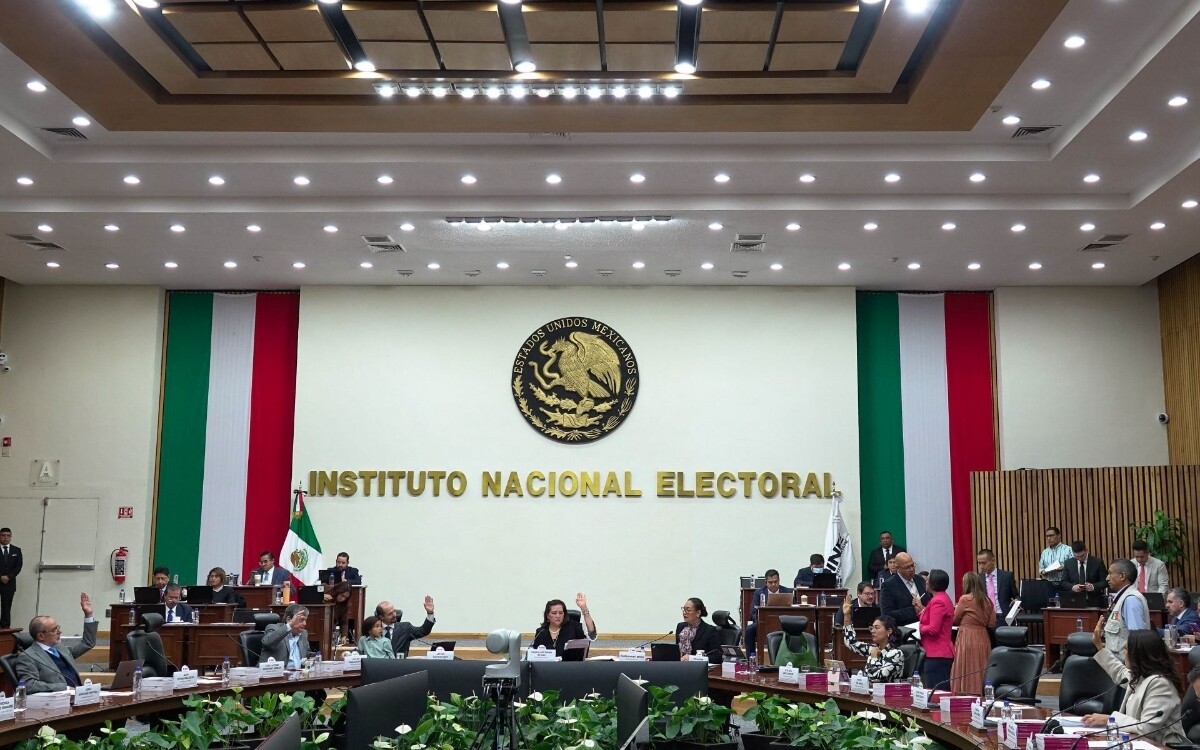
On April 6, a knowledge test was administered to the candidates who passed the first phase of requirements review. With this criterion, we have observed the process from its beginning and will continue to do so until the full Chamber of Deputies concludes the designation.
The formation of the Technical Evaluation Committee (CTE) raises legitimate concerns about whether the constitutional model—designed to guarantee the impartiality and political independence of the process—was observed in its reason and purpose.
It has already been demonstrated in 2023 that a lottery does not guarantee the suitability or impartiality of the designated individuals.
The process is thus in its core phase: the two remaining stages—the curriculum evaluation and the interview—are what will allow the Committee to assess, beyond technical mastery, the trajectory and profile of each candidate to integrate the CGINE.
As the specific suitability evaluation begins—concluding on April 12—and the interview phase, scheduled from April 14 to 16, we issue a direct call to the CTE for the interviews to allow candidates to demonstrate and verify their independence, and for the analysis of the files to objectively, with maximum transparency, and with strict weighting, evaluate the trajectory of each candidate, their institutional ties, and their possible dependencies on political or governmental actors.
The designation process was met with reservations due to the reduction in the number of members and the manner in which its five members were appointed, first by the 2025 reform, and because the JUCOPO and the CNDH that participated in the process did not accredit the safeguards for the balance between the criteria of parliamentary responsibility and the exercise of autonomy desirable.
This, by definition, requires an agreement between different political forces and ideas.
Three new counselorships with plural political backing and proven profiles of independence are a democratic demand that parliamentary groups have the obligation to honor.
The CTE has already published the list of those advancing to the suitability evaluation phase, ensuring gender parity among those who continue.
Our observation is based on an irrenounceable premise: an indispensable condition for having clean elections is the existence of independent, autonomous, and impartial electoral authorities.
The Citizen Observatory 2026*reiterates its commitment to accompany and document each stage of the process for renewing the three counselorships of the General Council of the INE (CGINE).
The origin of the qualified majority that the Constitution requires was due to the commitment to achieve a consensus that includes the opposition, as backing for the reliability of the General Council.
That is part of electoral integrity.
The resulting quintets will be the most eloquent evidence of whether the Committee assumed that standard as a guiding criterion, which would substantiate with facts the substantive fulfillment of its function.
Finally, the Observatory reiterates its exhortation to all parliamentary groups, and in a special way to the majority, so that dialogue and the building of consensus be the path to the election in the plenary.
*Integrated by Jorge Alcocer, Elba Arjona, Mariana Calderón, Morelos Canseco, Fernán González, José Ramón Cossío, Margarita Luna Ramos, Natalia Reyes Heroles, Jesús Orozco, Diego Valadés, Alma Zamora; advised by Dong Nguyen