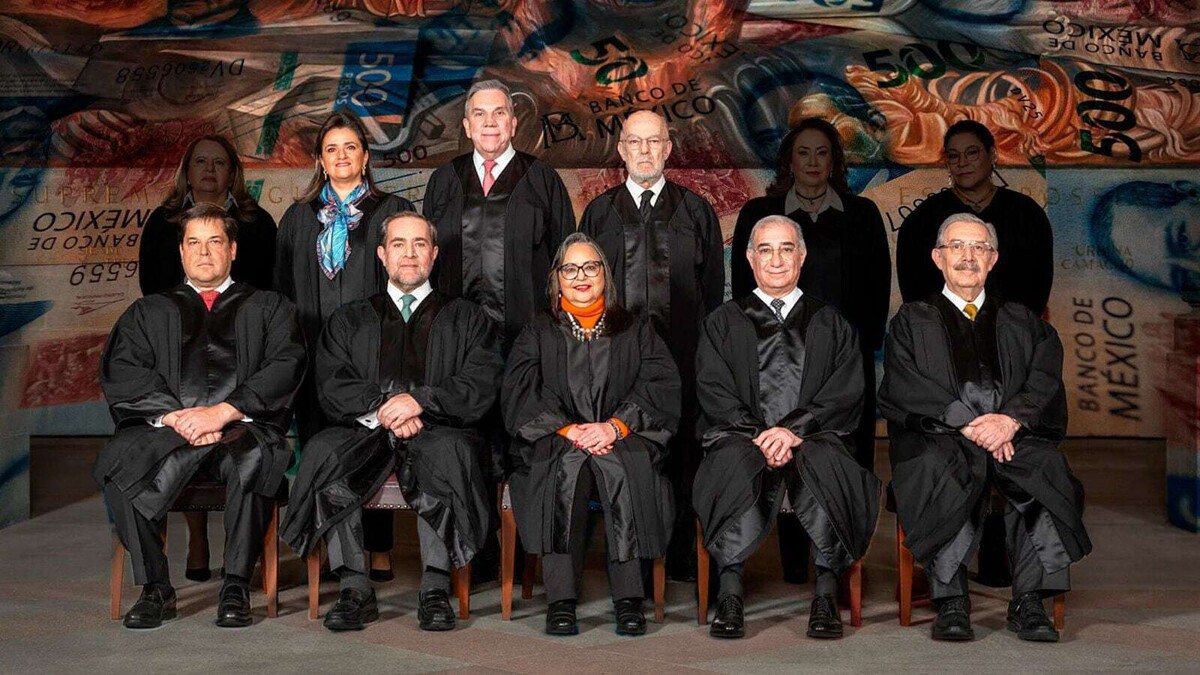
Eight of the 11 ministers of the Supreme Court of Justice of the Nation (SCJN) presented their letters of resignation in the context of the popular election proposed by the reform to the Judicial Power. Although their retirement was scheduled for August 31, 2025, according to the second paragraph of the seventh transitory article of the reform, the president of the Senate has raised the possibility of blocking their pensions.
Gerardo Fernández Noroña pointed out that senators might not accept the resignations to avoid granting them the pension established by law. Saucedo Portillo explained that the ministers could end up without their retirement benefits if they are not elected in the electoral process.
The Organic Law of the Judicial Power establishes that ministers are entitled to a retirement benefit equivalent to one hundred percent of their monthly salary during the first two years, and eighty percent thereafter. Meanwhile, the seventh transitory article of the Judicial reform states that those ministers who resign before August 31, 2025, will retain their acquired labor rights.
Diego Saucedo Portillo warned that not approving the ministers' resignations would be an abuse of power and a regression in terms of human and labor rights. Despite Noroña's proposal not to accept the resignations, the constitutional lawyer explained that the Senate does not have the authority to do so, as the resignations submitted are based on the seventh transitory article of the recently approved judicial reform.
Regarding Minister Luis María Aguilar Morales, who submitted his resignation since his term ends on November 30, 2024, he is in an ambiguous situation regarding his retirement. On the other hand, the fate of the pension of Minister Margarita Ríos Farjat, who decided not to accept the corresponding monthly payment for her retirement, is unknown, which, according to Saucedo, would constitute an abuse of power and a regression in human and labor rights.