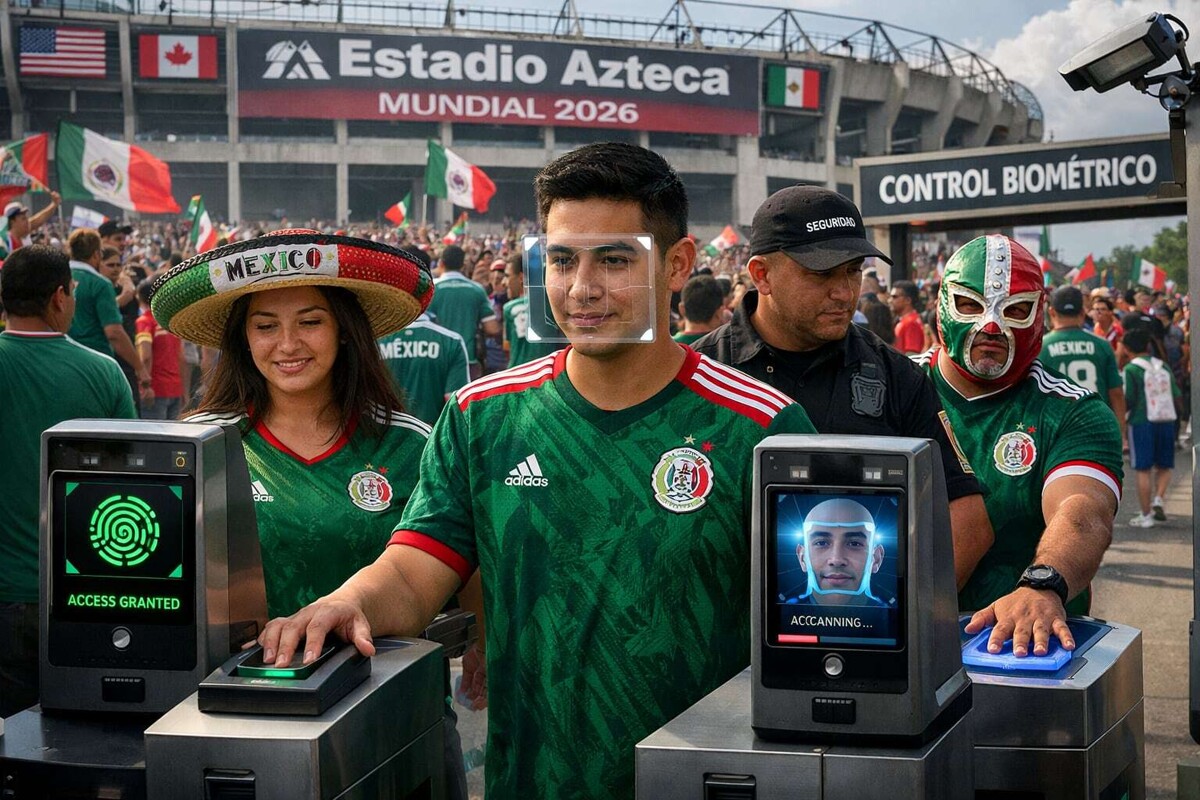
Thanks to biometrics, it will be possible to identify each person by linking their entry to their identity, which helps combat illegal resale and detect individuals who pose any risk. Additionally, this system will contribute to the overall organization of the event, allowing for a more orderly flow of fans and reducing crowds. Experts point out that the 2026 World Cup will be one of the most technologically advanced, with tools designed not to interfere with the spectator experience. The combination of innovation and coordination with authorities will allow the tournament to take place in a controlled and efficient environment, consolidating Mexico as a host prepared for international events. The implementation of cutting-edge technology will mark a before and after in the organization of the FIFA World Cup 2026, especially in Mexico, where the use of biometric controls is expected to guarantee security and efficiency at stadium entrances. This is how the control will work. Biometric control systems are identification systems that use unique physical characteristics of each person, such as the face, fingerprints, or even the iris. This type of tool allows for the rapid and accurate validation of an individual's identity, reducing the possibility of impersonation or fraud. Unlike traditional methods, such as physical tickets or codes, this technology is based on irreplaceable data, making it a more reliable alternative for large-scale events. For the 2026 World Cup, these mechanisms will be implemented at the Mexican venues: Mexico City, Guadalajara, and Monterrey. According to security specialists, the stadiums will have two or even three rings of control, where fans will have to pass through technological filters before entering. This measure seeks to expedite access and avoid long lines, while strengthening surveillance in each venue. The main objective of this innovation is to offer a safer environment for attendees.