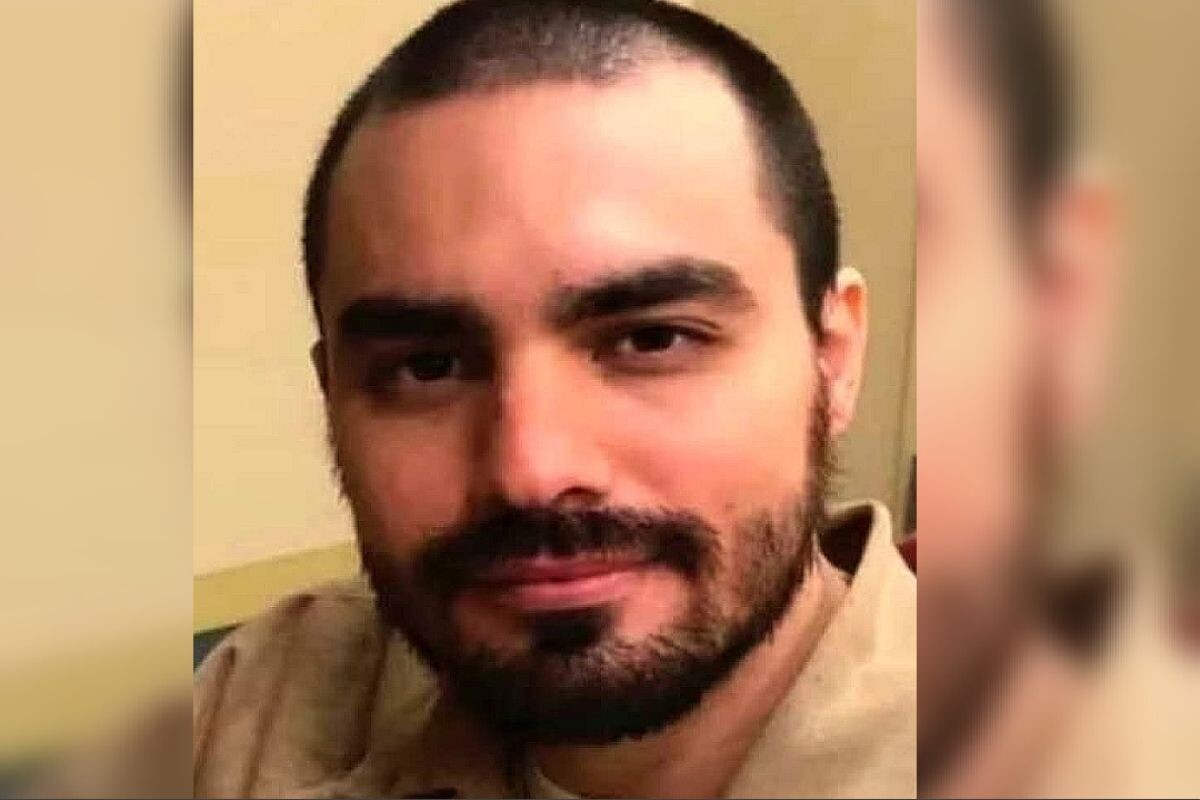
The escalation of the conflict quickly weakened his group. In May 2017, Dámaso López Núñez was arrested in Mexico City; his capture marked the collapse of the clan, and two months later, in July of that same year, he voluntarily surrendered to U.S. authorities. He was around 30 years old when he crossed the border to place himself at the disposal of the Drug Enforcement Administration (DEA). The surrender was part of a judicial negotiation. In the United States, López Serrano accepted responsibility for crimes related to conspiracy to distribute drugs and became a cooperating witness. During the process, he provided information about the internal structure of the Sinaloa Cartel, its methods of operation, and the disputes following the fall of Joaquín Guzmán Loera; this cooperation allowed him to receive procedural benefits. In 2018, a federal judge sentenced him to a reduced sentence of six years in prison, and the agreement reflected the value that U.S. authorities placed on his testimony, but it also opened a recurring discussion about the scope and limits of the collaborator figure in transnational organized crime cases. While López Serrano faced his process in the U.S., one of the most emblematic murders against the press was committed in Mexico. On May 15, 2017, journalist Javier Valdez was assassinated in Culiacán, founder of the weekly Ríodoce and correspondent for La Jornada; the crime generated national and international condemnation and put the focus on violence against journalists in the country. As the investigations advanced, Mexican authorities arrested and convicted the material authors of the murder. Years later, the Attorney General's Office pointed to Dámaso López Serrano as the presumed intellectual author of the crime, in the context of the internal dispute within the Sinaloa Cartel. López Serrano has denied that accusation, but the allegation remains one of the most delicate pending issues for Mexican justice. After serving part of his sentence in the United States, López Serrano regained his freedom under a regime of judicial supervision; the conditions included periodic reports and the prohibition of engaging in any illicit activity. For the authorities, that period represented the closure of his active criminal stage. However, while he was under supervised release, López Serrano was accused by U.S. authorities of attempting to traffic fentanyl, a synthetic drug associated with the current overdose crisis in the United States. The accusation implied not only a new crime but also a direct violation of the conditions imposed by the court. On February 5, 2026, a federal judge in Alexandria, Virginia, sentenced him to five years in prison; the resolution emphasized recidivism and, at least temporarily, closed the chapter of his judicial collaboration. At the same time, the Mexican government has reiterated that it maintains an active extradition request for López Serrano to face the pending charges in the country. To date, the process has no defined date and depends on the conclusion of his new sentence in the United States. Far from being closed, the file of Dámaso López Serrano remains active, with each new judicial decision placing his name back at the center of the debate and confirming that in the Sinaloa Cartel, generational changes do not necessarily mean ruptures, but continuities marked by power, violence, and impunity.