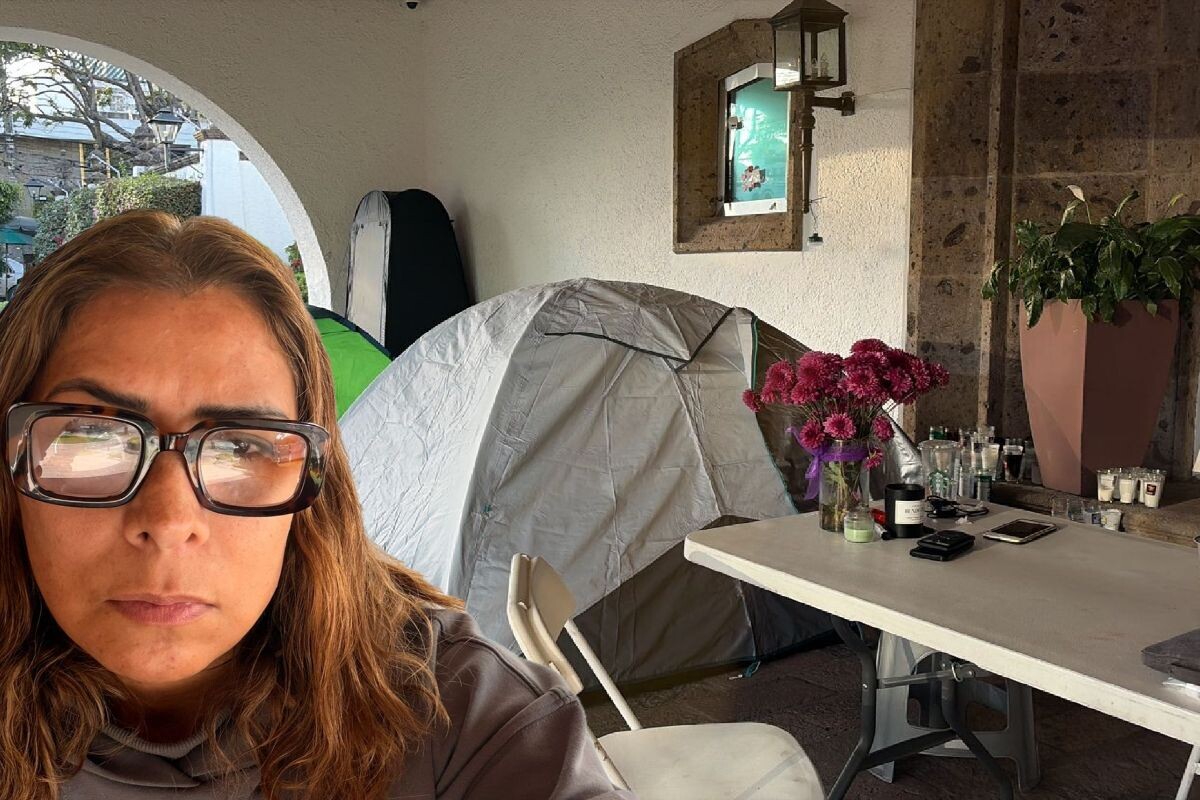
Lisi Celis González, a mother denouncing vicarious violence in Jalisco, is on day 19 of a liquid hunger strike in front of Casa Jalisco, the official state government residence. She is demanding the return of her 14-year-old son, Patricio, following a series of irregularities and what she considers corruption within the judicial system.
Lisi, also a co-founder of the National Front Against Vicarious Violence, stated in an interview with Aristegui Noticias that the father of her children—with his influence and resources—has failed to comply with over eighty court orders concerning the custody and return of Patricio, as well as to grant access to the boy's companionship and protection. She was summoned to more than 22 legal proceedings just to have Patricio returned, yet the father never appeared. Unfortunately, authorities have not imposed sanctions, as judges claim the gentleman has reached the limit of violations and penalties.
The woman insists that the system has protected her children's father and taken actions against her, despite the evidence she has presented about the conditions and violence in which the children live. Lisi is sustaining herself on liquids and following a protocol she defined with her legal team. Although her health is at risk, she assures she will continue the strike until the authorities comply with the legal frameworks.
The conflict began in 2019, when Marcelo and Patricio were taken by their father, Diego “N”. Since then, Lisi has faced over 300 legal proceedings in state and federal courts to regain custody of her sons. Celis González also reported being the subject of a complaint filed by her older son, who alleged threats to the bodyguards and associates of his father. She considers these accusations unfounded, leading to more legal proceedings against her.
The mother also mentioned that messages have been detected warning the perpetrator to flee when authorities are about to conduct proceedings at her home. Therefore, she demanded that authorities intervene in all irregularities. Currently, Lisi remains outside the residence, which is also that of Governor Pablo Lemus, in a tent with limited access to electricity and basic services—despite having obtained an amparo to guarantee minimum conditions—and under surveillance due to potential threats. She also denounced being denied access to officials from the Women's Justice Centers and the Jalisco Secretariat for Substantive Equality, allegedly by orders of the governor, who initially said he would support her case but later dismissed it.
Lisi stated that over these three weeks, she has been pressured and harassed by people and media linked to her ex-husband, as well as attempts to destabilize her protest. "I am not here for pleasure, I am fed up. I have seen how my children's rights are violated, how they have been isolated and left exposed to dangers on the streets, and I am going to stay here until this changes." She also believes in her right to no longer live this torture and may die of hunger.
Although vicarious violence has begun to be recognized in much of the country, only a few states have clearly classified this crime in their penal codes. Entities like Aguascalientes, Campeche, Nayarit, Yucatán, Michoacán, Puebla, Sonora, and Zacatecas, among others, have established specific sanctions for cases where one parent uses the children to harm or control the other parent. In other states, even though vicarious violence is recognized in laws protecting women, the lack of criminal classification limits the effective application of justice, leaving victims without clear mechanisms for aggressors to face legal consequences. Finally, Lisi said that her protest at Casa Jalisco highlights that the legal recognition of vicarious violence does not always translate into concrete actions to protect minors.