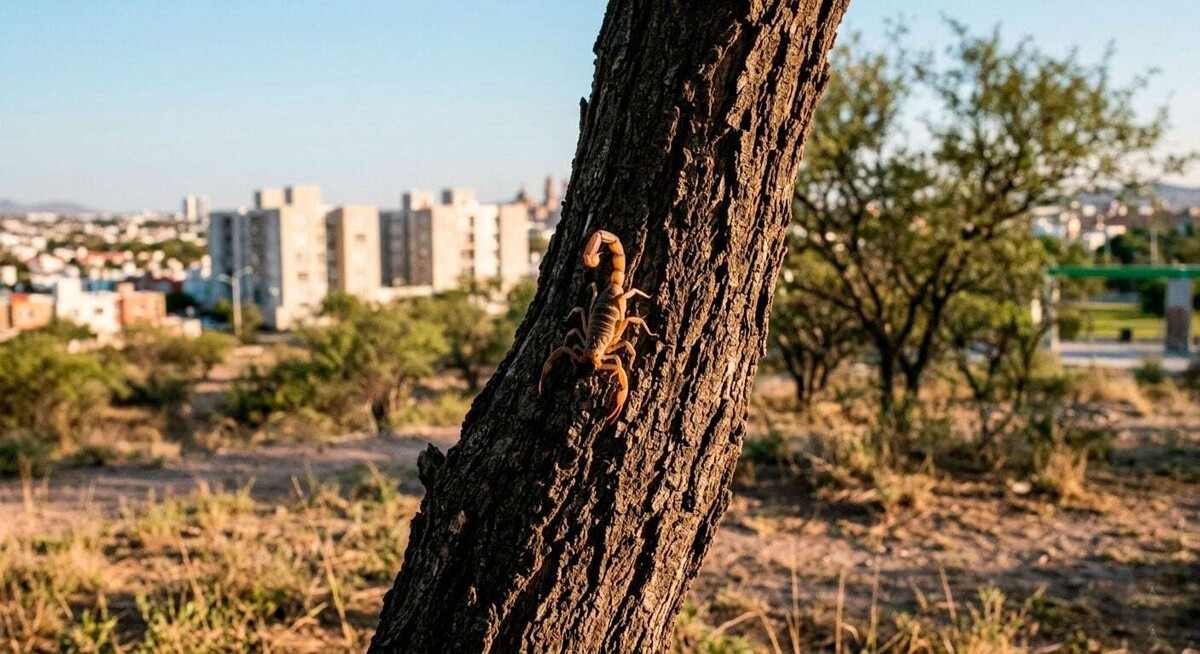
In León, where the fear of scorpion stings is part of daily life, health authorities have launched an unusual message: don't kill them, but learn to coexist with them under clear preventive measures. The notice focuses on Centruroides infamatus, known as the bark scorpion, a species of medical importance in the region, but also with a relevant ecological role within the urban environment. By April 2026, Guanajuato has accumulated over 7,000 scorpion stings, an increase associated with rising temperatures in the state, with León being one of the main hotspots. In case of a sting, the instruction is to seek immediate medical attention. The approach, authorities insist, is to change the logic of the response. From the impulse to kill to a culture of informed prevention, in a city where the scorpion is not an exception, but an active part of the urban ecosystem. To distinguish the bark scorpion (Centruroides infamatus)—of medical importance—from less dangerous species, it is key to observe some basic traits without getting close. The goal is not to eliminate them, but to reduce the risk of contact. Coexistence involves recognizing the danger without panicking, especially in areas with vegetation or open spaces. The recommendations are specific: avoid putting hands in cracks, tree trunks, or under bark; shake out clothing, backpacks, or blankets that have been on the ground; and never handle scorpions under any circumstances. Even so, the recommendation is not to handle any of them: when in doubt, all should be considered potentially dangerous and direct contact should be avoided. It usually presents a light yellow or straw-like color, with thin and elongated pincers, as well as a more stylized and segmented tail (metasoma), which gives it a “finer” appearance. In contrast, less venomous scorpions tend to be darker and sturdier, with thick pincers and a wider body. Its presence, explain experts, is not an accident, but part of an environment that still maintains natural dynamics. The shift in the message breaks with the immediate reaction. In this scenario, the Ministry of Health of Guanajuato (SSG) assured that there is a sufficient supply of anti-scorpion serum in all medical units and reinforced the call for prevention. The data is clear: it does represent a risk, but it also fulfills a function. This scorpion lives under tree bark and acts as a natural regulator of nocturnal insects, contributing to the balance of the ecosystem.