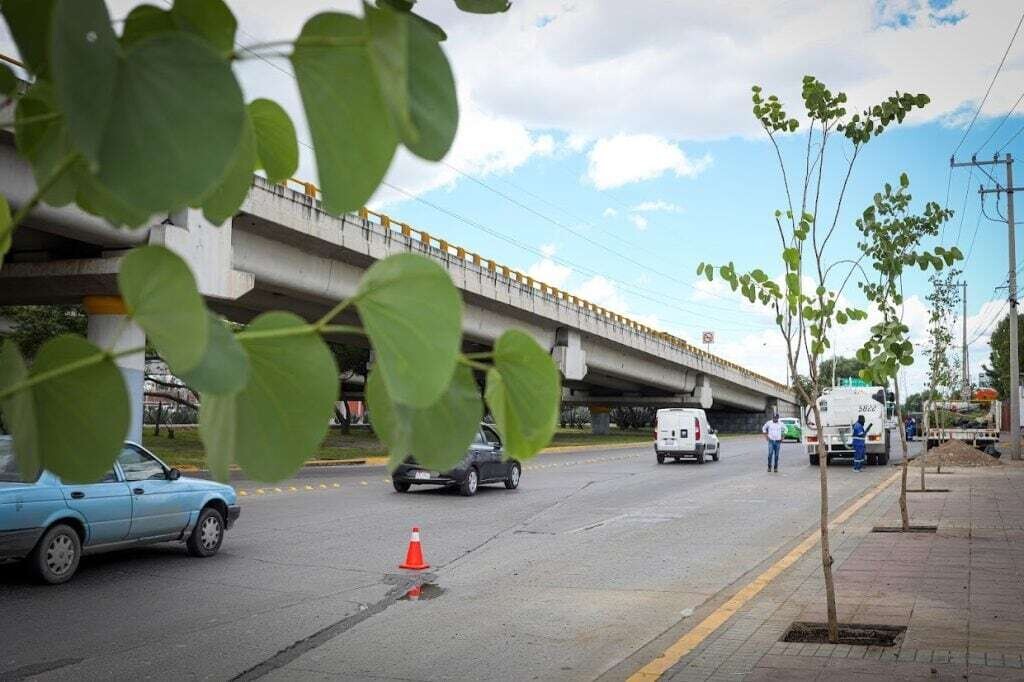
The central data confirms that over 90,000 trees have been treated since 2022 to combat pests such as mistletoe and dodder, two of the main causes of structural weakening in the city. The objective is to prevent trees from collapsing during the rainy season. The risk is not minor: weakened trees, combined with softened soil and strong winds, can fall and cause damage to roads, homes, or infrastructure. The strategy has budgetary backing. In 2025, the municipality allocated 10 million pesos for the diagnosis and care of the urban tree canopy, focusing on preserving existing trees rather than replacing them. The operational data completes the picture. During that same year, 236 trees fell in the city, all of them replaced, reflecting both environmental pressure and the institutional capacity to respond. However, there is another relevant shift. Tree management now incorporates recycling. From vegetative waste, the municipality generated 89 tons of mulch, an organic material that is reused to improve soil in new plantings and reforestation efforts. In other words, the fallen tree also re-enters the cycle. In parallel, expansion continues. Between 2022 and 2025, more than 60,000 trees have been planted, with a target of nearly 92,000 specimens, in a strategy that combines growth and maintenance. Specialists agree that the key is not to plant more, but to ensure healthy, stable, and well-adapted urban trees. In León, this transition has already begun. It is measured in more than just new roots. León is attending to over 90,000 trees with pests, and the municipal strategy aims to prevent falls during rains and improve the urban tree canopy. León has changed the logic of urban forestry: before planting, it is now focusing on rescue. It is measured in trees that do not fall.