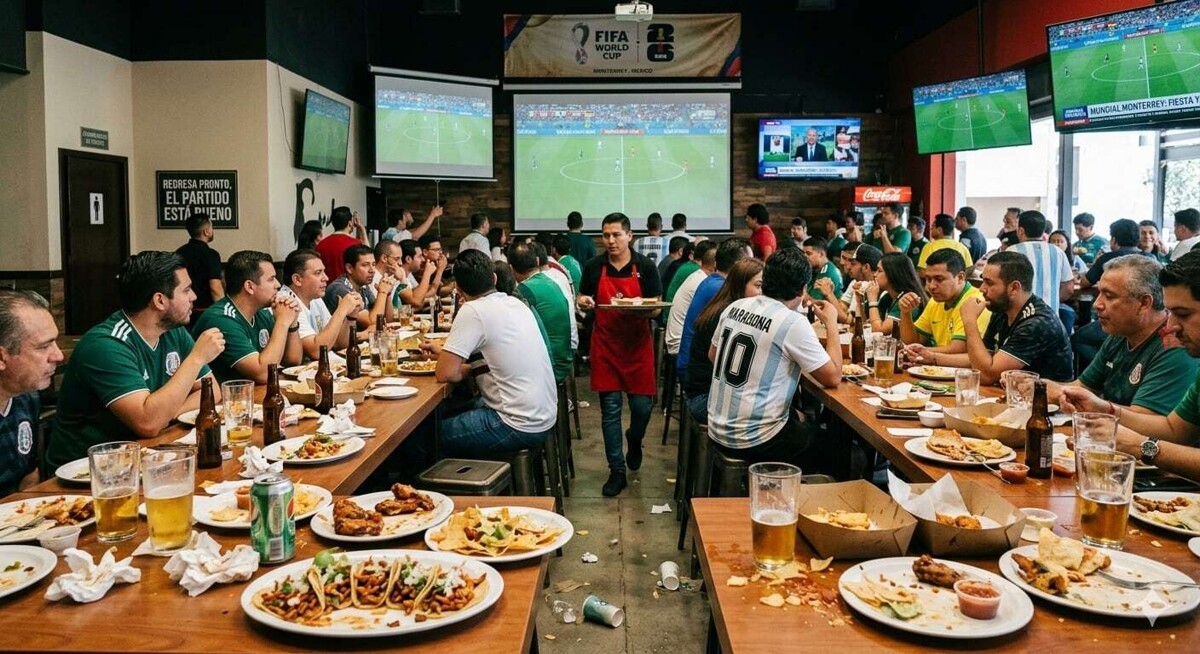
Less than three months before Mexico hosts the 2026 World Cup, the euphoria surrounding the sporting event is already translating into plans for gatherings, wholesale purchases, and tables full of side dishes, appetizers, and drinks. However, behind the festive atmosphere lies a little visible but growing problem: food waste. According to the survey 'World Cup 2026: Putting on a Shirt Against Food Waste,' conducted by the Cheaf app, Monterrey is emerging as the country's city with the highest risk of waste during the most active days of the World Cup (June 11 to July 5). While the rates are lower in Mexico City and Guadalajara, the capital of Nuevo León presents figures that are raising alarms among experts. The North, a leader in leftovers The study, which measures consumption and waste expectations among fans, reveals that one in five people in Monterrey (20%) anticipates that a significant amount of food will be left over after viewing parties. In contrast, the percentage in Mexico City is 13% and in Guadalajara, 12%. The gap widens in the most critical scenario: when a lot of food is left over, and even if it is saved, a portion ends up in the trash. In Monterrey, 12% of respondents acknowledge this will happen, while in the other two host cities, the figure stops at 7%. 'The pattern suggests that waste usually occurs with what is bought 'just in case' or prepared to fill the table,' explained Braulio Valenzuela, Country Manager for Mexico at Cheaf, when presenting the results. What will be thrown away the most? In all three host cities, the foods most likely to end up in the trash reflect the same syndrome: excessive precaution. In Monterrey, the products at the top of the risk list are: Side dishes (salads, purées, or rice): 48% Cold cuts, cheeses, and packaged snacks: 42% Breads and tortillas: 37% Excessively prepared food (soups or tamales): 32% Desserts: 30% The order is similar in Guadalajara, while in Mexico City and its metropolitan area, the focus shifts slightly: breads and tortillas are the main concern (48%), followed by side dishes (46%). One of the key findings of the study is that waste depends not only on the amount of food but also on the type of social gathering. In all three cities, most fans plan to watch the games at home, but in Monterrey, the social component is significantly higher. While 70% in Mexico City watch the games in their own homes, the percentage in Monterrey drops to 67%, but the dynamic of attending other people's homes or receiving guests increases: 48% of Monterrey residents plan to watch the games at friends' or family's homes, compared to 46% in Guadalajara and 36% in Mexico City. A 67% in Monterrey say they will invite other people to their home, a figure higher than Guadalajara's 58% and the country's capital 57%. This social pattern, explains Valenzuela, increases the likelihood of excessive purchases. 'When the gathering is planned to enjoy a match, a shopping trip is also planned, and that's where the difference between consumption and waste begins.' Recommendations: from 'just in case' to conscious consumption In light of the upcoming scenario, the Cheaf executive called for modifying shopping and preparation habits during the tournament, emphasizing that the World Cup can be an opportunity to establish more sustainable practices. 'The World Cup can be a boost to normalize simple habits: realistic portions, a short shopping list, and a plan for leftovers,' expressed Valenzuela. While the spotlight is on the logistics, security, and infrastructure of the World Cup, the data from this survey suggests that, at least in terms of waste, Monterrey will face an additional challenge that will require both civic awareness and family organization so the celebration doesn't end up in the trash.