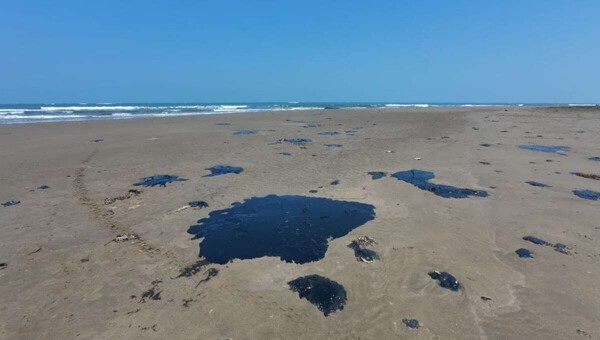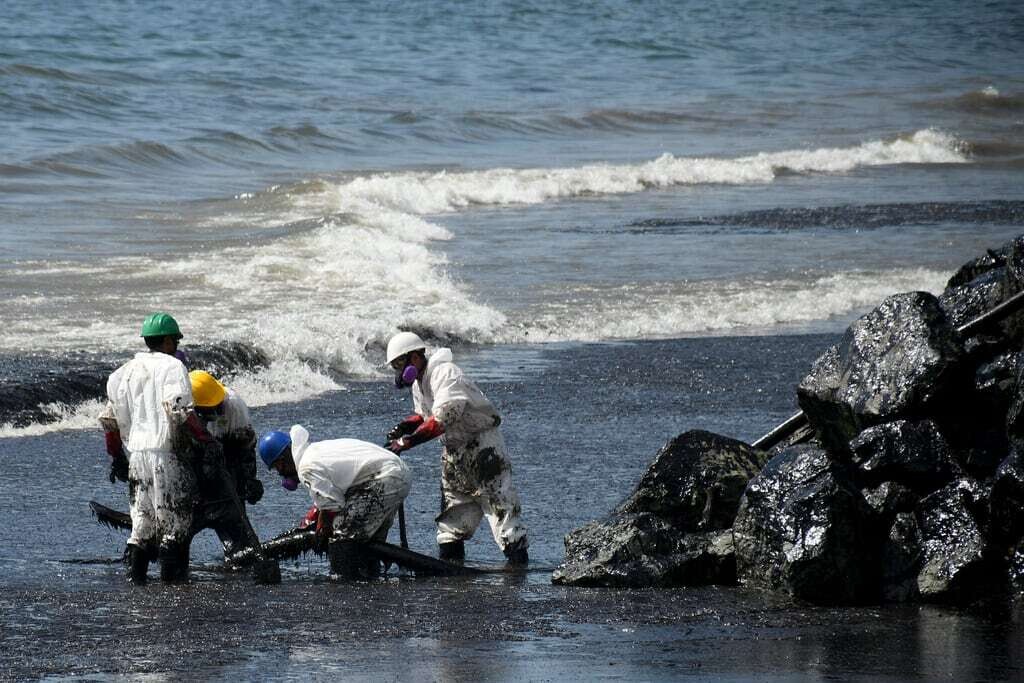
Two days later, Greenpeace assured that oil was continuing to arrive at Veracruz beaches in a fragmented and persistent manner. The organization warned of impacts on mangroves, lagoons, and coastal ecosystems, as well as possible effects on communities that depend on these environments. Point-outs and tension with authorities Greenpeace asked not to discredit its work after questions arose about the accuracy of an image shared on social networks. The organization clarified that the material was produced by a national medium and reiterated that its assessment is based on satellite data, independent monitoring, and field evidence. In this context, it also promotes a digital petition that has surpassed 30,000 signatures and aims to reach 50,000, with the goal of demanding attention for affected communities and greater transparency on the management of the spill. The spill reopens the debate on environmental risks The case once again places the vulnerability of the oil zones of the Gulf of Mexico and the risks associated with hydrocarbon activity in the region at the center of the debate. Greenpeace warned that, beyond the current event, it is necessary to prevent new disasters through a transition to renewable energy sources, while demanding immediate attention to the damage in ecosystems and affected communities. To date, there is no detailed position that specifies the total scope of the spill or the containment actions implemented, which leaves uncertainty open about the real magnitude of the environmental impact. The hydrocarbon spill in the Gulf of Mexico set off environmental alerts after showing a progressive expansion that, according to the organization Greenpeace, would have reached at least 630 kilometers of coastline between Tabasco and Veracruz. The environmental organization documented the advance of the oil through satellite images, monitoring, and field tours, which allowed reconstructing a timeline that points to a sustained spread for over a month. The spill intensified in a matter of days According to Greenpeace, the spill would have begun between February 6 and 10 in an area near the Akal-C platform. By February 11, the discharge intensified and two days later it was already visible on the surface, with the presence of vessels in the area. On February 14, the slick reached approximately 50 square kilometers, while by February 19 its extension was already around 300 square kilometers off the coast of Tabasco, with displacement towards the south of Veracruz. The expansion reached coastal areas and ecosystems By March 1, the hydrocarbon had already reached coastal areas of northern Tabasco and southern Veracruz. Subsequently, on March 18, traces were reported in municipalities such as Tamiahua, Tuxpan, and Cazones. On March 23, the Gulf of Mexico Reef Corridor Network reported damage in at least 630 kilometers of coastline.