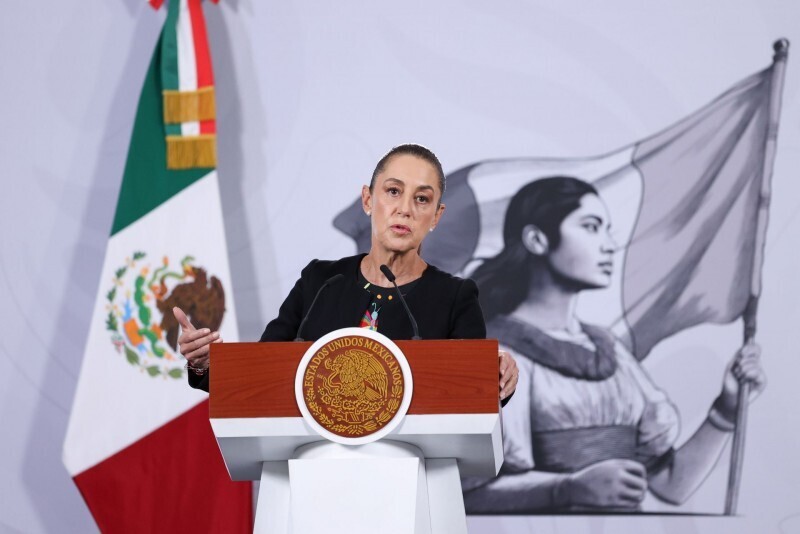
Mexico has backed down from Chinese pressure after softening the original measure. The decision was made after several meetings with Mexican and international business leaders in Mexico who warned the government that tariffs could affect the country's product prices. The original proposal was significantly changed to align with the 'Plan Mexico' for increasing local production without harming the national economy. 'We are establishing more in Mexico so that more is produced in Mexico,' said the president. Yesterday afternoon, the senators approved this initiative under fast-track procedures, which now moves to the executive branch and will take effect from the first minute of 2026. Following its approval in Congress and amid complaints from the Chinese government, President Claudia Sheinbaum defended that the new tariffs on countries without trade agreements with Mexico are not exclusively aimed at China. Questioned about the issue, the president clarified: 'It is not directed at China but at countries with whom we do not have trade agreements.' Sheinbaum also stated that 'we maintain our best willingness to continue working with these countries.' In another matter, the president said this morning that dialogues with the US government regarding the 1944 Water Treaty continue, as no agreement has been reached after the third day of meetings. Regarding Trump's statements yesterday about the wastewater problem in Tijuana, Sheinbaum defended that an agreement is already in place. 'Perhaps President Trump was not sufficiently informed,' she said. She recalled that during the previous administration, a first agreement led to the construction of a treatment plant by the military, and a similar project on the other side of the border was also agreed upon but has not been carried out. Trump now demands that Mexico resolve the sewage issues, calling them 'a threat.' Other projects are also pending on the Mexican side, which she said would be addressed promptly. She acknowledged that for many years there was a problem as Tijuana's drainage flowed into the Pacific but insisted that it has been addressed since the previous administration. Sheinbaum stated that while there was no immediate response to Trump's accusations, these issues will be addressed in the ongoing dialogues. The tariffs range from 5% to 50% and will impact products from a handful of Asian countries, including China, South Korea, India, Vietnam, and Thailand. This measure comes amid US tariff threats aimed at reducing China's share and ahead of the T-MEC review, which keeps the financial world in uncertainty. Citi: 'We are concerned about the inflationary impact of tariffs on China.' Nevertheless, Sheinbaum defends that these measures are aligned with her industrial plan to boost local production.