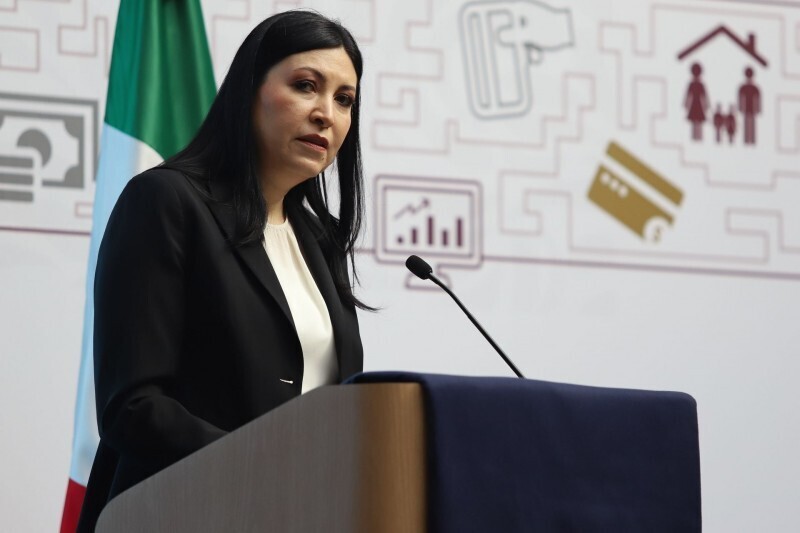
Bank of Mexico (Banxico) will end 2025 with a 7% interest rate and will prepare the ground for a monetary policy pause at the start of 2026, facing various pressures that will challenge its 3% inflation target, or at least that is the scenario analysts and investors are pricing in. According to the economic consensus, this coming Thursday, December 18, the Banxico board of governors, led by Victoria Rodríguez, will end the year with a 25 basis point cut. This data is important because this component helps to understand the trend the indicator will have in the medium and long term, so, if this scenario comes to pass, it still poses challenges for the central bank beyond 2026. The keys to high inflation and a monetary policy pause For 2026, the factors that will be at the center of the central bank's analysis are issues such as the impact of Mexico's tariffs; the IEPS tax that will take effect next year; wage increases; a slightly higher growth than this year; and, to a lesser extent, due to its temporary nature, the World Cup. Analysts from Banamex and Grupo Financiero Ve por Más agree in warning of a 'structural change' in some inflation components that will complicate Banxico's target. Alejandro Saldaña, economist at Ve por Más, emphasized the structural change in the labor market due to wage increases, which will imply higher labor costs. The projection is very tough for the central bank, which is facing accusations of a credibility crisis regarding its target. According to this same document, underlying inflation will close the year at 3.89%. 'This year it was 13%, but a data worth mentioning is that currently the percentage of the formal sector earning the minimum wage is 20%.' In contrast, the discourse repeated in the market is that 'there are no conditions' for Banxico to reach the 3% target in 2026 if the central bank continues its cutting trend. If the 2026 projections in the CITI consensus are observed, the estimated inflation for the end of next year is 3.9%, that is, it is at the limit of the range 'tolerated' by the central bank. This movement is even discounted in the movements in the bond market. For 2026, however, the path is not clear, as Banxico faces a series of inflationary challenges, market criticism of its projections, and growing discontent from the government over high interest rates that stifle the cost of debt and complicate the economy. This scenario works against Banxico, which maintains a flexible discourse and encourages a less restrictive monetary policy. He also considered that at current levels of the underlying component, 'it is more likely to rise to 4% than to fall below that level.' 'There is nothing that makes me assume that Banxico will lower it to 3%.' In that vein, Julio Ruiz, an analyst at Citi, explained that every time the minimum wage increases, the associated wage in the formal sector also increases. According to the consensus, next year the rate will be at 6.50%, which would imply two 25 basis point cuts or one 50 pb cut. Gabriela Siller, director of analysis at Banco Base, explained that if there are more cuts in the United States, Banxico will have more room to return to the cutting cycle. In that scenario, the market is already pricing in that the central bank will start the year with a pause in the cutting cycle, which will last at least the entire first quarter, while it digests these fiscal impacts and trade uncertainty. Ten years ago it was less than 5%. That impacts and affects the salary and disinflation of the service sector.' On the other hand, Ruiz pointed out that the effect of the IEPS will be temporary and will be mainly reflected in January, but it will be a 'one-time effect', however, he noted that it raises more alerts the effect of tariffs on countries without a trade agreement, such as China, since it will imply more expensive inputs 'and it is not so clear that it can dissipate so quickly,' he said. In turn, Banamex analysts speak of a structural problem, although they rather refer to the credibility of their projections, since since the 3% target was set, they have not managed to achieve it sustainably. Tension in the Treasury against Banxico grows: 'Now it turns out Victoria was a technocrat' Another factor will be how the Fed moves.