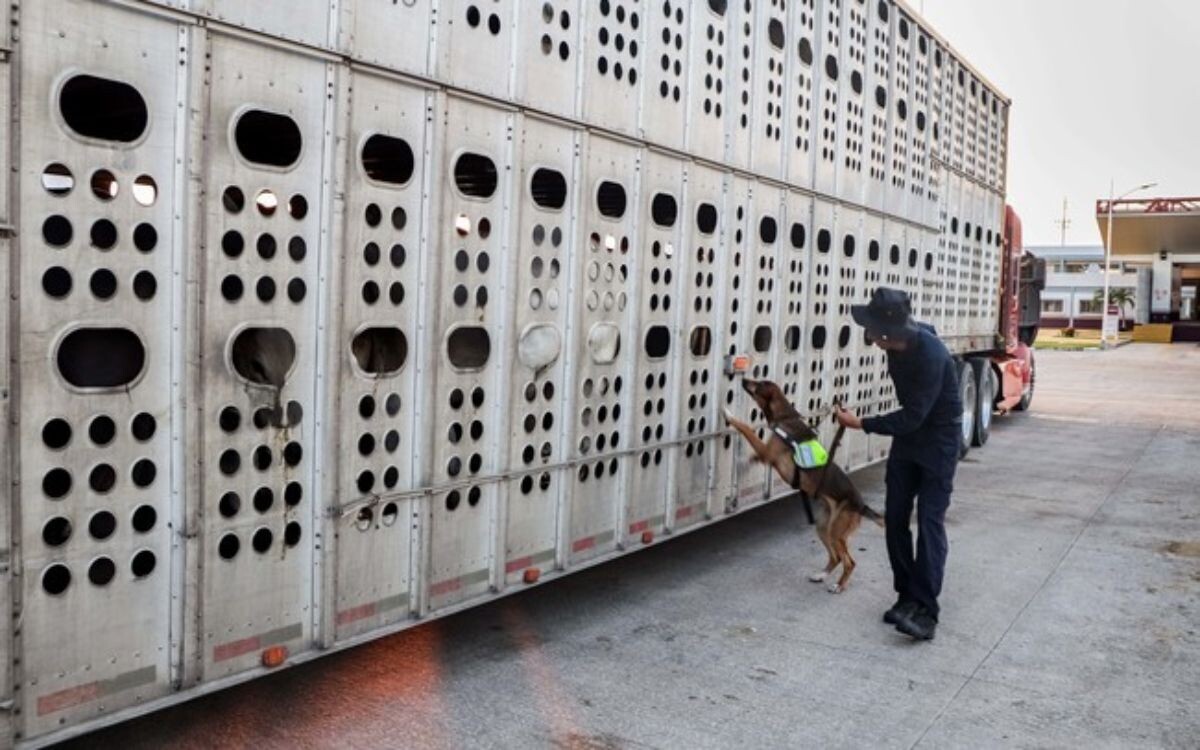
The federal government of Mexico announced that it has reinforced actions to contain the advance of the Cattle Borer Worm (GBG) through a special operation initiated on December 26, 2025, in the south-central region of Tamaulipas, northern Veracruz, and a part of the Huasteca Potosina. The strategy is coordinated by the Secretariat of Agriculture and Rural Development (Sader) through the National Service for Health, Safety and Food Quality (Senasica). According to the official communiqué, the decision to direct the release of sterile flies towards higher-risk areas is consistent with the technical proposals that Mexico has presented since November 2025 within the framework of binational cooperation. The objective is to prioritize the containment of the pest's advance fronts and halt its displacement into new livestock areas. This measure aligns with the joint action plan signed in August 2025, based on continuous technical analysis between both countries. The special operation on national territory involves the participation of the state governments of Tamaulipas, Veracruz, and San Luis Potosí; livestock associations and unions; as well as the support of the National Guard and the Tamaulipas State Guard. The plan includes a comprehensive set of actions to address the situation in the field. Key measures implemented include direct case management, which involves training producers, wound treatment, and preventive livestock treatment; the reinforcement of surveillance and notification through visits to production units; and the control of safe livestock movement, with inspections and preventive treatments. Sader reiterated that it will continue to adjust its actions as the situation in the field evolves, with the goal of protecting national livestock and directly supporting producers through timely, focused, and technically informed measures.