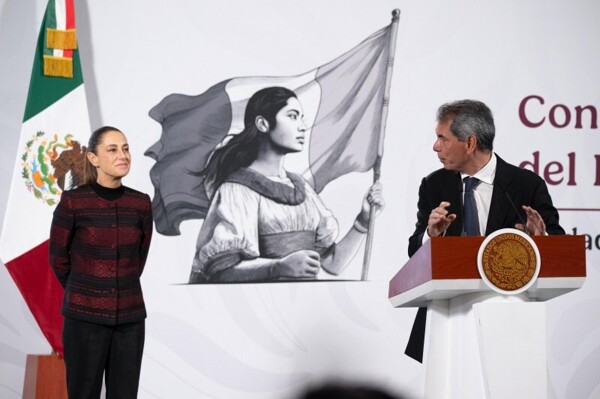
In Mexico, the reform to reduce the workweek from 48 to 40 hours advanced this Monday with the approval of the joint commissions of Constitutional Points and Labor and Social Security of the Chamber of Deputies. The proposal, without changes and with a gradual implementation until 2030, was presented by President Claudia Sheinbaum and received unanimous support from the 61 deputies present in the commission session. It maintains that for every six days of work, employees must enjoy at least one day of rest with full salary pay, a point that centered part of the debate due to demands that two days of rest be recognized. However, the Secretary of Labor and Social Security, Marath Bolaños, defended the gradualness of its implementation and announced that an electronic system is being developed to monitor compliance with this new norm once it comes into force. Additionally, the proposal states that overtime hours in the new workweek will be paid with a 100% additional bonus, and this extra time can exceed 12 hours per week, distributable up to four hours a day on a maximum of four days. If this limit is exceeded, the employer must pay a 200% additional bonus, according to the new framework to be discussed, and it also prohibits minors under 18 from working overtime. The transitional regime provides that the gradual implementation will begin next year, so in 2026 the 48-hour week will be maintained; in 2027 it would drop to 46; in 2028 to 44; in 2029 to 42, and in 2030 the 40-hour week would be reached, without reduction of salaries, wages, or benefits, according to the opinion. Likewise, during the discussion, the president of the Constitutional Points Commission, Leonel Godoy (Morena), indicated that it was agreed that reservations, additions, or particular votes will be presented directly to the Plenary for its discussion and analysis. From the ruling party, deputies of Morena, PT, and PVEM defended the reform and its graduality to not affect wages and to allow sectoral adjustments. In the opposition, the National Action Party (PAN), the Institutional Revolutionary Party (PRI), and Citizen Movement supported the reduction but insisted on making explicit the five days of work for two days of rest scheme and proposed, in different terms, incentives to avoid impacts on employment and productivity.