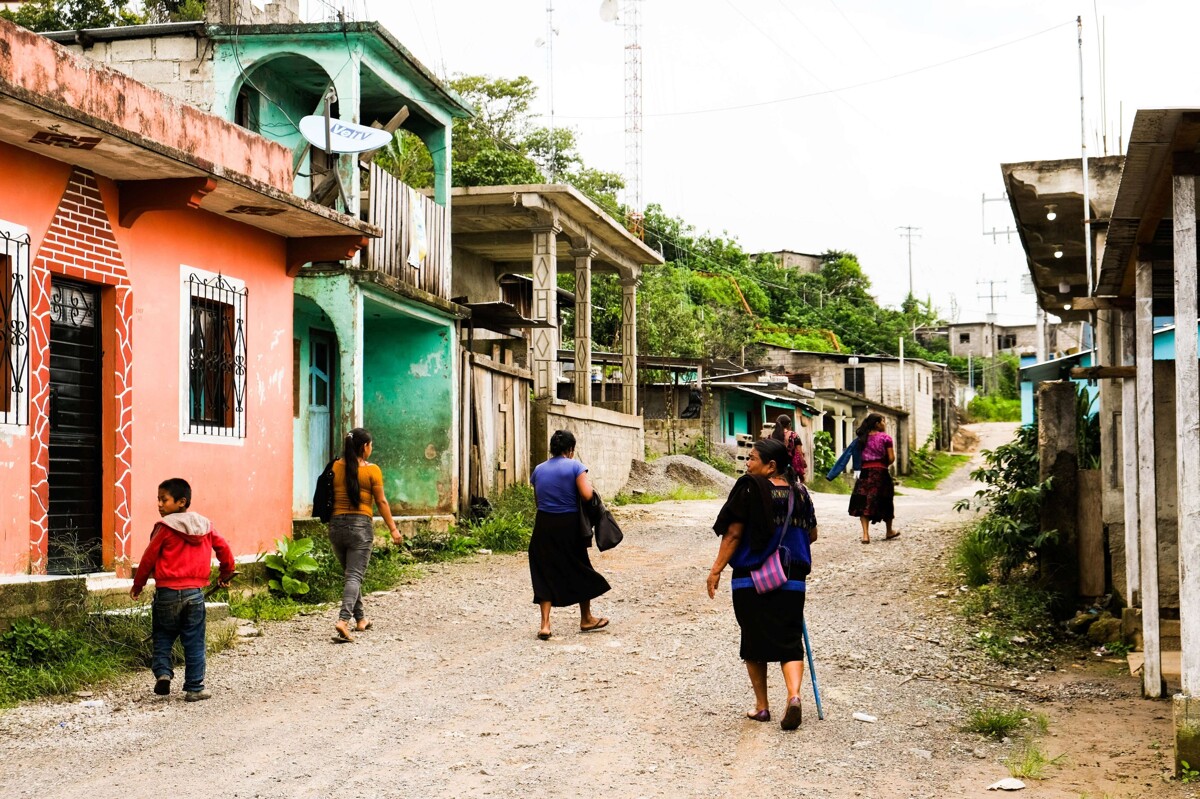
Real economic and social development in Mexico can only emerge from the regions, from the municipalities and their localities. Inequality, poverty, and misery are mainly found in rural Mexico; we can see what is happening in communities in states like Oaxaca, Chiapas, Guerrero, or Michoacán. The concentration at the municipal level is clear, in the shares of federal taxes, the collection of property tax, where we are close to 0.03 percent of GDP, far below countries like Chile, Argentina, or Colombia, or the average of the Organization for Economic Cooperation and Development (OECD), which is 1.9 percent, even in public debt. Municipalities face multiple spending needs mainly because they are service providers; cleaning, lighting, garbage collection, and water are municipal affairs, as well as urban equipment. With the exception of drinking water services, the others provided by the municipality can only be financed with their own resources or shares; this is why when financial crises in municipalities appear, citizens feel it immediately, either in the lack of garbage collection or in public lighting; in other words, a municipal financial blackout occurs. Doing politics without public works is complicated, and citizens often demand new projects, and mayors face the dilemma of stopping services or attending to new requests, especially when they come into administrations that are already in debt. The shares are the main income that municipalities have; however, some states still have deficient distribution formulas that only reward inefficiency. In addition, few states support more than 20 percent, the minimum established by the Coordination Law, without understanding that the growth of cities generates a greater demand for services, which can only be compensated with local collection resources. The Law of Financial Discipline has been a watershed for better municipal administration. In a federal country, within each level of government. Urban environments, almost always better connected to each other and with activities of higher added value than rural ones, produce —in nominal and strictly economic terms— greater wealth. Rural populations face an unequal world that reproduces and maximizes inequalities within their countries; although 80 percent of the world's food is produced on family farms, according to data from the Food and Agriculture Organization of the United Nations (FAO). Despite this, half of the rural population in the world lacks health coverage, compared to 22 percent in urban areas. Therefore, it is a priority that public spending be evaluated by its impact to guarantee efficiency and use to face the enormous challenge of combating poverty. The uneven development and growth of countries has placed the analysis of its causes as a priority issue on both the public agenda and that of governments; there is a consensus that inequality arises from historical and social conditions. This dynamic of inequality does not seem so distant when analyzing the economic inequality within each country, being replicated in the behavior of national economies. But there is still much to do. Pensions, labor awards, corruption, and lack of technical skills are some pending issues on the agenda. These topics continue to be a challenge in local development.