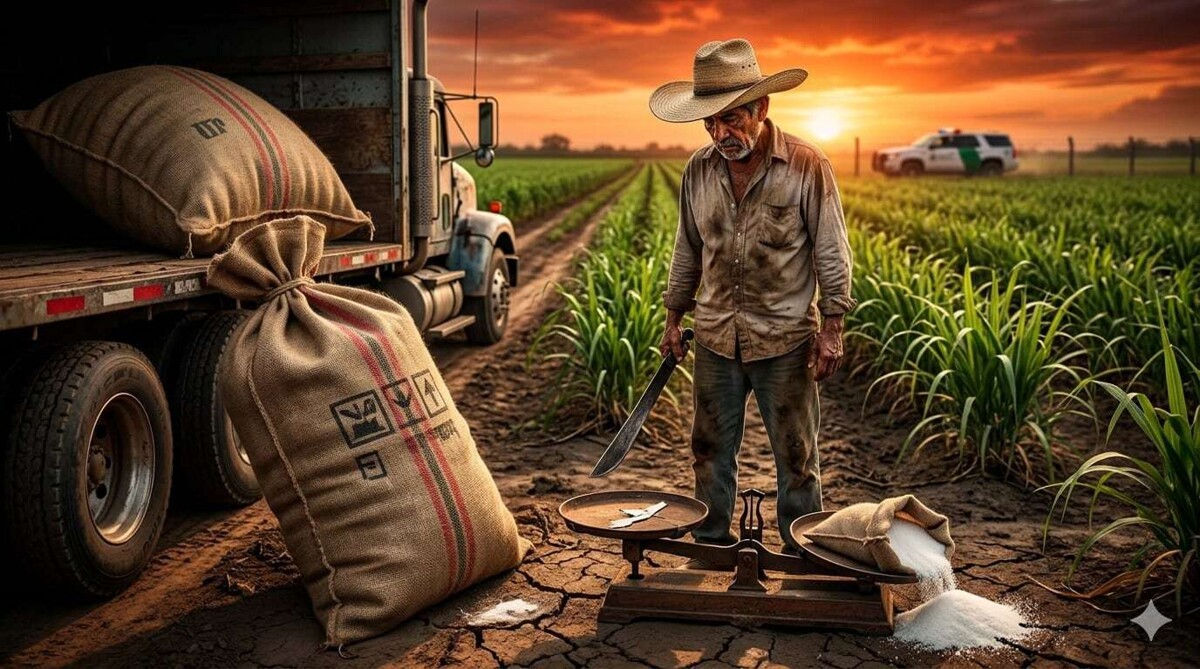
The Mexican sugar sector is facing a triple blow that is creating an adverse environment for the entire production chain. The main issue is the smuggling of sugar, primarily entering from Guatemala through the southern border. This flow not only evades taxes but also introduces products at artificially low prices, creating unfair competition for national producers. Additionally, the situation is compounded by a reduction in sugar export quotas to the United States and its mass replacement by cheaper high-fructose syrup by the food and beverage industry. This leads to an oversupply of sugar within the country, further pressuring domestic prices. As a result, sugar and cane producers suffer direct losses, sugar mill revenues decline, and the formal market is significantly distorted. Under these circumstances, experts emphasize the urgent need to strengthen border surveillance, improve inter-institutional coordination, and protect the viability of this strategic economic sector.