Guanajuato maintains its position as Mexico's fifth-largest economy, with a Gross Domestic Product of 82,971 million dollars, reported the state Secretary of Economy, Claudia Cristina Villaseñor Aguilar, during her appearance before the local Congress. In this context, the state exceeded 23 billion dollars in exports between January and September 2025, positioning it as the second-largest non-border exporter in the country and confirming its role in international trade.
«From the beginning of the administration and until March 2026, forty-eight projects have been completed», stated Claudia Cristina Villaseñor Aguilar, Secretary of Economy of Guanajuato.
Industry and automotive sustain leadership Guanajuato's economic growth is explained by its industrial base. The state has set a goal of 8 billion dollars by 2030 and the creation of 50,000 jobs.
«A common goal that economic development is based on balance and is reflected in a stronger and more competitive Guanajuato», stated Claudia Cristina Villaseñor Aguilar, Secretary of Economy of Guanajuato.
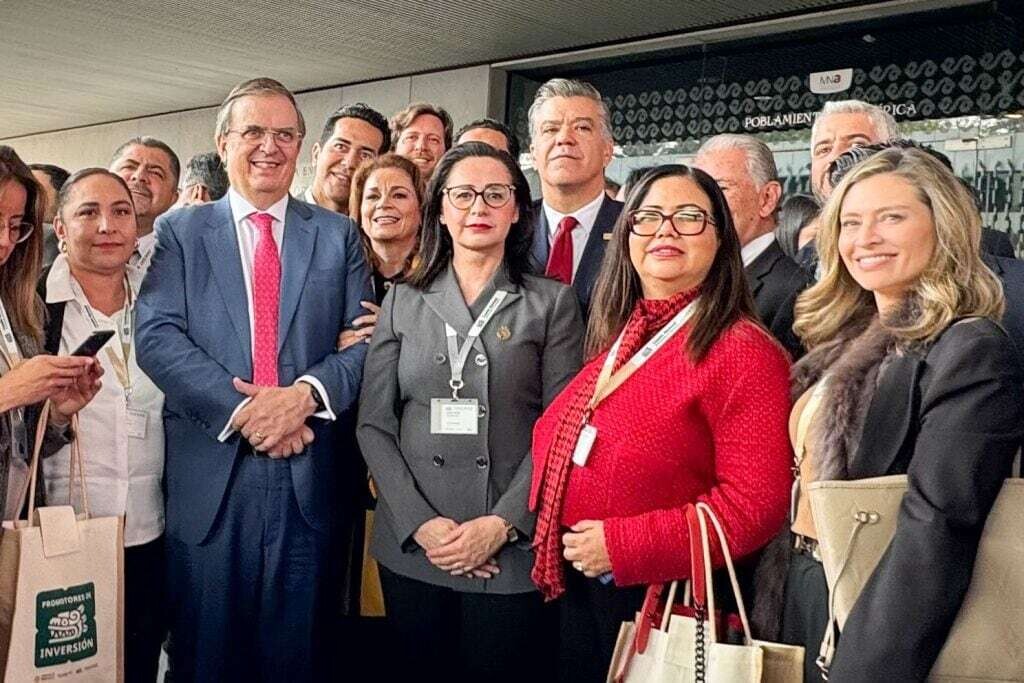
The current progress is 46%, which presents the challenge of achieving a sufficient pace of capital attraction to sustain growth in the medium term. During 2025, investments of over 1,567 million dollars were completed, in sectors such as automotive, new technologies, agribusiness, and services, including companies like Toyota, Walmart, American Industries, and Pirelli.
Growth with social reach The economic balance also incorporates a social focus. More than 70% of the financing and support has been directed to working women, benefiting 9,949 people in the state's 46 municipalities. This component seeks to expand the impact of growth beyond the industrial poles.
The entity ranks second nationally in manufacturing production, with a value of 1.17 trillion pesos. This is added to its automotive leadership: first place in vehicle production, with 861,000 units assembled in 2025, and second place in the value of automotive production, with 620 billion pesos. This productive framework keeps the state integrated into global value chains.
Investment advances, but marks the limit of growth Despite the economic dynamism, investment remains the main challenge.