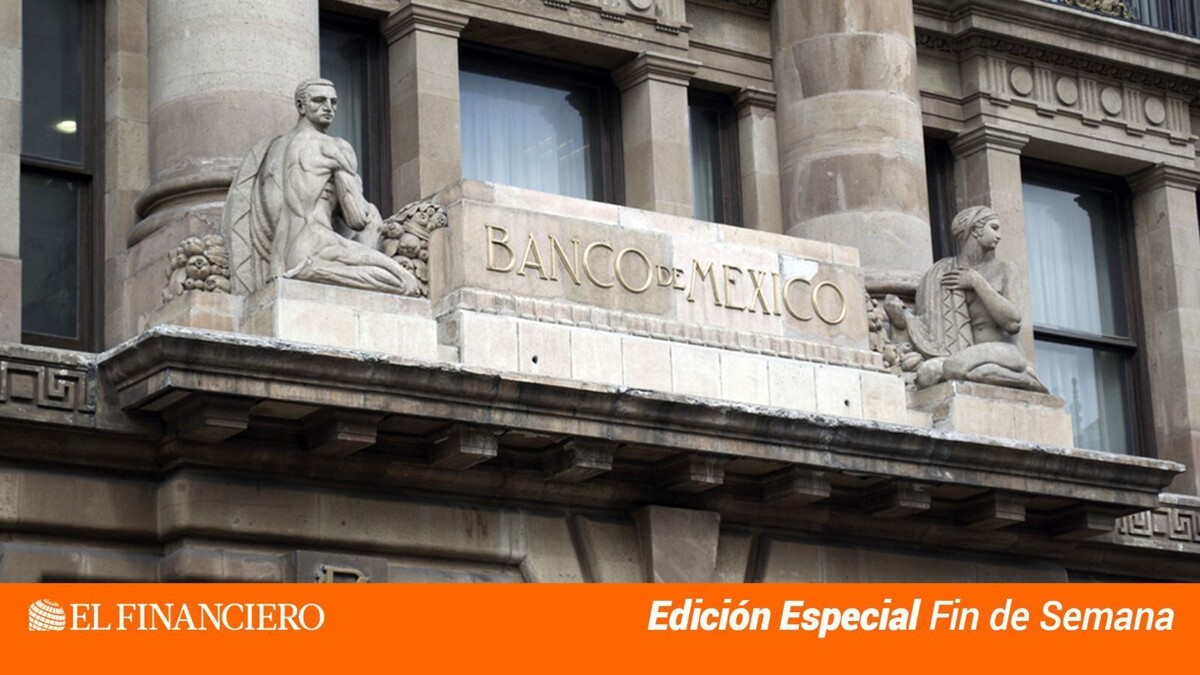
The Bank of Mexico caused controversy last Thursday by announcing a 25-basis-point cut in its benchmark rate to 6.75%, a decision made by a majority vote of 3 to 2. Before the decision, opinions among financial market analysts and private-sector economists were divided. A narrow majority in the Citi México survey from March 20 anticipated that the benchmark rate would remain unchanged at this week's meeting, with the next move being a 25-basis-point cut until the next decision in May. It should be recalled that in early February, the Bank of Mexico's Governing Board decided to pause its rate-cutting cycle. A pause that, despite inflationary pressures in the Mexican economy due to rising prices for agricultural products, was shorter than expected. The Bank of Mexico announced the reduction in its target rate from 7.0% to 6.75% amidst geopolitical tensions due to the conflict in the Middle East and an upward revision in the central bank's own inflation expectations for general and underlying inflation for the first, second, and third quarters of 2026. Not only did it reduce the rate, but in its forward guidance, it also signaled its willingness to consider another cut, which would conclude the easing cycle that began in August 2024: 'Going forward, as the evolution of macroeconomic and financial conditions warrants, the Governing Board will assess the appropriateness and timing of making an additional cut to the benchmark rate.' Alonso Cervera, Deputy General Director of Studies, Public Affairs, and Communication at Banco Santander México, told this writer that 'the question that remains open is whether they will only go for one more cut or if they could repeat this phrase in the coming months, even while cutting the rate.' Assuming, without conceding, that the Bank of Mexico makes another quarter-point cut, its benchmark rate would reach 6.50%, which would be the 'terminal' rate level, where it would practically be in a neutral zone. The doubt is when this terminal rate would be reached, in May or June of this year, or even later. Another point is that the central bank would be on neutral ground, which implies that the benchmark rate is no longer explicitly restrictive without having reached the convergence to the inflation target of 3.0%. Although it revised its forecasts for general and underlying inflation—which excludes goods and services with more volatile prices—upward for the first and third quarters of this year, the Bank of Mexico continues to anticipate that general inflation will converge to the target in the second quarter of 2027. Its constitutional mandate to maintain price stability requires forecasting the path of inflation to its target. However, the process of convergence to the target within the forecast horizon is proving challenging, especially since two days before the central bank's decision, INEGI released inflation data for the first half of March, which caused a negative surprise. General inflation accelerated to 4.6% annually in the first half of the month, its highest level since late October 2024, due to a 23.9% annual surge in fruit and vegetable prices, its most significant increase since July of the same year. This was the Bank of Mexico's Governing Board meeting with the most dissent in a long time—since August 2024—regarding the majority decision, with votes in favor of the rate cut to 6.75% from Governor Victoria Rodríguez and Deputy Governors Gabriel Cuadra and Omar Mejía, while Deputy Governors Galia Borja and Jonathan Heath voted to keep it at 7.0%. The two dissenting votes in the Governing Board show that the decision was very complicated, as previously mentioned, there was no consensus even among analysts due to the complex and uncertain inflationary landscape. The minutes of this meeting, to be published on April 9, will reveal the dovish wing's inclination to cut again or halt the cycle.